Asia · Trade
US Increases Anti-Dumping Duties on Vietnamese Pangasius Exports
New tariff rates mark escalation in long-running trade dispute over Southeast Asian catfish shipments to American markets
KEY TAKEAWAYS
- ·The United States has raised anti-dumping duties on pangasius imports from Vietnam, extending a trade dispute that began in 2003 over pricing practices.
- ·The US market represents roughly one-fifth of Vietnam's pangasius exports by value, with the Mekong Delta producing 90 percent of national output worth approximately $1.5 billion annually.
- ·Vietnamese exporters may redirect shipments to European and Asian markets while industry groups pursue legal and diplomatic channels to challenge the new duty rates.
Tariff Escalation Hits Mekong Exports
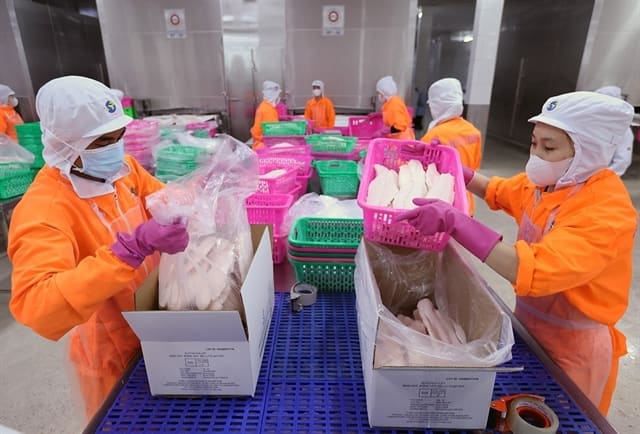
The United States has increased anti-dumping duties on pangasius imports from Vietnam, adding fresh pressure to an industry that ships roughly $1.5 billion worth of the white-fleshed fish to global markets annually. The move extends a trade friction that began in 2003, when American catfish farmers first petitioned for protection against what they described as below-cost competition from the Mekong Delta.
Vietnamese pangasius, marketed internationally as basa or swai, occupies a unique position in Asian seafood trade. Farmed intensively in the nutrient-rich waters of southern Vietnam, the fish offers restaurants and retailers a mild-tasting, affordable alternative to marine whitefish. That price advantage has made it a target for US domestic producers, who argue that Vietnamese exporters benefit from unfair subsidies and sell below production cost.
The latest duty adjustment follows the US Department of Commerce's periodic review of dumping margins, a process that recalculates tariff rates based on updated cost and pricing data. While the specific new rates have not been disclosed in preliminary announcements, historical reviews have seen duties range from single-digit percentages for compliant exporters to punitive rates exceeding 200 percent for non-cooperating firms.
Delta Producers Face Margin Squeeze
For Vietnam's aquaculture sector, the timing is challenging. Feed costs have climbed over the past two years as global grain prices surged, while labor and energy expenses in the delta provinces have risen in tandem with broader inflation. Many farmers operate on thin margins, relying on export volume to cover fixed costs associated with pond infrastructure, hatcheries, and processing facilities.
The US market accounts for roughly one-fifth of Vietnam's total pangasius exports by value, making it the second-largest destination after China. A significant increase in duties could force exporters to absorb costs, redirect shipments to less lucrative markets, or reduce procurement from smallholder farmers who lack the scale to weather prolonged price pressure.
Industry observers note that Vietnamese exporters have diversified their customer base over the past decade, expanding sales into Europe, Latin America, and Middle Eastern markets. That geographic spread offers some insulation, but the US remains a high-value outlet where buyers are willing to pay premium prices for certified, traceable product.
Certification and Compliance Landscape
Vietnam's larger seafood processors have invested heavily in sustainability certifications and traceability systems, partly to meet European Union import standards and partly to differentiate themselves in competitive export markets. Best Aquaculture Practices certification, Aquaculture Stewardship Council approval, and ISO food safety credentials have become common among exporters targeting supermarket chains and institutional buyers.
These investments have not shielded producers from anti-dumping actions, which hinge on cost accounting and pricing behavior rather than environmental or social performance. The US methodology for calculating normal value and export price involves detailed examination of production records, overhead allocation, and sales transactions, a process that smaller exporters often struggle to navigate.
Firms that decline to participate in Commerce Department reviews face the highest residual duty rates, effectively pricing them out of the US market. That has created a bifurcated industry structure, with a handful of large, vertically integrated companies dominating American sales while mid-sized and smaller exporters focus on less regulated destinations.
Regional Trade Implications
The duty increase arrives as Southeast Asian economies negotiate deeper integration through the Regional Comprehensive Economic Partnership and bilateral agreements with major trading partners. Vietnam has positioned itself as a manufacturing and export hub, leveraging its coastal geography and improving infrastructure to attract investment in electronics, textiles, and food processing.
Trade remedies like anti-dumping duties complicate that narrative, reminding investors and policymakers that market access remains contingent on navigating complex regulatory frameworks in destination countries. For aquaculture specifically, the precedent set by pangasius actions has influenced how other seafood sectors approach US market entry, with shrimp and tuna exporters closely monitoring enforcement trends.
The Mekong Delta, home to roughly 90 percent of Vietnam's pangasius production, depends on export revenue to support rural livelihoods and provincial economies. Farmers in An Giang, Dong Thap, and Can Tho provinces have few alternative crops that can match the income potential of intensive fish farming, particularly given land constraints and seasonal flooding patterns.
What Comes Next
Vietnamese trade officials and industry associations are expected to engage with US counterparts through diplomatic channels and legal avenues, including potential appeals to the US Court of International Trade. Past reviews have occasionally resulted in duty reductions when exporters successfully demonstrate compliance with fair pricing standards, though the process is lengthy and resource-intensive.
In the near term, exporters will likely adjust their sales strategies, potentially shifting volume toward European and Asian markets where regulatory conditions are more predictable. Larger firms with diversified portfolios may absorb short-term margin compression, while smaller operators could reduce production or exit the US supply chain altogether.
The broader question for Vietnam's seafood sector is whether continued investment in compliance infrastructure and market diversification can insulate the industry from periodic trade actions. As global demand for affordable protein grows, pangasius remains well-positioned to capture share in emerging markets, but the path forward in established destinations like the United States will require sustained attention to cost transparency and regulatory engagement.
RELATED STORIES
Vietnam's Infrastructure Firms Cash In on State Spending Surge
Tran Quoc Bao · 2 min
Asian Routes Become Conduit for Billions in Tariff Evasion
Cheng Wei-Lun · 3 min
Indonesia's Food Exports Reach $6.25 Billion, Fourth in ASEAN Behind Thailand and Vietnam
Siti Nuraini · 3 min

Vietnam Automakers Push to Relax Euro 5 Tech Transfer Rules
Priyanka V. Rao · 3 min
Spot something wrong? Email editor@briefasia.com. We log every correction publicly.