Asia · Trade
Indonesia's Food Exports Reach $6.25 Billion, Fourth in ASEAN Behind Thailand and Vietnam
Jakarta pushes halal-certified products and Middle East expansion as trade ministry leverages diplomatic network across 33 countries to close gap with regional leaders.
KEY TAKEAWAYS
- ·Indonesia's food and beverage exports totaled $6.25 billion, ranking fourth in ASEAN behind Thailand at $17 billion, Vietnam at $8.8 billion, and Singapore at $6.5 billion.
- ·The Indonesian trade ministry is prioritizing halal-certified products and Middle East markets, leveraging the country's status as the world's largest Muslim-majority nation.
- ·Jakarta is deploying Trade Attachés and promotion centers across 33 countries to connect domestic producers with international buyers and close the export gap with regional leaders.
Indonesia Lags Regional Peers Despite Massive Market
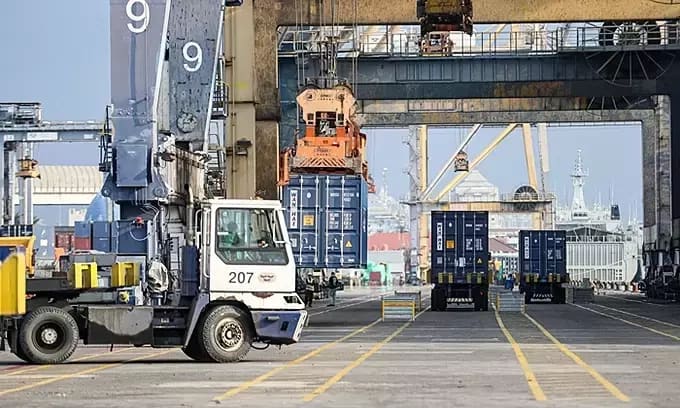
Indonesia's food and beverage sector generated $6.25 billion in export revenue, placing the archipelago nation fourth among ASEAN members in a category dominated by Thailand, Vietnam, and Singapore. The figures, disclosed at a trade promotion forum in Jakarta this week, underscore both the scale of Indonesia's agricultural economy and the distance it must travel to match smaller neighbors.
Thailand leads the region with $17 billion in F&B exports, while Vietnam has captured $8.8 billion and Singapore $6.5 billion, according to Dyah Roro Esti, Indonesia's deputy minister of Trade. The gap is striking given Indonesia's population of 280 million and its status as the world's fourth most populous nation.
Esti addressed industry executives and exporters at the Indonesia Food and Beverage Trade Promotion Forum on Tuesday, outlining the ministry's strategy to lift export performance. She emphasized untapped demand in international markets, particularly for products that meet halal certification standards.
Halal Certification as Competitive Edge
The deputy minister identified the Middle East as a priority region where Indonesian exporters can leverage the country's position as the world's largest Muslim-majority nation. Halal certification, a requirement for many food products sold in Gulf Cooperation Council countries and broader Middle Eastern markets, offers Indonesian producers a structural advantage over competitors in Thailand and Vietnam, where halal supply chains are less developed.
Indonesia's trade ministry is deploying its network of Trade Attachés and Indonesian Trade Promotion Centers across 33 countries to connect domestic producers with buyers and distributors. These offices, embedded in Indonesian embassies and consulates, serve as matchmaking platforms for businesses seeking to enter or expand in foreign markets.
The ministry's approach reflects a recognition that Indonesia's export performance has not kept pace with the scale of its domestic food industry. With palm oil, coffee, cocoa, seafood, and processed snacks among its key export categories, the country has raw material advantages but has struggled to translate those into higher value-added exports.
Diaspora and Restaurant Expansion
Esti noted that Indonesian restaurants opening abroad and the country's diaspora communities represent additional channels for F&B exports. Overseas Indonesians, numbering several million across Malaysia, Saudi Arabia, Taiwan, and other destinations, create built-in demand for familiar products.
The ministry's strategy involves three pillars: expanding the trade attaché network, targeting markets with growing halal food demand, and supporting businesses in meeting international quality and safety standards. The focus on halal aligns with broader Indonesian government efforts to position the country as a global hub for Islamic finance and halal industries.
Regional Context
Thailand's dominance in ASEAN F&B exports reflects decades of investment in food processing infrastructure, cold chain logistics, and trade agreements. Vietnamese exporters have gained ground through coffee, seafood, and fruit exports, supported by preferential access to the European Union and other markets under free trade agreements.
Singapore's $6.5 billion in F&B exports, despite having no significant agricultural base, highlights the city-state's role as a regional trading and re-export hub. Much of Singapore's reported export value stems from goods that are processed, repackaged, or transshipped rather than produced domestically.
Indonesia's challenge is not a lack of resources but the complexity of coordinating export efforts across an archipelago of more than 17,000 islands with fragmented supply chains and varying levels of infrastructure development. The trade ministry's push to formalize connections between producers and overseas buyers aims to address these structural bottlenecks.
The forum in Jakarta brought together exporters, trade officials, and logistics providers to discuss market access barriers, certification requirements, and financing options for businesses looking to scale up international sales. The ministry has set no public target for export growth but emphasized that the current $6.25 billion figure represents only a fraction of the sector's potential.
RELATED STORIES

AI Demand Pushes Southeast Asia Data Centre Investment Despite Power Constraints
Cheng Wei-Lun · 2 min
Indonesia's Textile Exports Eye 4% Growth as Supply Chain Gaps Persist
Siti Nuraini · 2 min

Indonesia's Hartono Heirs Receive $2.9 Billion Each in Major Asian Wealth Transfer
Priyanka V. Rao · 3 min
Indonesia Redirects State Fund Dividends to Reduce Debt Burden
Priyanka V. Rao · 3 min
Spot something wrong? Email editor@briefasia.com. We log every correction publicly.