Asia · Business
Pay Fairness Does Not Equal Job Satisfaction in the Philippines
Eight in ten Filipino workers say they are fairly paid, yet fewer than six in ten report satisfaction with their salaries - a disconnect that reveals deeper tensions around workload, recognition, and the true cost of living.

KEY TAKEAWAYS
- ·Eighty percent of Filipino workers consider their pay fair, yet only 59 percent report satisfaction, with 45 percent saying earnings fall short of living costs.
- ·Employees satisfied with pay are 2.2 times more likely to stay motivated, while those unhappy are 2.9 times more likely to seek new jobs.
- ·Technology workers report the highest salary satisfaction at 54 percent, while millennials post the lowest at 54 percent despite being in peak earning years.
The Fairness Paradox
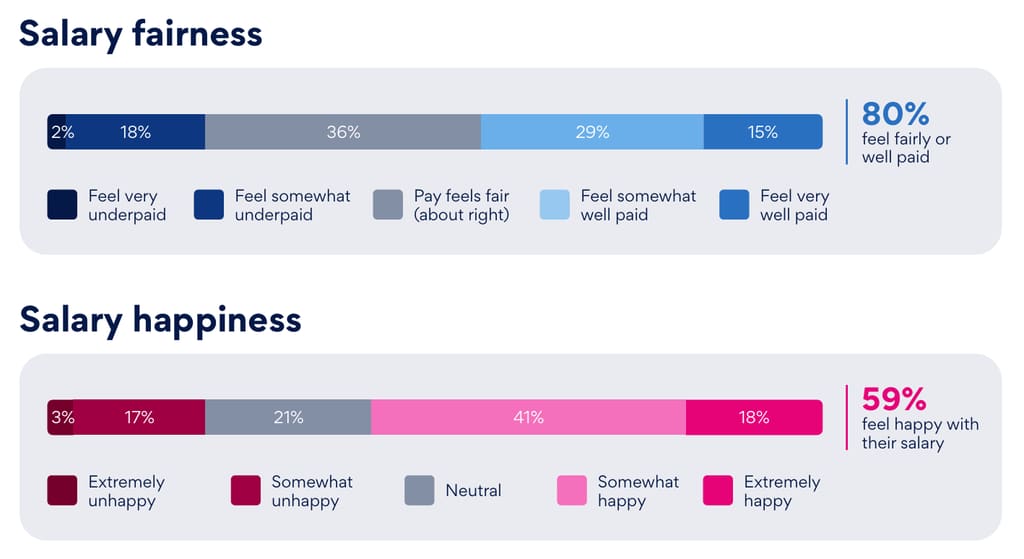
A striking contradiction has emerged in the Philippine labor market: the vast majority of employees believe their compensation is equitable, yet less than six in ten report being genuinely satisfied with what they earn. According to data from Jobstreet by SEEK, which surveyed more than a thousand workers across the archipelago, 80 percent of respondents consider themselves fairly or well paid. At the same time, only 59 percent express satisfaction with their actual salary levels.
That gap points to a deeper tension in how workers evaluate their compensation. For many, fairness is an abstract benchmark measured against industry standards or peer salaries. Satisfaction, by contrast, is personal and visceral - tied to whether the paycheck covers rent, groceries, school fees, and the rising cost of living in Metro Manila and beyond.
The disconnect becomes even sharper when considering that 45 percent of survey respondents said their earnings fall short of their cost-of-living needs. Among those who believe their pay is fair, only 44 percent report satisfaction, according to Jobstreet by SEEK. The implication is clear: workers are judging compensation not just on market rates but on workload, recognition, and whether their salary supports the life they want outside office hours.
Motivation and Retention at Stake
The survey reveals that salary satisfaction is a powerful lever for both engagement and attrition. Employees who are content with their pay are 2.2 times more likely to feel motivated and willing to put in extra effort at work. Conversely, those unhappy with their earnings are 2.9 times more likely to be actively searching for a new employer.
That ratio matters in a region where talent mobility is high and cross-border opportunities are multiplying. Nearly three in ten surveyed workers said they would relocate to another city or even another country for a 10 percent salary bump. Yet the same cohort expressed reluctance to trade a positive workplace environment for a toxic culture, even if it meant a similar pay increase. The finding underscores a broader shift in Asia's labor markets, where younger workers in particular weigh quality of life and organizational culture alongside compensation.
Dannah Majarocon, managing director of Jobstreet by SEEK in the Philippines, noted that the gap between perceived fairness and actual satisfaction shows that compensation is only one dimension of the employee experience. She emphasized that employers need to pair competitive pay with meaningful recognition, clear career pathways, and open conversations about growth to build engaged teams prepared for the future.
Sectoral and Generational Divides
The survey also highlights notable variation across industries and age groups. Technology workers reported the highest level of salary satisfaction at 54 percent, followed by construction employees at 50 percent. Both sectors saw nearly half of their workforce receive salary increases over the past year, suggesting that regular adjustments help narrow the fairness-satisfaction gap.
By contrast, industrial workers posted the lowest pay satisfaction. Fifty-eight percent of respondents in that sector said their earnings failed to meet their cost-of-living requirements, pointing to stagnant wages in manufacturing and production roles that have not kept pace with inflation or urban expenses.
Generational differences are equally pronounced. Millennials - many of whom are now in their thirties and facing mortgages, childcare costs, and aging parents - reported the lowest salary satisfaction at 54 percent. That compares with 61 percent among Gen Z workers and 60 percent among Gen X. Even among millennials who said they were satisfied with their pay, 54 percent acknowledged that their salaries still fell short of covering their actual living expenses.
The millennial squeeze is not unique to the Philippines. Across Southeast Asia, this cohort is navigating peak earning years while shouldering multiple financial obligations. In markets from Jakarta to Bangkok, employers are grappling with how to retain mid-career talent who feel stretched thin despite climbing the salary ladder.
The Asia Context
The Philippine findings fit into a broader regional pattern. Labor markets across Asia are experiencing a recalibration as workers reassess what they expect from employment. In Singapore, recent surveys have shown that recognition and career development rank as high as salary in retention decisions. In Vietnam, tech talent has become increasingly mobile, with engineers willing to switch employers for modest pay increases combined with better learning opportunities.
The Philippines, with its large diaspora and strong English proficiency, has long exported talent to the Middle East, North America, and other parts of Asia. But the domestic economy is also growing, particularly in business process outsourcing, technology services, and construction linked to infrastructure buildout. That creates competition for skilled workers and raises the stakes for employers who want to retain top performers.
For multinational firms operating in Manila or Cebu, the survey data suggests that benchmarking salaries against local market rates is necessary but not sufficient. Workers are evaluating total rewards - recognition, flexibility, career progression, and whether their contribution feels valued - alongside the number on their payslip.
What Employers Can Do
The survey points to several actionable insights for companies. First, regular salary reviews matter. In sectors where pay adjustments have been frequent - technology and construction - satisfaction levels are higher. Second, transparency around compensation philosophy can help bridge the fairness-satisfaction gap. When workers understand how pay is determined and see a clear link between performance and reward, perceived fairness rises.
Third, recognition does not always have to be monetary. Public acknowledgment of contributions, opportunities for skill development, and clear pathways to promotion all contribute to a sense of being valued. In the Philippine context, where family obligations and community ties are strong, flexibility around work schedules and remote work options can also enhance overall satisfaction.
Finally, employers should be prepared for candid conversations about cost of living. In a country where inflation has periodically spiked and where urban housing costs are rising, workers are acutely aware of whether their salary keeps pace with daily expenses. Offering financial wellness programs, transport allowances, or meal subsidies can make a tangible difference, especially for employees early in their careers.
The Road Ahead
The tension between fairness and satisfaction is unlikely to disappear soon. As the Philippine economy continues to integrate with regional and global markets, workers will have more information about pay benchmarks and more options to move. Employers who treat compensation as a static number risk losing talent to competitors who understand that satisfaction is shaped by a bundle of factors - only one of which is the salary itself.
For workers, the survey is a reminder that feeling fairly paid is not the same as feeling financially secure. Advocating for transparent pay structures, seeking out employers who invest in development, and being willing to move for better opportunities are all part of navigating a labor market in flux. The data from Jobstreet by SEEK suggests that the next generation of competitive employers in Asia will be those who recognize that fairness is table stakes, and satisfaction is the real prize.
RELATED STORIES
Filipino Workers Say They're Paid Fairly, Yet Half Still Can't Cover Living Costs
Priyanka V. Rao · 3 min

San Miguel Brings Urban Farming Model to Visayas After Luzon Success
Mariel D. Santos · 3 min

Philippines Infrastructure Delays Stem From Short-Term Budgeting Cycles
Mariel D. Santos · 3 min

Manila Eyes Larger Coal Revenue Cut as Semirara Mine Tender Stalls
Priyanka V. Rao · 2 min
Spot something wrong? Email editor@briefasia.com. We log every correction publicly.