Asia · Trending
Filipino Workers Say They're Paid Fairly, Yet Half Still Can't Cover Living Costs
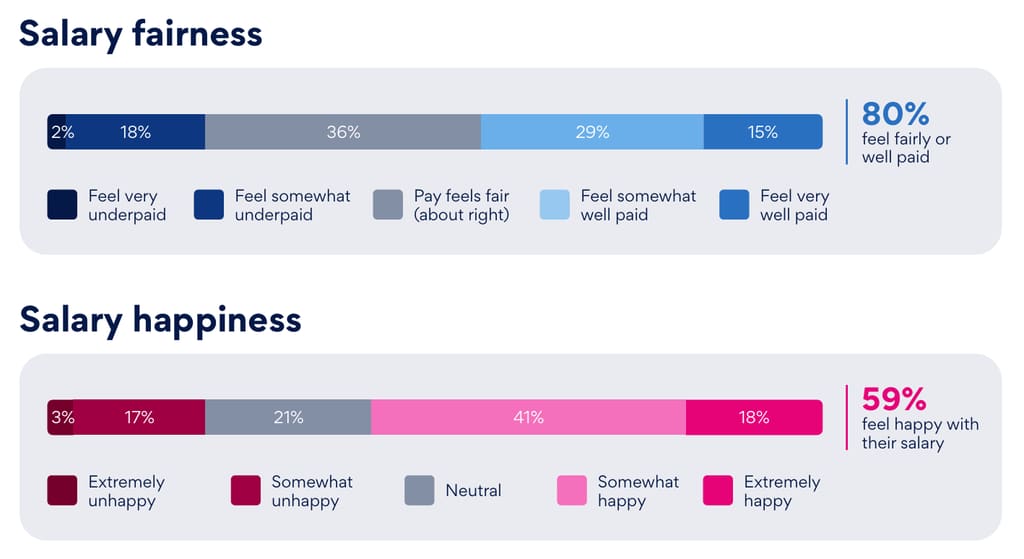
A new survey reveals a striking paradox: while 80% of employees believe their wages are fair, 45% report their salaries fall short of basic living expenses
KEY TAKEAWAYS
- ·Fifty-nine percent of Filipino workers are satisfied with their salaries, but 45% report their pay does not cover their standard of living, according to a February 2026 Jobstreet by SEEK survey of 1,009 employees.
- ·Millennials show the lowest salary happiness at 54% and are most likely to pursue side income, with 54% saying wages fall below living needs and 27% receiving pay increases under 2% in the past year.
- ·Workers satisfied with pay are 2.2 times more likely to exceed expectations, while those unhappy are 2.9 times more likely to consider changing jobs, creating retention risk for employers across the region.
The Satisfaction Paradox
Six in ten Filipino workers express satisfaction with their salaries, yet 45% simultaneously report that their pay fails to meet the cost of maintaining their standard of living, according to new survey data from Jobstreet by SEEK. The contradiction points to a deeper tension in Southeast Asia's employment landscape: workers may view their compensation as reasonable relative to the market, but those same wages struggle to keep pace with rising living costs.
The survey, which polled 1,009 employed Filipinos aged 18 to 64 in February 2026, found that 80% believe they are paid fairly or well for the work they perform. That perception ranks among the highest in the Asia-Pacific region. Yet among those who described their pay as merely "fair" or "about right," only 44% reported actual satisfaction with their earnings.
The gap suggests that workers evaluate their compensation through multiple lenses: whether it reflects their workload and contribution, how it compares to prevailing market rates, and critically, whether it supports the life they want outside the office. When wages check the first two boxes but fail the third, satisfaction erodes.
Millennials Bear the Brunt
Generational divides emerged clearly in the data. Millennials recorded the lowest salary happiness rate at 54%, trailing both Gen Z at 61% and Gen X at 60%. More than half of Millennials, 54%, said their salaries fell below what they needed for their standard of living. Another 27% reported receiving pay increases of less than 2% over the past year, a figure that barely registers against inflation.
Faced with stagnant wages, Millennials were the generation most likely to pursue side income. The willingness to take on additional work outside their primary employment underscores the financial pressure this cohort faces, often juggling family expenses, housing costs, and debt obligations accumulated earlier in their careers.
Industry Disparities
Industry sector shaped compensation sentiment sharply. Technology and construction workers reported the highest rates of feeling well paid, at 54% and 50% respectively, and posted the strongest salary happiness scores at 69% and 65%. Both sectors have seen robust demand for skilled labor in recent years, giving workers greater leverage in wage negotiations.
Industrial workers occupied the opposite end of the spectrum. Fifty-eight percent said their salaries failed to cover their cost-of-living needs, reflecting weaker bargaining power and tighter margins in manufacturing and production roles.
The Business Case for Pay Satisfaction
The survey data offers employers a clear incentive to address compensation gaps. Workers satisfied with their salaries were 2.2 times more likely to report feeling motivated to exceed expectations in their roles. Conversely, those unhappy with their pay were 2.9 times more likely to be actively considering a job change.
Dannah Majarocon, managing director of Jobstreet Philippines, noted that the disconnect between perceived fairness and actual satisfaction signals that compensation alone does not determine the employee experience. She emphasized that employers should pair competitive salaries with recognition programs, transparent career progression pathways, and regular dialogue about professional development.
What It Means for Asia's Labor Markets
The Philippines sits at the intersection of several regional trends: a young, digitally connected workforce; rapid urbanization driving up living costs; and an economy increasingly integrated into global supply chains. The survey findings reflect a broader challenge across Southeast Asia, where wage growth has often lagged behind the cost of housing, healthcare, and education.
For multinational companies operating in the region, the data underscores the risk of relying solely on market-rate benchmarks to set pay. A compensation package that appears competitive on paper may still fail to retain talent if it does not account for the real-world expenses employees face. As labor mobility increases across ASEAN markets, workers dissatisfied with their purchasing power will find it easier to move to employers or jurisdictions offering better terms.
The paradox of fair pay that does not satisfy also raises questions about how inflation and cost-of-living pressures are communicated and understood in wage-setting processes. If workers accept that their pay is fair relative to their peers, but still struggle financially, the issue shifts from individual employer practices to broader economic policy and wage standards across industries.
RELATED STORIES

Manila Court Indefinitely Suspends 85-Peso Wage Increase for Metro Manila Workers
Priyanka V. Rao · 2 min

Philippines Must Rebuild Investment Confidence to Unlock Growth
Priyanka V. Rao · 3 min

Philippines Logs P115 Billion Foreign Investment Surge in Q2
Priyanka V. Rao · 3 min

Philippine Grid Pays 60% of Transmission Costs for Idle Power Plants
Priyanka V. Rao · 4 min
Spot something wrong? Email editor@briefasia.com. We log every correction publicly.