Asia · Business
Philippine Grid Pays 60% of Transmission Costs for Idle Power Plants
Ancillary services consume up to P260 monthly per household while backup generators sit unused, exposing structural flaws in the country's power market design.
KEY TAKEAWAYS
- ·Ancillary services account for 60 percent of Philippine transmission charges, compared to five to fifteen percent in mature markets, adding P120 to P260 monthly to household bills.
- ·Backup power plants contracted under firm agreements were utilized below 21 percent across all reserve categories in the first half of 2026, yet consumers pay full availability fees.
- ·The Department of Energy's 100 percent firm contract mandate drives costs higher than international norms, creating a seller's market among coal and gas generators.
The Hidden Premium in Manila's Power Bills
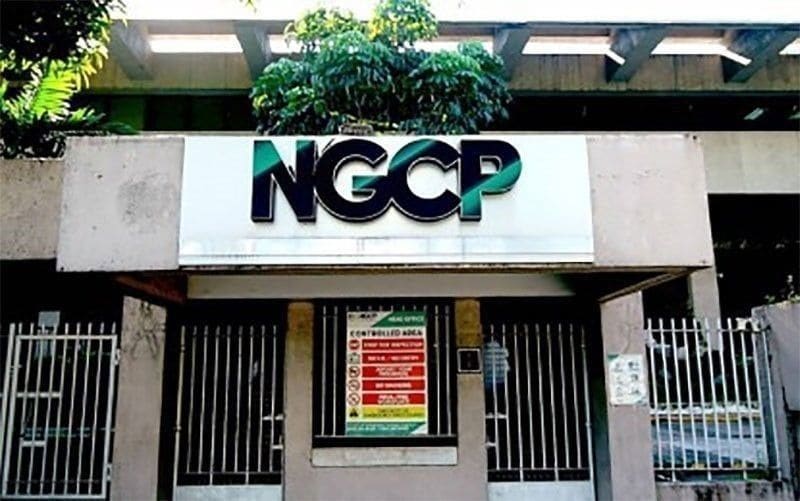
Filipino consumers face a transmission charge spike of 30 centavos per kilowatt-hour this month, offsetting much of Meralco's 59-centavo generation rate cut. The culprit is not the National Grid Corporation of the Philippines (NGCP), which operates the transmission infrastructure. Instead, roughly 60 percent of transmission charges now flow to power generation companies contracted to provide ancillary services, backup capacity that rarely gets deployed.
Meralco's head of Utility Economics, Larry Fernandez, confirmed the breakdown during a press briefing. While NGCP's wheeling rate for physically moving electricity ranges from P0.54 to P0.70 per kWh, ancillary service fees alone account for P0.60 to P0.85 per kWh. Total transmission charges land between P1.35 and P1.68 per kWh, meaning backup reserves cost more than the wires that carry the power.
Paying for Standby Capacity That Stays Idle
Ancillary services exist to stabilize grids against sudden demand swings, renewable energy fluctuations, or generator outages. In mature markets, these services typically represent five to fifteen percent of transmission costs. The Philippines sits at the opposite extreme, dedicating the majority of transmission spending to reserve capacity.
NGCP data for January through June 2026 reveal strikingly low utilization. In Luzon, regulating reserve was tapped 13.72 percent of the time, contingency reserve 10.53 percent, and dispatchable reserve just 1.59 percent. Visayas figures were even lower, with contingency reserve called upon 0.69 percent of the time. Mindanao's dispatchable reserve saw 0.78 percent deployment.
Households consuming 200 kWh per month currently pay an estimated P120 to P260 for ancillary service charges. If the Philippines aligned with global norms at ten percent of transmission costs, that line item would shrink to P15 or P20 monthly.
A Mandate That Locks in High Prices
The Department of Energy mandates NGCP to secure 100 percent firm contracts for backup power, a policy stricter than international practice. Firm contracts require availability payments whether or not a single watt is dispatched, a take-or-pay structure that guarantees income for generators and expense for consumers.
The DOE introduced firm contracts to prevent generators from selling backup capacity elsewhere when spot prices climb. While the rule ensures legal commitment, it also creates a seller's market. Power plant owners know the grid operator must contract the full reserve margin, giving them pricing leverage in a supply-constrained environment.
The policy decision reflects a trade-off between reliability and cost efficiency. With thin operating reserves that occasionally vanish entirely, regulators chose maximum contractual security over market flexibility. The result is a structural premium embedded in every bill.
Supply Shortage Drives Reserve Costs
The high cost of ancillary services is a symptom of inadequate baseload generation. When available supply barely exceeds demand, both spot market prices and reserve costs spike. The Philippines operates an energy market for daily dispatch and a reserve market administered by the Independent Electricity Market Operator of the Philippines (IEMOP), but tight margins blur the distinction.
Regulatory caps or market rule changes cannot durably lower ancillary costs while supply remains constrained. Until new capacity enters the system and reserve margins widen, backup power will command premium pricing.
Fossil fuel plants contracted for ancillary services must keep boilers hot and engines warm to maintain readiness, consuming fuel for standby operations that consumers ultimately finance. The same generators dominate both the energy and reserve markets, concentrating market power among a small group of operators.
Battery Storage as a Structural Solution
Large-scale battery energy storage systems offer a path to break the cost spiral. Batteries require no fuel to remain ready, sitting at full charge with minimal parasitic load. They can inject or absorb power within milliseconds of a grid disturbance, performing frequency regulation and voltage support more efficiently than spinning thermal reserves.
Deploying utility-scale batteries would introduce competition into the reserve market, currently dominated by coal and natural gas plants. By handling fast-response grid stabilization, batteries free thermal plants from low-utilization standby duty, reducing the need for expensive firm contracts.
The technology also decouples emergency backup, which still requires large dispatchable plants, from moment-to-moment grid balancing. That separation could shrink the ancillary services budget while maintaining reliability.
Policy Review on the Horizon
The ancillary services cost structure joins system losses as a priority issue for any review of the Electric Power Industry Reform Act. The 100 percent firm contract mandate, while intended to ensure reliability, imposes economic costs that exceed international norms by a wide margin.
Policymakers face pressure to balance grid stability with affordability. Introducing storage, relaxing firm contract requirements, or expanding baseload capacity each carry trade-offs. What remains clear is that current arrangements transfer billions of pesos annually from consumers to generators for capacity that sits largely unused, a premium the market cannot sustain indefinitely as the economy electrifies further.
RELATED STORIES

Philippines Looks to Rebuild Nuclear Workforce After Decades of Overseas Talent Drain
Mariel D. Santos · 3 min

Middle Eastern Oil Firms Eye Storage Deal in Philippines
Priyanka V. Rao · 3 min

Philippines Logs P115 Billion Foreign Investment Surge in Q2
Priyanka V. Rao · 3 min

Philippines Must Rebuild Investment Confidence to Unlock Growth
Priyanka V. Rao · 3 min
Spot something wrong? Email editor@briefasia.com. We log every correction publicly.