Finance · Markets
Tokyo and Seoul Shore Up Currencies in Coordinated Market Move
Joint intervention lifts yen from four-decade lows and strengthens won by 2 percent, signaling aligned policy goals across Pacific economies.
KEY TAKEAWAYS
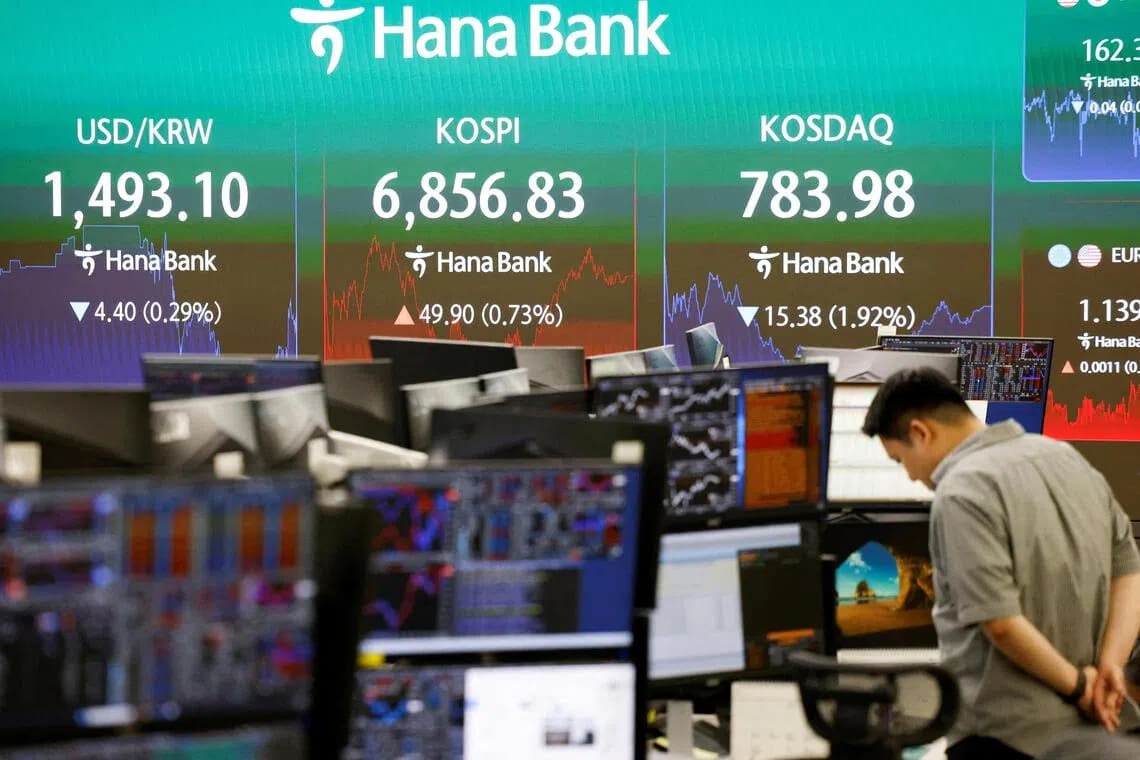
- ·Japanese and South Korean authorities conducted coordinated currency purchases on July 30, lifting the yen from 40-year lows and strengthening the won 2 percent to nine-month highs.
- ·The intervention aligned with US interests in lowering exchange rates to encourage Korean and Japanese investment in America, with the won and yen tightly coupled for amplified impact.
- ·The Bank of Japan held rates at 1 percent on July 31, leaving markets focused on whether monetary tightening will proceed fast enough to provide fundamental currency support.
Coordinated Currency Defense
Japanese and South Korean monetary authorities executed a rare synchronized intervention on July 30, purchasing their respective currencies in open-market operations. The yen climbed away from levels not seen in four decades, while the won strengthened 2 percent to reach its highest point in nine months.
Market participants described the move as unprecedented coordination between the two East Asian economies, with some suggesting possible involvement from US authorities. The timing aligned with the Bank of Japan's July 31 policy meeting, where the central bank maintained its benchmark rate at 1 percent as widely anticipated.
The yen traded at 160.64 per dollar following the intervention, after touching 157.8 during the coordinated buying. The won reached 1,437.62 per dollar on July 31, nearly 8 percent stronger for July overall.
Strategic Alignment
The intervention reflects converging policy interests across the Pacific. Lee Min-hyuk, an analyst at KB Kookmin Bank, noted that the won and yen move in tandem, making joint action more effective than isolated efforts. The coupling between the two currencies meant coordinated buying could amplify impact in both markets.
From a US perspective, elevated exchange rates had made Korean and Japanese investment in American projects more expensive in local currency terms. Bringing rates down removes a friction point for cross-Pacific capital flows, particularly as both economies face pressure to deploy manufacturing and technology investments stateside.
South Korea's foreign exchange authorities conducted what sources characterized as a rare dollar-selling operation. The won had touched a 17-year low of 1,561.50 in June before beginning its July recovery.
Corporate Repatriation Factor
The won's July strength coincided with significant corporate dollar repatriation. SK Hynix raised $26.5 billion through a US offering earlier in the month, with a portion of those proceeds converted back into won. The timing of the intervention capitalized on this natural dollar supply in the Korean market.
According to Lee at KB Kookmin Bank, authorities likely used the moment to shift market expectations. With the SK Hynix American depositary receipt conversion complete and Japan moving to support the yen, Seoul seized an opportunity to reinforce a lower exchange rate trajectory and disrupt speculative positioning.
Historical Context
Coordinated currency intervention between Japan and its partners remains rare. According to analysis by Spectra Markets, Japan has participated in joint operations with the US or other Group of Seven members five times since 1985, compared with eight solo interventions over the same period.
The Nikkei newspaper reported that Japan likely conducted large-scale yen purchases and that US authorities performed rate checks, a preliminary step often associated with intervention activity. Most historical joint interventions have coincided with turning points in dollar-yen direction, suggesting markets take coordinated action more seriously than unilateral moves.
Market Dynamics and Central Bank Policy
Despite the intervention, traders tested Tokyo's resolve the following day as the Bank of Japan held its policy meeting. The central bank kept rates at 1 percent, leaving investors to parse statements for signals on the pace of future tightening.
Masahiko Loo, senior fixed income strategist at State Street Investment Management, noted that the intervention signals continued discomfort at the Ministry of Finance with excessive yen weakness. The question now centers on whether interest rate policy will move fast enough to provide fundamental support for the currency, or whether authorities will need to return to the market.
The won's recovery has been sharper in percentage terms, supported by corporate flows and a broader reversal in sentiment toward emerging Asian currencies. July's 8 percent gain represents a significant shift from the pessimism that drove the currency to multi-decade lows just weeks earlier.
What Comes Next
Currency markets remain volatile as investors weigh the durability of the intervention effect against underlying rate differentials. The Bank of Japan's cautious approach to tightening continues to leave the yen vulnerable to carry trade dynamics, where investors borrow in low-yielding yen to fund higher-return assets elsewhere.
For South Korea, the test will be whether corporate repatriation flows persist and whether export competitiveness concerns emerge if the won continues to strengthen. Authorities in both countries have demonstrated willingness to act in concert, adding a new variable to trader calculations in Asia's most liquid currency pairs.
The coordinated move underscores a broader theme in Asian currency management: officials are increasingly willing to deploy reserves and coordinate across borders when exchange rate moves threaten financial stability or economic policy goals. Whether this intervention marks a turning point or a temporary reprieve will depend on how quickly fundamentals, particularly interest rate differentials, adjust to support the new levels.
RELATED STORIES
SoftBank Prices ¥1 Trillion Retail Bond in Largest Offering Since 2020
Aiko Nakamura · 3 min
Bank of Japan Eyes Rate Increase as Inflation Risks Mount
Cheng Wei-Lun · 4 min
Malaysian Ringgit Gains Ground as Markets Anticipate Fed and BOJ Rate Moves
Tran Quoc Bao · 2 min
Yen Climbs to Eight-Month High as Rate Hike Expectations Shift Sentiment
Jun-ho Seo · 3 min
Spot something wrong? Email editor@briefasia.com. We log every correction publicly.