Asia · Business
Taiwan GDP Growth Forecast Lifted to 11.6% on AI Chip Demand
Cathay Financial upgrades 2026 outlook as semiconductor exports hit record highs, though expansion is expected to moderate next year
KEY TAKEAWAYS
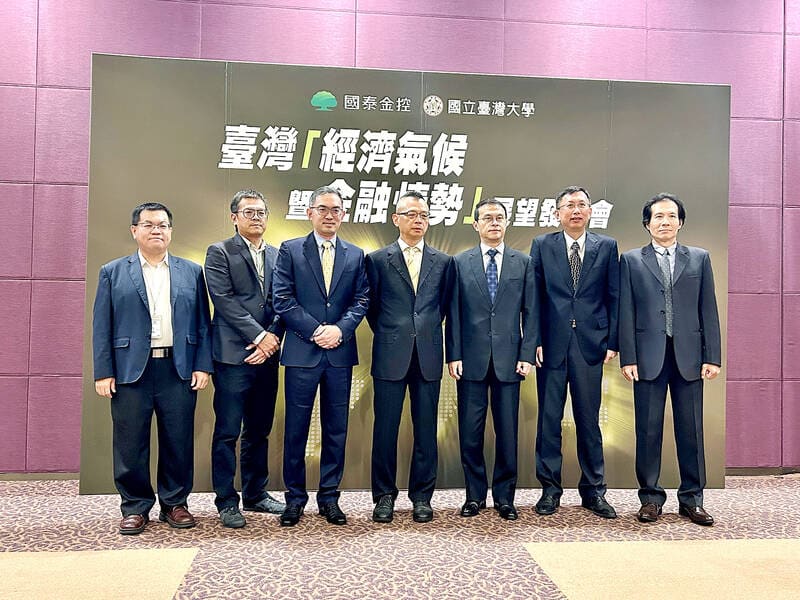
- ·Cathay Financial upgraded Taiwan's 2026 GDP growth forecast to 11.6 per cent from 10.1 per cent, citing stronger AI chip demand and record exports of US$82.4 billion in August.
- ·Growth is projected to slow to 5.1 per cent in 2027 due to a high comparison base, while inflation is expected to ease from 2.1 per cent this year to 1.9 per cent next year.
- ·The central bank is likely to hold rates steady at its September meeting despite inflation above the 2 per cent threshold, with policymakers monitoring US Federal Reserve policy before any tightening.
Forecast Upgraded on Sustained Tech Momentum
Cathay Financial Holding has revised Taiwan's economic growth projection for 2026 to 11.6 per cent, a substantial increase from its earlier estimate of 10.1 per cent. The upgrade reflects sustained demand for artificial intelligence hardware, particularly semiconductors, alongside continued capital investment in AI infrastructure across the island.
Taiwan's exports reached US$82.4 billion in August 2026, setting a new record. High-performance computing products and AI-related components drove the surge, underscoring the technology sector's outsized role in the economy. According to Cathay Financial, the research team now expects second-half growth of roughly 9 per cent, slightly above official projections.
The economy expanded 14 per cent in the first half of the year, with third-quarter growth anticipated to remain in double digits. National Central University economics professor Hsu Chih-chiang, who co-directs the research programme, noted that cloud service providers in the United States are increasing capital expenditure as enterprises adopt AI tools more widely, which in turn supports Taiwan's export and investment performance.
Moderation Expected in 2027
Growth is forecast to slow to 5.1 per cent in 2027, according to Cathay Financial. The deceleration stems from the high comparison base created by this year's exceptional expansion rather than any anticipated collapse in demand. AI-related orders are expected to remain a pillar of support, though the pace of increase will naturally ease.
Consumer price inflation is projected at 2.1 per cent for 2026, closely aligned with the government's 2.07 per cent estimate, before moderating to 1.9 per cent in 2027. Despite inflation running above the central bank's 2 per cent threshold for four consecutive months, Cathay Financial's research team does not expect a rate increase at the central bank's September board meeting. Policymakers are likely to monitor US Federal Reserve actions and domestic price trends before considering any tightening measures later in the year.
Housing and Bond Market Risks
The central bank is also expected to hold off on additional housing credit controls. Property transaction volumes have slowed and prices have largely stagnated, reducing the urgency for further intervention.
Hsu flagged rising US Treasury yields as a potential headwind for equities, particularly technology stocks. Higher bond yields could make fixed-income assets more attractive relative to shares, diverting capital flows. A more severe risk would be an inversion of the US yield curve, which historically signals concerns about economic outlook and could trigger broader market volatility.
Regional Context
Taiwan's performance stands in contrast to softening growth across parts of Asia. While semiconductor demand remains strong, notebook computer shipments globally are forecast to decline 8 per cent year-on-year to 167.9 million units in 2026, weighed down by high component costs and supply constraints. The AI boom has concentrated benefits in specific segments of the supply chain, primarily foundries and memory producers, rather than spreading evenly across the electronics industry.
Foundry leader TSMC reported a market share of 72.5 per cent in the second quarter, with revenue growing 12 per cent quarter-on-quarter to US$40.2 billion. The company's production lines are running at full utilisation on some nodes, driven by AI accelerator and smartphone chip orders.
The central bank's policy meeting on 19 September will provide further clarity on how policymakers balance inflation management with support for export-driven growth. For now, Taiwan's economy remains anchored by the global AI infrastructure build-out, with the island's semiconductor ecosystem positioned as a critical enabler of that expansion.
RELATED STORIES

Taiwan Consumer Confidence Falls Amid Record Growth Forecasts
Cheng Wei-Lun · 2 min
Taiwan Sees Fastest Economic Growth in Four Decades on AI Boom
Cheng Wei-Lun · 3 min

Eurasian Security Bloc Convenes as Shein Prices Hong Kong IPO
Cheng Wei-Lun · 3 min

South Korea's Chip Concentration Carries Lower Risk Than Taiwan's, Financial Analysis Shows
Cheng Wei-Lun · 3 min
Spot something wrong? Email editor@briefasia.com. We log every correction publicly.