Asia · Business
Taiwan Sees Fastest Economic Growth in Four Decades on AI Boom
The island's GDP is now forecast to expand 11.05 percent this year, driven by semiconductor exports and infrastructure investment from global cloud providers
KEY TAKEAWAYS
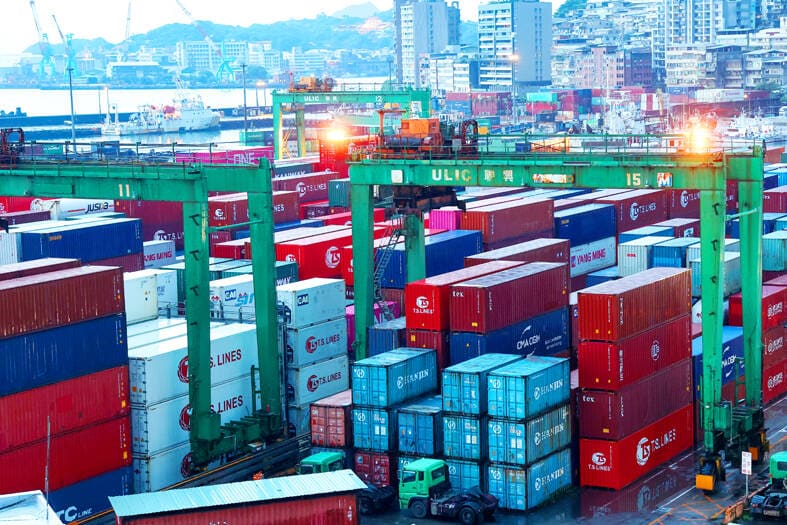
- ·Taiwan's economy is forecast to grow 11.05 percent in 2026, the fastest pace in 39 years, with exports projected to reach a record $903.6 billion.
- ·Private investment will climb 11.58 percent, driven by semiconductor capacity expansion to meet surging demand from US cloud providers for AI infrastructure.
- ·Non-technology exports rose 8.6 percent in the first seven months, signaling recovery in traditional manufacturing sectors beyond electronics.
Record Expansion Driven by Semiconductor Demand
Taiwan's economy is on track to grow 11.05 percent this year, the fastest pace in nearly four decades, according to updated projections from the Directorate-General of Budget, Accounting and Statistics. The revised forecast marks a 1.41 percentage point increase from the May estimate of 9.64 percent, reflecting the island's central role in the global artificial intelligence supply chain.
The first-half performance proved stronger than anticipated, with GDP expanding 14.15 percent. Third-quarter growth is projected at 11.42 percent before moderating to 5.37 percent in the final three months of the year. Exports are expected to reach a record $903.6 billion, up 41.19 percent from 2025, according to DGBAS data.
"Exports, the biggest contributor to economic growth, have been driven by demand for electronics, and information and communications technology products," DGBAS Minister Chen Shu-tzu said at a briefing in Taipei.
Cloud Infrastructure Spending Fuels Investment Surge
Private investment is forecast to climb 11.58 percent this year, the fastest rate in five years and 5.15 percentage points above the previous estimate. The upward revision stems largely from capacity expansion among semiconductor manufacturers, packaging and testing facilities, memory producers, and equipment suppliers.
Major cloud service providers in the United States continue to increase AI infrastructure spending, placing advance orders and signing long-term contracts to secure production capacity. Demand extends beyond cloud-based training systems to inference applications, AI agents, and edge devices, all of which require greater computing power.
Tsai Yu-tai, head of the DGBAS statistics department, noted that tight supplies of key electronic components, including memory chips, have pushed prices higher and supported export values. Taiwan's position at the center of the AI hardware ecosystem has allowed local firms to capture a disproportionate share of global spending on accelerators, customized chips, and advanced packaging.
Traditional Manufacturing Shows Signs of Recovery
Non-technology exports rose 8.6 percent in the first seven months of 2026, suggesting that traditional industries are emerging from a prolonged downturn. The figure indicates broader economic momentum beyond the semiconductor sector, according to DGBAS officials.
The recovery in conventional manufacturing, combined with robust demand for high-bandwidth memory and logic chips, has created a more balanced export profile than in recent years. Still, the electronics and information technology categories remain the dominant drivers of overall trade growth.
Inflation Edges Above Central Bank Threshold
The agency also raised its inflation forecast for 2026 to 2.07 percent, slightly above the central bank's 2 percent warning level. The adjustment reflects higher fuel prices amid ongoing tensions in the Middle East. Consumer prices rose 1.7 percent in the first half, while total wages increased 3.5 percent, resulting in positive real wage growth.
DGBAS officials characterized the inflation outlook as manageable, projecting a decline to 1.9 percent in 2027. The combination of rising nominal wages and moderate price increases has supported domestic consumption, which performed better than expected in the first half.
Outlook for 2027
For next year, the agency forecast economic growth of 6.04 percent, with exports projected to reach $1.07 trillion, an 18.7 percent increase from the revised 2026 estimate. The slower but still robust pace reflects expectations that AI infrastructure investment will remain elevated, even as the rate of expansion decelerates from this year's extraordinary levels.
The projections assume continued demand for advanced semiconductors and stable geopolitical conditions in East Asia. Any disruption to supply chains or shifts in trade policy could alter the trajectory, though DGBAS officials did not provide scenario analysis for alternative outcomes.
Taiwan's outperformance relative to other Asian economies underscores the strategic value of its semiconductor industry, which has become indispensable to global technology firms racing to deploy AI capabilities at scale. The island's ability to sustain growth will depend on maintaining technological leadership and managing capacity expansion without triggering bottlenecks or cost overruns.
RELATED STORIES

Taiwan's Economy Holds Red-Hot Signal for Seventh Month Running
Cheng Wei-Lun · 3 min
Taiwan's Machinery Sector Posts 18th Straight Month of Export Growth
Cheng Wei-Lun · 4 min
Taiwan Drone Suppliers Weigh US Production as Trump Tariffs Bite
Cheng Wei-Lun · 3 min

Formosa Plastics and Daicel Launch Chip Materials Joint Venture in Taiwan
Cheng Wei-Lun · 3 min
Spot something wrong? Email editor@briefasia.com. We log every correction publicly.