Asia · Trade
Taiwan Drone Suppliers Weigh US Production as Trump Tariffs Bite
Teco Electric and Thunder Tiger explore American manufacturing footprints after Washington imposes tariffs up to 100 percent on UAV imports, reshaping Asia-Pacific defense supply chains.
KEY TAKEAWAYS
- ·Teco Electric & Machinery is evaluating US drone component production after Washington imposed tariffs up to 100 percent on UAV imports, with Taiwan facing a 15 percent rate.
- ·Thunder Tiger Corp, which already operates facilities in California and Ohio, sees the tariff structure as an opportunity to secure Pentagon contracts by building a China-free supply chain.
- ·The tariffs take effect in 21 days for sensitive drone categories and 180 days for less critical components, giving Taiwanese suppliers a window to establish American manufacturing footprints.
Tariff Shock Prompts Supply Chain Rethink
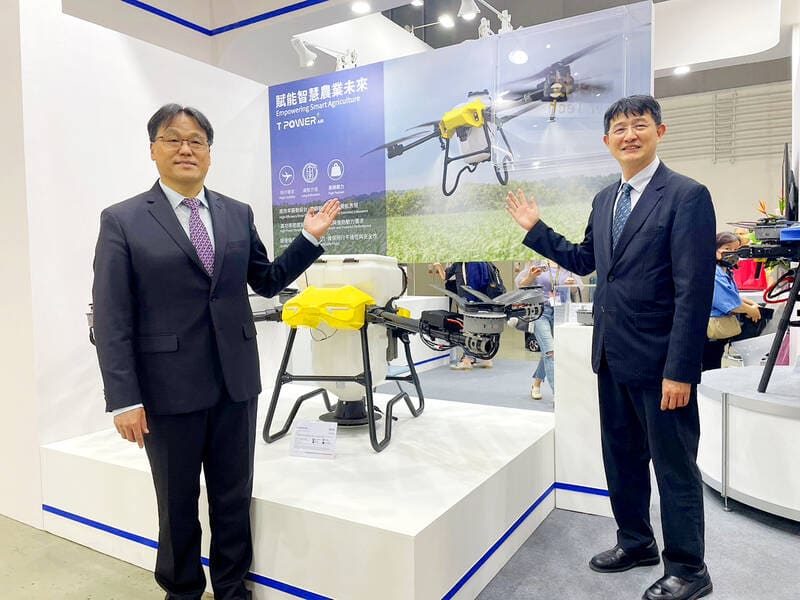
Teco Electric & Machinery Co announced it would assess building a drone component production facility in the United States following Washington's overnight proclamation imposing tariffs as high as 100 percent on certain uncrewed aerial vehicle imports. The Taipei-based firm, which specializes in power systems for commercial and agricultural drones, operates a manufacturing base in Taoyuan's Jhongli District and sees American expansion as a hedge against the new trade barriers.
The tariff structure, signed by President Donald Trump, targets drones above certain size thresholds or those carrying capabilities deemed sensitive for national security. Products from Taiwan face a 15 percent levy, matching rates for the European Union, Japan, South Korea, Switzerland, and Liechtenstein. The United Kingdom received a 10 percent rate. Full implementation begins 21 days after signing for sensitive categories and 180 days for less critical components, according to the White House.
Teco's drone power systems serve logistics operators, firefighting teams, solar panel maintenance crews, and agricultural sprayers. The company indicated that a US production footprint could shield it from margin compression as customers absorb higher landed costs.
Defense Contractors See Opportunity
Thunder Tiger Corp, a Taiwanese drone manufacturer with existing production lines in California and Ohio, framed the tariff regime as a supply chain realignment rather than a purely protectionist measure. The company believes Washington's move signals an intent to build a trusted supplier network free from Chinese dependencies, opening doors for Pentagon contracts as the Department of Defense tightens procurement standards.
Thunder Tiger's existing American footprint positions it to scale capacity quickly if defense orders materialize. The firm views the tariff architecture as validation of its earlier decision to establish dual-shore manufacturing, a strategy that now delivers competitive advantage as rivals scramble to adjust.
Divergent Exposure Among Taiwanese Firms
Not all Taiwan drone suppliers face immediate pressure. CUB Elecparts, which produces advanced driver-assistance systems and recently entered the drone countermeasure market, said its product categories fall outside the tariff scope. The company also noted that the United States represents a minor share of revenue, limiting direct impact. Still, CUB Elecparts pledged to monitor policy shifts across global defense markets as trade rules evolve.
E-Lead Electronic, a Changhua County supplier of augmented reality head-up displays that diversified into drones and precision engine components, said Europe remains its primary market for UAV products. The firm anticipates minimal fallout from the US tariffs, though it acknowledged that cascading policy changes in other jurisdictions could alter that calculus.
Broader Implications for Asia-Pacific Defense Tech
The tariff announcement underscores a broader pattern in which Washington leverages trade policy to reshape defense technology supply chains. Taiwan's position as a trusted partner affords it preferential treatment relative to mainland China, yet the 15 percent rate still imposes meaningful cost increases for exporters accustomed to tariff-free access.
For component makers like Teco, the calculus hinges on order volume and customer willingness to absorb price hikes. Establishing US production requires capital expenditure and operational complexity, but it also unlocks access to Department of Defense and Homeland Security procurement channels that increasingly mandate domestic or allied sourcing.
The 180-day grace period for non-sensitive components offers a window for companies to negotiate contracts, secure financing, and evaluate site locations. Industry observers expect Taiwan's Industrial Technology Research Institute and the Ministry of Economic Affairs to coordinate with affected firms on financing mechanisms and partnership opportunities with US state governments seeking to attract advanced manufacturing.
What Comes Next
Teco has not disclosed a timeline or investment figure for a potential US facility, describing the initiative as under assessment. Thunder Tiger's existing California and Ohio operations give it a head start, though scaling to meet Pentagon demand would require additional capital and workforce expansion.
The tariff structure also creates incentives for joint ventures between Taiwanese suppliers and American defense primes. Lockheed Martin, Northrop Grumman, and other contractors have publicly committed to diversifying their UAV component sourcing away from China, and Taiwan's technical capabilities in motors, batteries, and avionics make it a natural partner.
As the 21-day countdown to tariff implementation begins, Taiwan's drone sector faces a strategic inflection point. Companies that move decisively to establish American production may capture outsized market share in a defense procurement environment increasingly defined by supply chain security. Those that delay risk ceding ground to competitors already embedded in the US industrial base.
The Trump administration's tariff proclamation may be framed as a national security measure, but for Taiwan's drone suppliers, it represents a forced march toward binational manufacturing and a test of their ability to navigate the intersection of trade policy and defense strategy.
RELATED STORIES
Taiwan's Machinery Sector Posts 18th Straight Month of Export Growth
Cheng Wei-Lun · 4 min
Taiwan Sees Fastest Economic Growth in Four Decades on AI Boom
Cheng Wei-Lun · 3 min

Formosa Plastics and Daicel Launch Chip Materials Joint Venture in Taiwan
Cheng Wei-Lun · 3 min

Compal Bets on AI Servers With Triple-Digit Growth Target
Cheng Wei-Lun · 3 min
Spot something wrong? Email editor@briefasia.com. We log every correction publicly.