Sustainability · Energy
Oil Surges Past $88 as Tanker Attacks Choke Hormuz Strait
Crude climbed more than $1 per barrel Friday as shipping disruptions and stalled US-Iran talks tighten global supply through a channel carrying one-fifth of world oil flows.
KEY TAKEAWAYS
- ·Brent crude settled at $88.52 per barrel, up $1.45, with WTI gaining $1.15 to $82.40 Friday after tanker attacks in the Strait of Hormuz.
- ·Shipping traffic through the strait, which carries one-fifth of global oil and gas supply, has fallen below monthly averages since US-Israeli actions began in late February.
- ·US Treasury Secretary Scott Bessent said unprecedented economic isolation measures against Iran will be announced next week, as ceasefire talks remain stalled.
Supply Chokepoint Under Pressure
Crude futures rose sharply Friday as attacks on vessels transiting the Strait of Hormuz and diplomatic deadlock between Washington and Tehran raised immediate concerns about global energy flows. Brent settled at $88.52 per barrel, up $1.45, while US West Texas Intermediate closed at $82.40, gaining $1.15. Both benchmarks were on track for weekly advances exceeding 5 per cent.
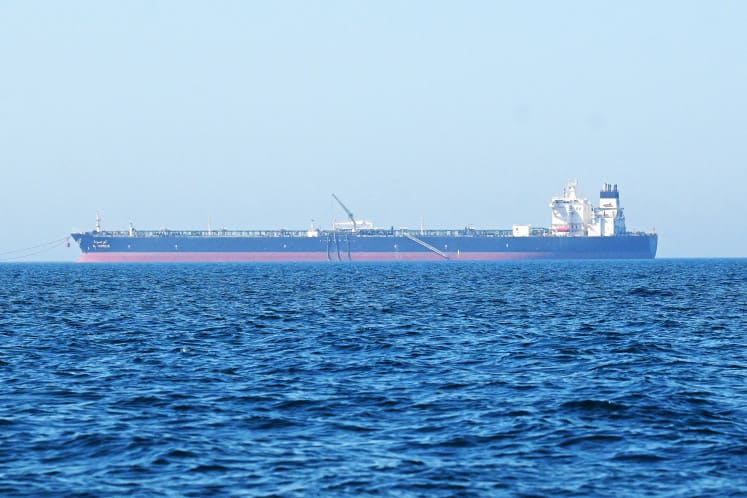
Two tankers operated by Abu Dhabi National Oil Company were struck while passing through the strait Thursday, according to the United Arab Emirates state news agency. The UAE government attributed the incident to Iranian forces. The waterway typically handles about one-fifth of global oil and liquefied natural gas supply, a volume that has fallen below monthly averages as tensions escalate.
Shipping traffic through the channel has slowed noticeably since late February, when military actions involving US and Israeli forces against Iranian targets began. The narrowing of this critical artery is compounding price pressure across refined products, with diesel reaching $180 per barrel and gasoline hitting $130 per barrel, far outpacing crude's own climb.
Economic Isolation on the Table
US Treasury Secretary Scott Bessent indicated Thursday that Washington is prepared to sustain a naval blockade of Iran indefinitely and will unveil additional economic measures next week. Speaking on Newsmax, Bessent said the coming actions would represent unprecedented levels of economic isolation. The comments followed the breakdown of ceasefire negotiations, with no clear path toward resolution.
Andrew Lipow, president of Lipow Oil Associates, noted that continued constraints on Hormuz traffic could trigger a "day of reckoning" for global markets. The disconnect between crude prices and refined product costs is already hitting consumers, particularly in economies reliant on imported fuels across Asia and the Middle East.
Black Sea Disruption Adds to Tightness
Separately, crude exports from Russia's Sheskharis terminal at Novorossiysk were halted Friday following a drone strike, according to three sources familiar with operations at the Black Sea port. The suspension adds another layer of disruption to global supply, coming at a moment when Middle Eastern flows are already constrained.
Phil Flynn, senior analyst at Price Futures Group, pointed to the combination of the Hormuz attacks and the Novorossiysk incident as the twin catalysts driving Friday's rally. The confluence of geopolitical risk in two major export corridors is tightening the physical market even as broader fundamentals suggest caution.
Demand Signals Remain Mixed
While supply risks dominate the immediate narrative, recent forecasts from OPEC and data from the US Energy Information Administration reveal a more complex picture. US crude inventories posted their largest weekly build in over three and a half years, signaling that demand growth may be softer than anticipated.
Norbert Rucker, head of economics and next generation research at Julius Baer, noted that storage levels are holding up better than feared. The latest reports from the International Energy Agency and EIA suggest that inventory buffers remain adequate, which could eventually pull prices lower if geopolitical tensions ease.
The tension between immediate supply risk and underlying demand weakness will likely shape market direction in the weeks ahead. For now, the physical constraints in the Strait of Hormuz and the Black Sea are overriding concerns about slower consumption growth, particularly in Asia's major economies. Traders are watching for any signal from Washington or Tehran that could shift the diplomatic stalemate, as well as for further clarity on OPEC production policy as the group navigates a tightening but uncertain market.
RELATED STORIES
Crude Markets Price in Hormuz Deal Uncertainty and Red Sea Tanker Strikes
Rajesh K. Iyer · 4 min
Crude Prices Climb as Iran Tightens Grip on Hormuz Transit
Priyanka V. Rao · 3 min
Oil Prices Drop Despite Middle East Tensions as Shipping Lanes Stay Open
Priyanka V. Rao · 3 min
Brent Crude Crosses $100 as Red Sea Tanker Strikes Add New Chokepoint Risk
Priyanka V. Rao · 3 min
Spot something wrong? Email editor@briefasia.com. We log every correction publicly.