Sustainability · Energy
Brent Crude Crosses $100 as Red Sea Tanker Strikes Add New Chokepoint Risk
Houthi attacks on Saudi vessels in Bab el-Mandeb compound supply fears as Strait of Hormuz traffic remains stalled, pushing oil prices to four-month highs
KEY TAKEAWAYS
- ·Brent crude settled at $100.69 per barrel, up 7 percent, after Houthi forces attacked two Saudi oil tankers in the Bab el-Mandeb Strait.
- ·Gulf loading activity has collapsed to 2.5 million barrels per day over the past week, down from 6 million bpd the prior month, as Strait of Hormuz traffic stalls.
- ·Goldman Sachs forecasts Brent could exceed $120 in the fourth quarter if Hormuz remains disrupted through 2027, with OPEC+ planning only a modest 188,000 bpd output increase for September.
Two Straits, One Supply Crisis
Brent crude settled above $100 per barrel on Thursday for the first time since May, propelled by twin disruptions across two of the world's most critical oil transit routes. The benchmark finished at $100.69, up 7 percent, while West Texas Intermediate climbed 6.2 percent to $92.19. Both marks represent the highest closes in over six weeks and cap a 40 percent rally since conflict with Iran erupted in February.
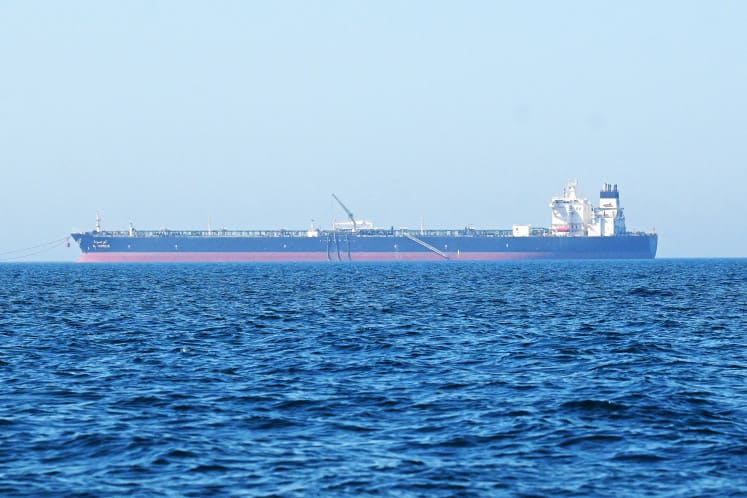
The immediate catalyst was a Houthi announcement that the group had attacked two Saudi Arabian oil tankers transiting the Bab el-Mandeb Strait, the narrow passage between the Red Sea and the Gulf of Aden. Saudi state media confirmed one vessel caught fire following an assault, though it did not identify the attacker. The incident marks a geographic expansion of the Iran conflict, with Houthi forces declaring a naval blockade on Saudi shipments through the strait.
Bab el-Mandeb and the Strait of Hormuz together account for roughly a quarter of global oil flows. While two Chinese supertankers carrying 4 million barrels of Saudi crude managed to exit the Red Sea via Bab el-Mandeb on Thursday, the attacks signal a widening threat envelope for tanker operators and Asian refiners dependent on Middle Eastern supply.
Hormuz Traffic Collapses
The Red Sea strikes compound an already severe bottleneck at Hormuz, where Iranian attacks on non-Iranian vessels have driven tanker traffic to historic lows. Loading activity within the Gulf has fallen to 2.5 million barrels per day over the past week, down from 6 million bpd over the prior month, according to UBS. Iranian oil loadings have dropped to zero from a pre-conflict range of 1.5 million to 2 million bpd, partly reflecting a US naval blockade targeting Iranian ports.
Iran's Revolutionary Guards said Thursday that the strait was under their control and "completely closed" while US military operations continued in the region. The Guards warned that no tanker would be permitted to enter or leave without Iranian coordination, a statement that underscores Tehran's willingness to weaponize the chokepoint even as it invites further US retaliation. President Donald Trump promised "major military punishment" for Iran and its Houthi allies.
Bob Yawger, director of energy futures at Mizuho, noted that crude is now within reach of the four-year high of $126.41. "With the possibility of a ground war seemingly increasing by the day, and tanker traffic restricted through two of the most active chokepoints in the world, the global economy is drawing down so fast it will eventually be running on fumes," he said.
Goldman Sees $120 Brent If Disruption Persists
Goldman Sachs projected that Brent could exceed $120 per barrel in the fourth quarter and average $100 in 2027 if Hormuz remains disrupted through next year. The bank flagged additional upside if the Bab el-Mandeb Strait and Suez Canal face sustained interference, a scenario that would force European and Asian buyers to reroute cargoes around Africa at significantly higher cost.
For now, OPEC+ appears ready to open the taps modestly. Seven core members, including Saudi Arabia, Russia, Iraq, Kuwait, Algeria, Kazakhstan, and Oman, are expected to raise their collective output target by roughly 188,000 barrels per day for September when they meet on August 2, according to three sources. The increment is small relative to the supply lost at Hormuz, and several OPEC+ producers face their own logistical or security constraints that limit their ability to pump more.
Asia's Supply Calculus
Asian refiners are scrambling for alternatives. Middle Eastern crude premiums have surged as buyers bid for barrels from West Africa, the Americas, and the North Sea. Yet those replacement flows take weeks to arrive, and freight costs have climbed in tandem with charter rates for tankers willing to navigate contested waters.
The dual chokepoint crisis also revives questions about strategic petroleum reserve policy across the region. Japan, South Korea, and India hold substantial stockpiles, but each government faces domestic political pressure to avoid premature drawdowns that could leave reserves depleted if the conflict deepens or drags into 2027.
For executives and treasury teams managing energy exposure, the message is unambiguous: the risk premium is back, and it reflects not just today's disruptions but the widening geography of threats to supply. The Red Sea was supposed to be a secondary concern compared to Hormuz. Now it is a second front, and the market is pricing in the possibility that neither passage will return to normal operations anytime soon.
RELATED STORIES
Oil Markets Hold Steady as Lebanon Clashes and Hormuz Threats Complicate US-Iran Talks
Priyanka V. Rao · 3 min
Oil Surges Past $88 as Tanker Attacks Choke Hormuz Strait
Priyanka V. Rao · 3 min
Crude Prices Climb as Iran Tightens Grip on Hormuz Transit
Priyanka V. Rao · 3 min
Crude Markets Price in Hormuz Deal Uncertainty and Red Sea Tanker Strikes
Rajesh K. Iyer · 4 min
Spot something wrong? Email editor@briefasia.com. We log every correction publicly.