Asia · Trade
India's Chinese Import Bill Climbs Despite Self-Reliance Push
New Delhi's manufacturing drive has yet to curb dependence on electronics, machinery and chemical inputs from across the Himalayas
KEY TAKEAWAYS
- ·India's imports from China have continued to rise through 2026 despite production incentive schemes aimed at reducing reliance on Chinese electronics, machinery and chemical inputs.
- ·Domestic manufacturers still depend on Chinese suppliers for printed circuit boards, active pharmaceutical ingredients and industrial machinery due to scale, pricing and delivery advantages.
- ·The bilateral trade deficit is widening as policy measures add compliance costs but fail to redirect sourcing to Indian or alternative suppliers in the near term.
The Paradox Deepens
India's trade relationship with China has entered another year of contradictions. Despite a sustained policy focus on reducing reliance on Chinese goods, the value of imports from China has climbed steadily, underlining structural dependencies that tariffs and incentive schemes have yet to dislodge.
The trend surfaces across categories that matter to India's industrial ambitions. Electronics components, machinery for manufacturing lines, active pharmaceutical ingredients and specialised chemicals arrive from Chinese ports in volumes that have grown rather than shrunk. Trade data through the first half of 2026 show the bilateral deficit widening, not narrowing.
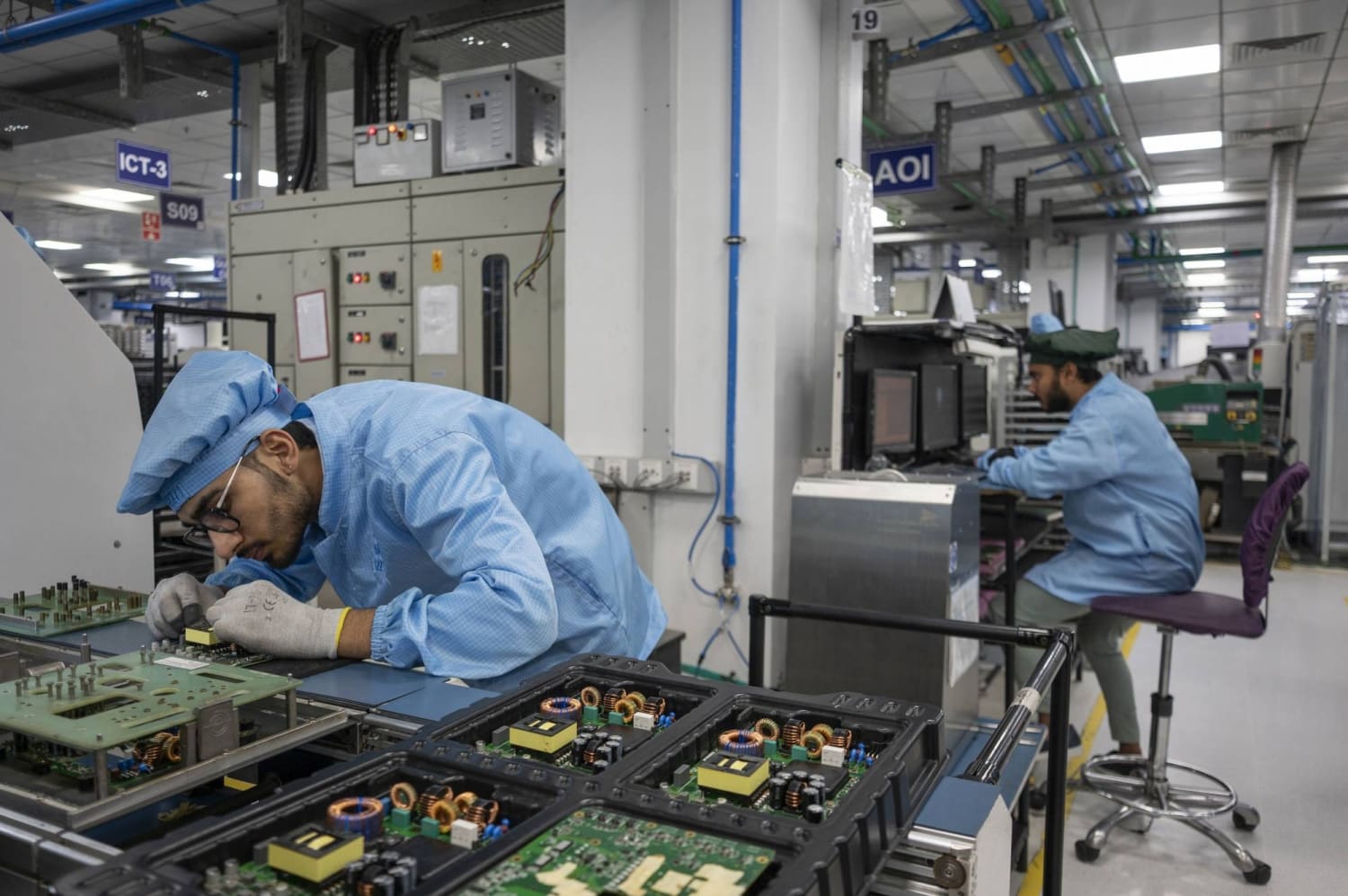
New Delhi has rolled out production-linked incentive programmes covering mobile phones, solar panels, batteries and other strategic sectors. The schemes aim to pull investment into domestic capacity and wean manufacturers off imports. Yet the electronics sector, a flagship target, still draws heavily on Chinese printed circuit boards, display modules and semiconductor packaging. A factory floor in Bengaluru assembling smartphones may carry an Indian label, but the bill of materials often traces back to Shenzhen or Dongguan.
Where Substitution Stalls
The persistence of Chinese imports reflects gaps that financial incentives alone cannot bridge quickly. Manufacturing ecosystems depend on supplier networks, logistics infrastructure and technical know-how accumulated over decades. China's scale in intermediate goods gives it pricing power and delivery speed that nascent Indian suppliers struggle to match.
Chemical inputs for pharmaceuticals offer a case study. Indian drugmakers have tried to diversify sourcing, but Chinese producers dominate the active ingredient market for antibiotics, vitamins and generic compounds. Attempts to build domestic capacity have met delays in permitting, land acquisition and feedstock availability. In the meantime, purchase orders continue to flow eastward.
Machinery imports follow a similar pattern. Textile mills, automotive component plants and food processing units rely on Chinese equipment for precision tooling, automation and quality control. Domestic machine tool makers exist but lack the range and after-sales support that established Chinese exporters provide. For a manufacturer racing to meet a customer deadline, the choice tilts toward the supplier with proven inventory and shorter lead times.
Policy Meets Reality
India's government has layered non-tariff measures atop existing duties. Import licensing requirements, quality certification delays and port inspections have slowed the flow of certain Chinese goods. Yet these frictions have not redirected sourcing so much as added cost and complexity. Compliance paperwork lengthens, but the underlying economic logic of the supply chain holds.
The production incentive schemes have notched some successes. Mobile phone assembly has grown, and India now exports handsets to markets in Asia and Africa. Solar module production has expanded, reducing the share of imports. But assembly is not the same as value addition. The upstream components, the parts that carry higher margins and technical complexity, remain largely imported.
Trade negotiators in New Delhi face a dilemma. Cutting off Chinese imports outright would disrupt production lines and raise costs for consumers. Allowing imports to continue unchecked undermines the self-reliance narrative and perpetuates the deficit. The compromise has been incremental, a mix of targeted restrictions and selective openings that satisfy neither camp fully.
What Comes Next
The trajectory of India's import bill will hinge on how quickly domestic suppliers can scale and whether multinational firms relocating from China choose India as a destination. Vietnam, Thailand and Indonesia compete for the same investment, often with simpler regulatory frameworks and established industrial zones.
Infrastructure bottlenecks remain. Power reliability, port turnaround times and freight costs still disadvantage Indian manufacturers in sectors where margins are thin. A component maker in Tamil Nadu may have lower labour costs than a counterpart in Guangdong, but if the electricity cuts out twice a week and the nearest container terminal is congested, the cost advantage evaporates.
The geopolitical dimension adds another variable. Border tensions and strategic rivalry have prompted Indian policymakers to view trade with China through a security lens. Restrictions on Chinese investment in sensitive sectors and scrutiny of technology partnerships have multiplied. Yet trade flows have proven more resilient than diplomatic temperature would suggest. Commerce adapts, finding channels even when official rhetoric hardens.
For now, the data tell a straightforward story. India wants to buy less from China. It continues to buy more. The gap between ambition and outcome measures the distance still to travel in building the supply chains that policy envisions.
RELATED STORIES

China Shifts Pharma Strategy From Manufacturing to Drug Ownership
Priyanka V. Rao · 3 min
Eurasian Security Bloc Convenes as Shein Prices Hong Kong IPO
Cheng Wei-Lun · 3 min
India's 7.8% GDP Growth Sparks Debate Over Revised Base Year Calculations
Rajesh K. Iyer · 3 min

Godrej Industries Commits $2.1 Billion to Haryana Expansion
Rajesh K. Iyer · 3 min
Spot something wrong? Email editor@briefasia.com. We log every correction publicly.