Technology · Dev
South Korean Battery Giants Pour $2.84 Billion Into Capacity Despite EV Demand Slump
LG Energy Solution, Samsung SDI, and SK On maintain aggressive capital spending in first half of 2026, signaling long-term confidence in electrification despite near-term headwinds
KEY TAKEAWAYS
- ·South Korea's three largest battery makers invested 4.32 trillion won in production facilities during the first half of 2026, maintaining expansion plans despite slowing global EV demand.
- ·LG Energy Solution, Samsung SDI, and SK On are prioritizing North American and European capacity tied to long-term automaker contracts and government subsidies.
- ·The sustained capital spending contrasts with Chinese competitors slowing capacity additions, as Korean firms bet on technology leadership and market recovery by 2028.
Betting Through the Downturn
South Korea's battery manufacturing triumvirate is holding the line on capital spending. LG Energy Solution, Samsung SDI, and SK On collectively deployed 4.32 trillion won ($2.84 billion) on plant construction and equipment upgrades during the first six months of 2026, according to first-half business reports from the three companies. The investment pace remains largely unchanged from prior periods, even as electric vehicle demand across major markets continues to soften.
The bulk of the capital went toward expanding production capacity, building new lines, and modernizing existing facilities. All three companies are proceeding with previously announced expansion roadmaps, suggesting they view the current demand plateau as a cyclical blip rather than a structural shift.
Diverging Strategies, Shared Conviction
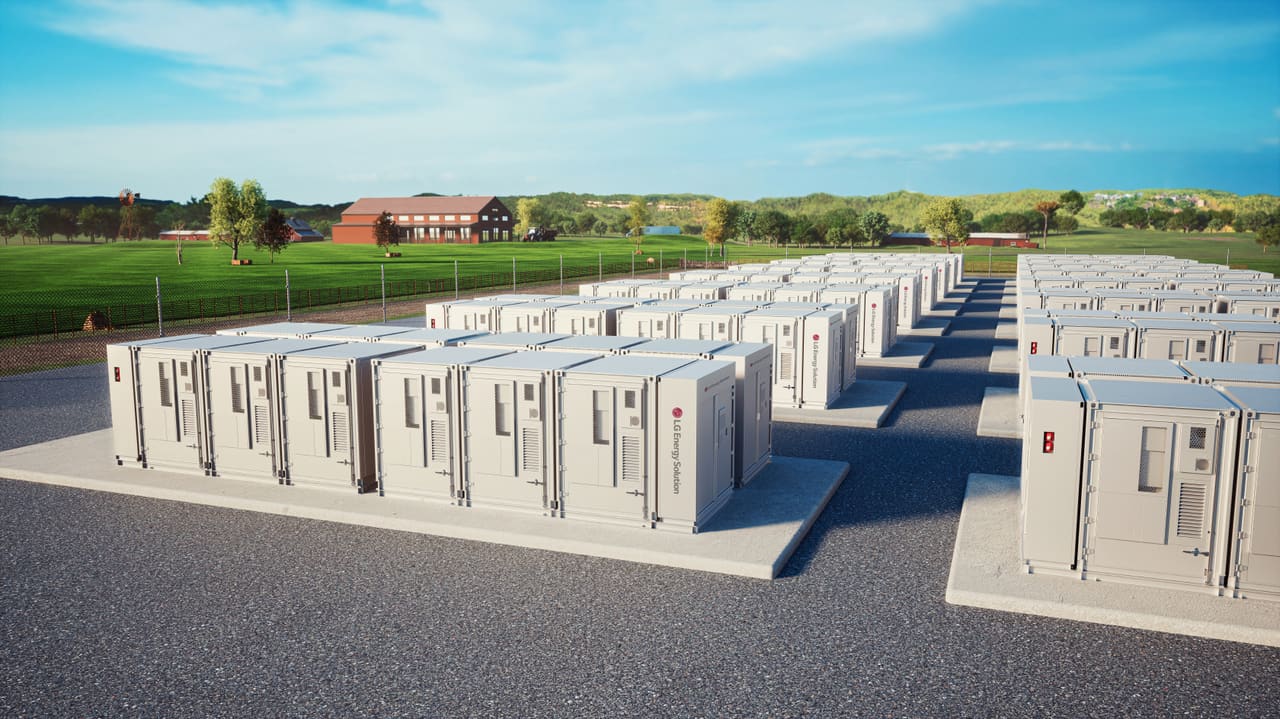
LG Energy Solution, the world's second-largest battery maker by market share, accounted for the largest portion of the spending. The company is ramping up capacity at plants in North America and Europe, where automakers are locked into multi-year supply contracts and government subsidies remain intact. Its joint ventures with General Motors and Stellantis continue to advance on schedule, with several gigafactories in various stages of commissioning.
Samsung SDI has concentrated its investment on high-nickel chemistries and prismatic cell formats, targeting premium EV segments where price sensitivity is lower. The company is expanding its plant in Hungary and has begun site preparation for a second facility in the United States, backed by commitments from BMW and other European automakers.
SK On, the most financially stretched of the three, has maintained spending levels despite posting consecutive quarterly losses. The company is prioritizing completion of plants already under construction in the United States and China, rather than launching new projects. Its strategy reflects a calculation that pulling back now would forfeit hard-won customer relationships and cede market share to Chinese competitors at a critical juncture.
The Asia Angle
The sustained investment by South Korean battery makers stands in contrast to the more cautious posture adopted by some Chinese peers, who have begun to slow capacity additions in response to inventory buildups and margin compression. Korean firms are betting that their technology lead in high-energy-density cells and established positions with Western automakers will allow them to capture disproportionate share as the market recovers.
The capital intensity also reflects the structural realities of the battery industry. Production lines require 18 to 24 months from groundbreaking to commercial output, meaning investment decisions made today determine competitive positioning in 2028 and beyond. Companies that hesitate risk being unable to meet demand when growth resumes, a lesson learned during previous technology cycles in semiconductors and displays, industries where Korean firms have historically thrived.
Government support remains a tailwind. South Korea's Ministry of Trade, Industry and Energy has designated battery manufacturing as a strategic sector, offering tax incentives and expedited permitting for capacity expansions. The U.S. Inflation Reduction Act, despite ongoing political uncertainty, continues to provide production credits that improve the economics of North American plants, where much of the Korean investment is concentrated.
Market Realities and Long Bets
The spending commitment comes as global EV sales growth has decelerated sharply. Penetration rates in China have plateaued near 35 percent, while European markets face headwinds from the phase-out of purchase subsidies and macroeconomic weakness. In the United States, EV adoption remains concentrated in a handful of coastal states, with the mass-market breakthrough still elusive.
Battery makers are nonetheless locked into their expansion plans by contractual obligations and the front-loaded nature of capital expenditure. Once construction begins, the marginal cost of completion typically exceeds the cost of seeing projects through, even if near-term utilization rates disappoint.
The Korean battery sector's capital discipline will face its real test in the second half of 2026 and into 2027. If demand remains weak and automakers begin to push back delivery schedules or renegotiate volumes, the industry could face a painful period of underutilized capacity and compressed margins. But if the current slowdown proves transient, as Korean executives are wagering, today's investments will position them to dominate the next phase of electrification across Asia, Europe, and North America.
RELATED STORIES

LG Electronics Logs Record Appliance Subscription Revenue in First Half
Cheng Wei-Lun · 3 min
LG and Nvidia Push for 100,000 Hours of Humanoid Robot Training Data
Cheng Wei-Lun · 3 min
Samsung Fold8's Wider Aspect Ratio Pulls New Buyers into Foldable Market
Jun-ho Seo · 3 min
SK Keyfoundry Commits $64 Million to Expand 8-Inch Wafer Capacity
Cheng Wei-Lun · 3 min
Spot something wrong? Email editor@briefasia.com. We log every correction publicly.