Asia · Business
Seoul Finance Chief Pitches Manufacturing and AI Strengths to US Executives
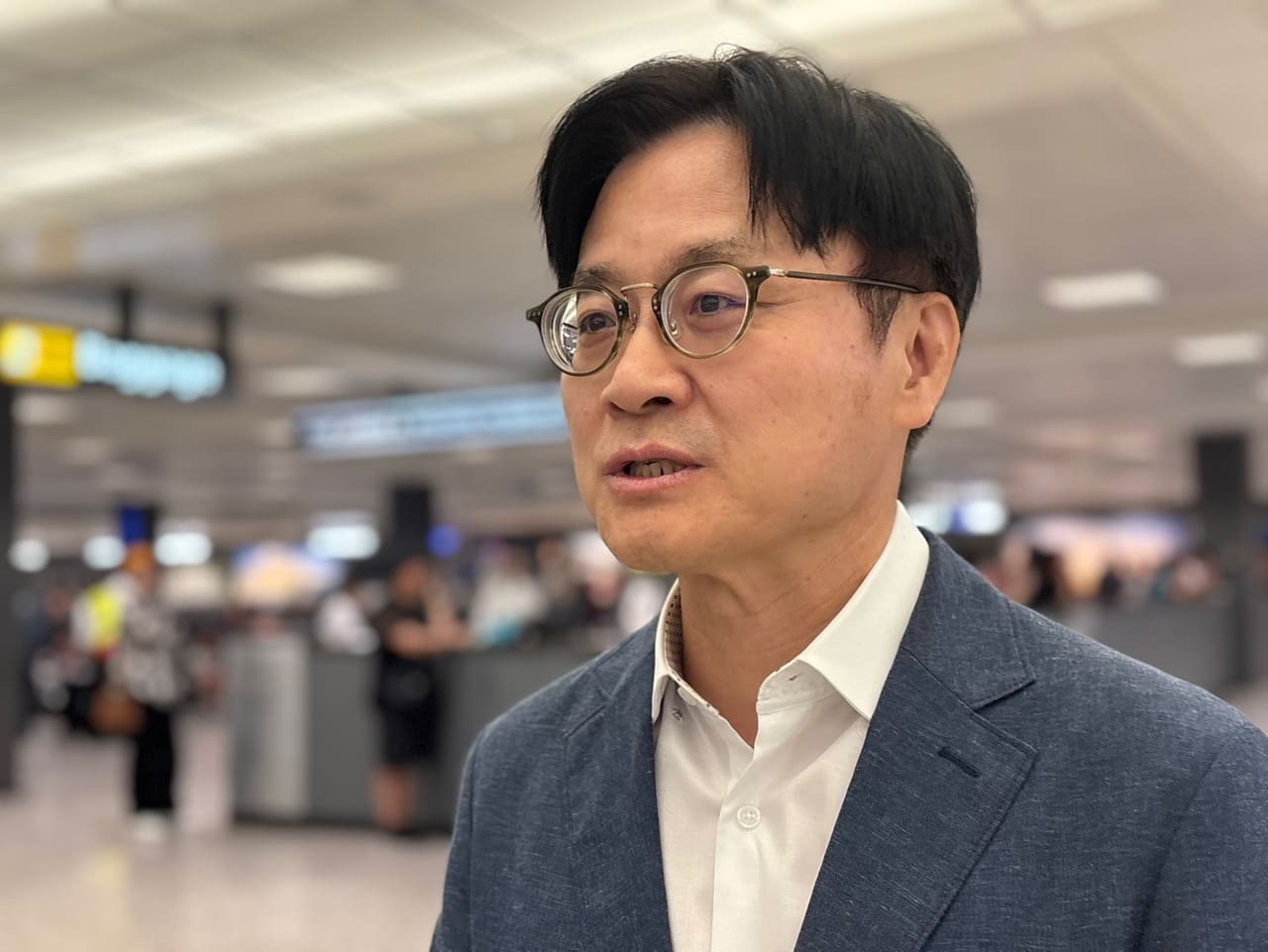
Deputy Prime Minister Koo Yun-cheol outlined Korea's investment case to American business leaders, emphasizing industrial capacity and tech collaboration opportunities.
KEY TAKEAWAYS
- ·Korea's finance minister addressed 150 US business leaders in Seoul, highlighting manufacturing capacity and AI cooperation as investment priorities.
- ·The pitch included pledges to continue financial-market reforms aimed at improving corporate governance and transparency for foreign investors.
- ·The outreach comes as Korea seeks to attract US capital amid regional trade tensions and efforts to diversify supply chains away from China.
Investment Appeal in Seoul
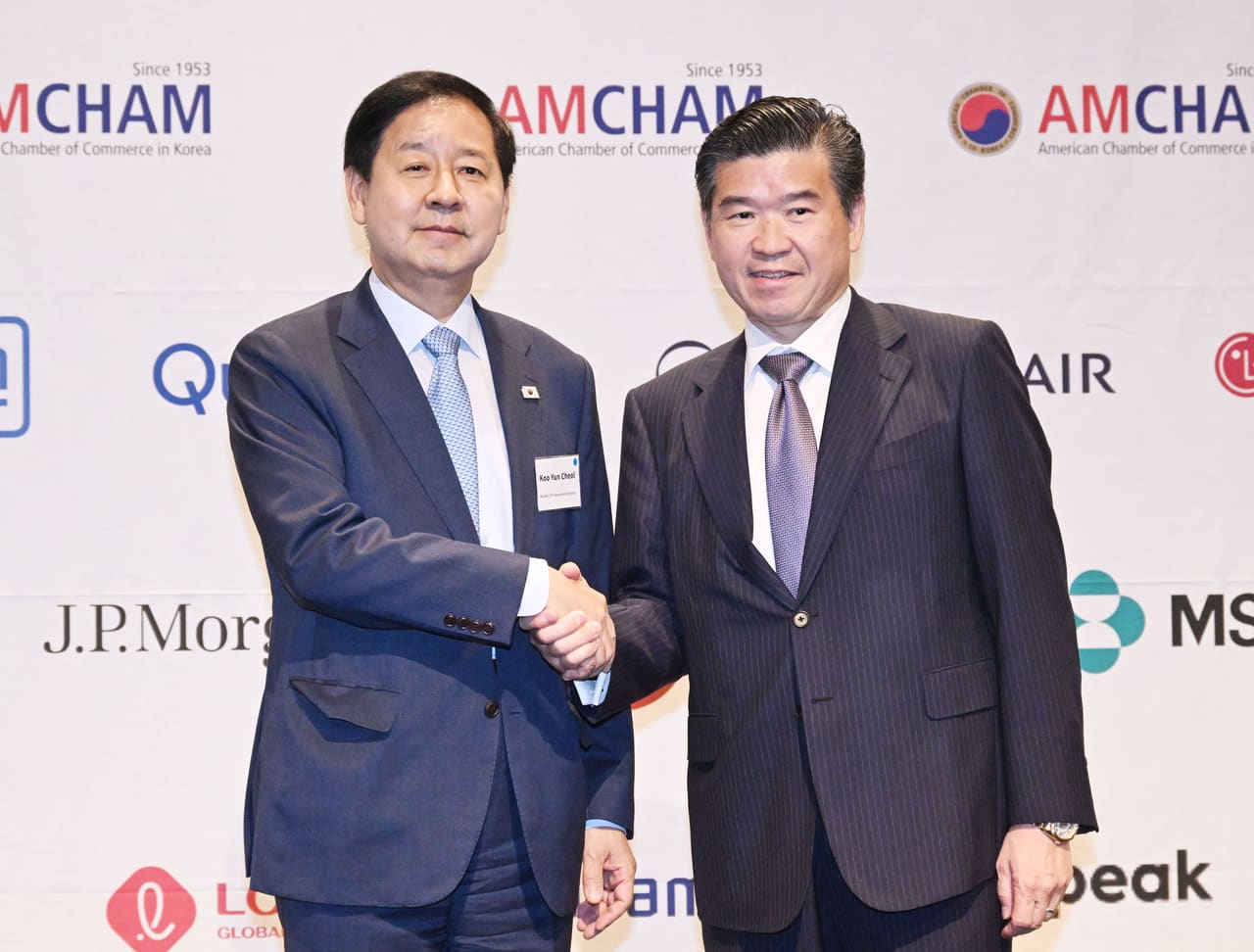
Deputy Prime Minister and Finance Minister Koo Yun-cheol presented Korea's economic strategy to US investors Wednesday, framing the nation's industrial infrastructure and technology sector as key drivers for increased American capital flows and joint development in artificial intelligence.
Speaking at a luncheon organized by the American Chamber of Commerce in Korea, Koo addressed approximately 150 attendees including government representatives and corporate executives from both Korean and multinational firms. The gathering represented one of the highest-profile engagements between Seoul's economic leadership and the American business community this year.
Manufacturing and Technology Assets
Koo's pitch centered on Korea's established manufacturing capabilities, positioning them as a foundation for partnerships that extend beyond traditional production into advanced technology domains. The country maintains significant capacity in semiconductors, electric vehicle batteries, and precision manufacturing, sectors where US firms have been seeking supply-chain diversification and production partners closer to key Asian markets.
The finance minister also emphasized artificial intelligence as a focal point for bilateral cooperation. Korea has been working to position itself as a regional AI hub, with major conglomerates investing heavily in data infrastructure and research facilities. The government has allocated budget resources toward AI research clusters and regulatory frameworks designed to attract foreign technology investment.
Financial Market Reforms
Alongside the investment pitch, Koo reaffirmed the government's commitment to ongoing financial-market reforms. Seoul has been under pressure from international investors to improve corporate governance standards, enhance market transparency, and address concerns about conglomerate structures that have historically limited minority shareholder rights.
Recent policy discussions have included proposals to strengthen disclosure requirements, adjust regulations around cross-shareholdings within business groups, and streamline capital-market rules to align more closely with standards in developed markets. The reforms are part of a broader effort to boost Korea's valuation multiples, which have lagged behind regional peers despite strong corporate earnings in key industries.
Strategic Context
The outreach to US business leaders comes as Korea navigates a complex regional economic environment. Trade tensions between Washington and Beijing have created both opportunities and challenges for Korean exporters and manufacturers. Companies based in Korea have benefited from some US firms' efforts to reduce dependence on Chinese production, but they also face exposure to potential supply-chain disruptions and technology-export restrictions.
Korea's semiconductor industry, in particular, sits at the intersection of these dynamics. Major chipmakers have substantial operations in both China and the United States, and policy decisions in Washington around export controls and manufacturing incentives directly affect their investment calculus.
Business Community Response
The American Chamber of Commerce in Korea has been a vocal advocate for regulatory clarity and market access, regularly publishing position papers on taxation, labor policy, and intellectual property protection. The chamber represents more than 800 member companies, many of which operate manufacturing, research, or sales operations in Korea.
US direct investment in Korea has grown steadily over the past decade, though it remains concentrated in a handful of sectors. Manufacturing, particularly in chemicals and electronics components, accounts for a significant share, while professional services and finance have seen more gradual expansion.
Policy Coordination
Koo's presentation aligns with broader government efforts to attract foreign capital amid domestic growth headwinds. Korea's export-driven economy has faced slowing demand in key markets, and policymakers have sought to offset weaker external conditions through investment promotion and structural reforms.
The finance ministry has also been coordinating with the Ministry of Trade, Industry and Energy on industrial policy initiatives, including subsidies for strategic sectors and infrastructure investments designed to support advanced manufacturing. These efforts are intended to reinforce Korea's competitive position in global supply chains and attract multinational corporations looking to establish or expand regional production bases.
The luncheon represents part of a sustained engagement strategy between Seoul's economic officials and the international business community, with similar events planned for other investor groups in the coming months.
RELATED STORIES
Seoul Rejects Chip Investment Reports Amid Washington Trade Talks
Cheng Wei-Lun · 2 min
South Korea's Hanwha Secures First US Army Artillery Contract
Jun-ho Seo · 4 min
LG and Nvidia Push for 100,000 Hours of Humanoid Robot Training Data
Cheng Wei-Lun · 3 min
Seoul Races to Salvage $200 Billion US Investment Rollout
Cheng Wei-Lun · 3 min
Spot something wrong? Email editor@briefasia.com. We log every correction publicly.