Asia · Politics
Seoul Rejects Chip Investment Reports Amid Washington Trade Talks
South Korea's Industry Ministry pushes back on claims that semiconductors are under discussion for first US investment commitment as minister holds tariff negotiations
KEY TAKEAWAYS
- ·South Korea's Industry Ministry has denied that semiconductors are being considered as the first project under Seoul's US investment commitments, contradicting local media reports.
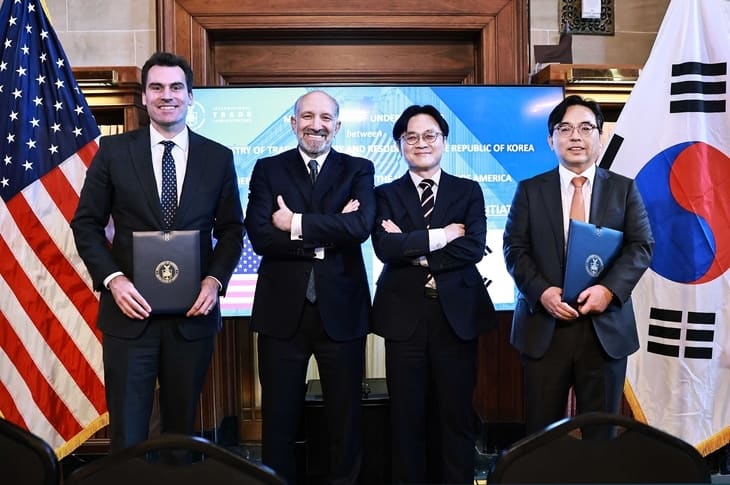
- ·The denial comes as Industry Minister Kim Jung-kwan conducts final-stage negotiations in Washington on both the investment framework and related tariff issues.
- ·The ministry's statement leaves unclear what sector will actually form the first strategic investment project under the bilateral package being discussed.
Ministry Issues Swift Denial
South Korea's Industry Ministry moved quickly to shut down speculation about semiconductor investments on Tuesday, issuing a statement that explicitly rejected claims circulating in domestic media. The ministry's position is clear: chips are not on the table as the inaugural project under Seoul's broader US investment package.
The denial comes at a sensitive moment. Industry Minister Kim Jung-kwan is currently in Washington conducting what officials describe as final-stage discussions on both the investment framework and related tariff matters. The timing suggests Seoul wants to control the narrative before any formal announcements emerge from the talks.
The Context Behind the Pushback
The clarification follows reporting by a South Korean newspaper that initially suggested semiconductors were being floated as a candidate for the first strategic investment commitment. That report, now contradicted by the ministry, had sparked immediate interest given the sector's geopolitical weight and the ongoing competition between Washington and Beijing over advanced chip manufacturing.
South Korea sits at a critical junction in the global semiconductor supply chain. Its two major players control significant portions of memory chip production, and both have faced pressure to expand manufacturing capacity in the United States under various incentive programs. Any official commitment linking chips to a new investment framework would carry implications far beyond a single factory announcement.
What Remains Unclear
The ministry's statement addresses what the first investment project is not, but leaves open the question of what it might actually be. Seoul has been negotiating with Washington on multiple fronts, including tariff relief and market access, and the investment package appears designed to function as part of a broader economic arrangement.
Minister Kim's presence in Washington for what are described as last-minute talks suggests that some form of agreement may be approaching finalization. The decision to publicly rule out semiconductors indicates that Seoul is either protecting a different sector for the announcement or managing expectations around what the investment commitment will entail.
Regional Trade Dynamics
The negotiations unfold against a backdrop of shifting trade relationships across Asia. Washington has been pushing allied governments to commit to manufacturing investments on US soil, particularly in sectors deemed critical to national security. Seoul has been balancing those requests against its own industrial policy goals and its complex economic relationship with China, which remains a major market for South Korean exports.
The semiconductor sector has become a flashpoint in these negotiations precisely because of its strategic importance. Any major investment decision in that space would signal not just an economic commitment but a geopolitical alignment, which may explain the ministry's swift move to tamp down speculation.
Next Steps
With Minister Kim still in Washington, observers will be watching for any joint statements or announcements that might clarify what the first investment project will actually involve. The ministry's denial suggests that when an agreement does emerge, it will cover a different industrial sector entirely, though officials have not indicated which one.
The outcome of these talks will set a precedent for how Seoul structures future investment commitments with Washington and may influence how other Asian governments approach similar negotiations. For now, the only certainty is that semiconductors, despite their centrality to both economies, are not part of the opening move.
RELATED STORIES
Seoul Races to Salvage $200 Billion US Investment Rollout
Cheng Wei-Lun · 3 min
South Korea's Hanwha Secures First US Army Artillery Contract
Jun-ho Seo · 4 min
Seoul Finance Chief Pitches Manufacturing and AI Strengths to US Executives
Cheng Wei-Lun · 3 min
SK Keyfoundry Commits $64 Million to Expand 8-Inch Wafer Capacity
Cheng Wei-Lun · 3 min
Spot something wrong? Email editor@briefasia.com. We log every correction publicly.