Asia · Business
Seoul Races to Salvage $200 Billion US Investment Rollout
Working-level hurdles threaten South Korea's plan to announce first tranche of projects by month's end, as bilateral talks intensify in Washington
KEY TAKEAWAYS
- ·South Korea's $200 billion investment package for the United States has encountered concrete working-level issues in final coordination stages, jeopardizing late August announcement plans.
- ·Industry Minister Kim Jung-kwan confirmed the complications during arrival in Washington, signaling high-level diplomatic efforts to resolve operational hurdles before project unveiling.
- ·The package represents one of Asia's largest bilateral capital commitments and serves as a strategic anchor for Seoul amid trade volatility and supply chain realignment pressures.
Timeline Under Pressure
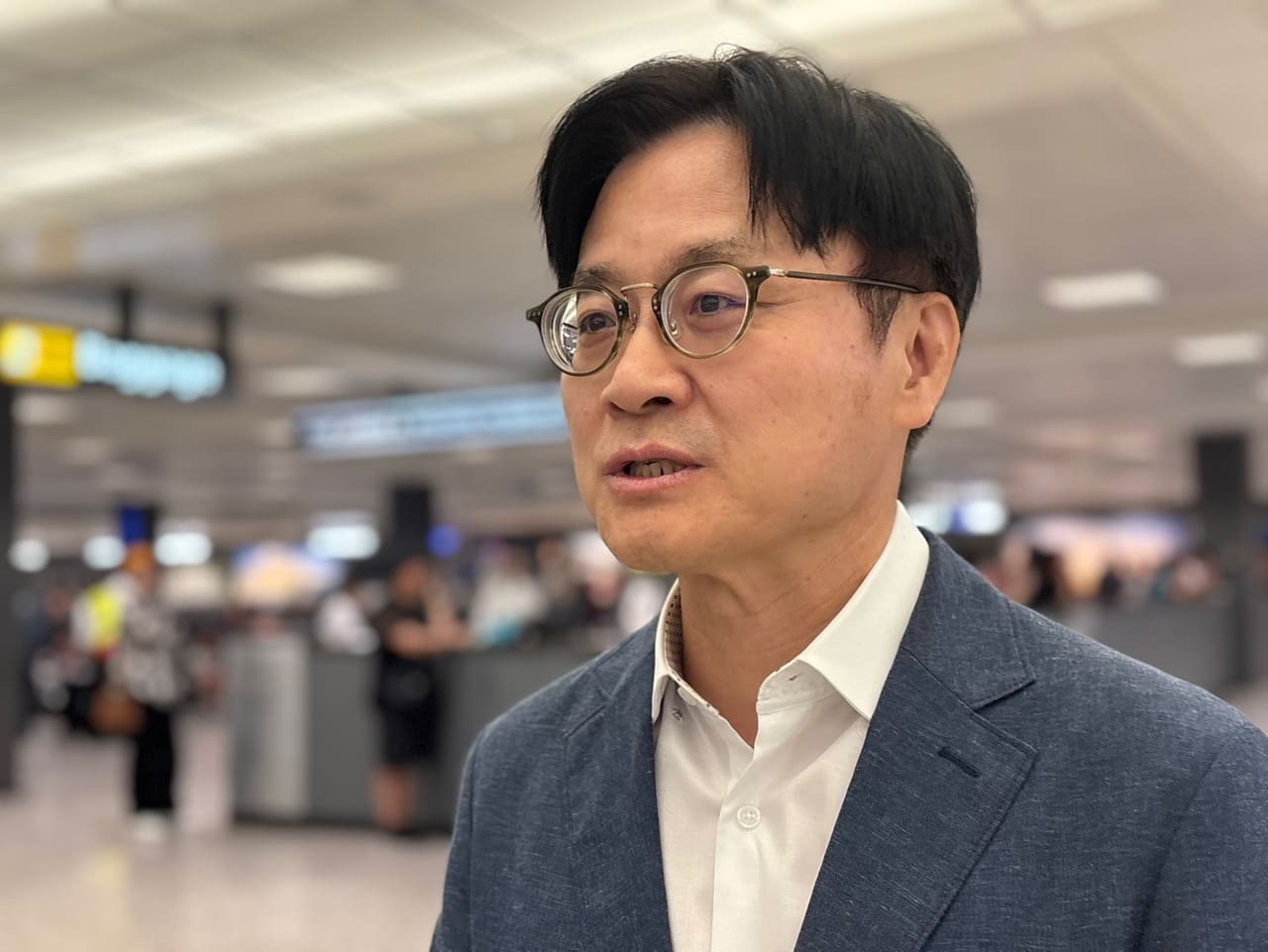
South Korea's ambitious $200 billion investment commitment to the United States has hit procedural roadblocks just weeks before its planned unveiling, according to Industry Minister Kim Jung-kwan. Speaking to media at Dulles International Airport outside Washington on Sunday, Kim acknowledged that concrete, working-level complications have surfaced in the final stages of coordination between Seoul and the US government.
The investment package, one of the largest bilateral capital commitments in recent Asia-Pacific economic diplomacy, was originally scheduled for announcement in late August or early September. That timeline now appears uncertain as technical negotiations drag into their closing phase.
What's at Stake
The $200 billion figure represents a significant expansion of South Korean corporate presence across US manufacturing, technology, and infrastructure sectors. Seoul has positioned the package as a strategic anchor in its relationship with Washington, particularly as both governments navigate trade policy volatility and supply chain realignment pressures across semiconductors, batteries, and advanced manufacturing.
Kim's comments suggest the complications are operational rather than political. The phrase "working-level issues" typically signals disputes over implementation details: tax treatment, local content requirements, permitting timelines, or equity structures. These are the mechanics that can delay or derail even politically agreed deals.
For South Korea, the stakes extend beyond capital deployment. The investment package is central to Seoul's effort to lock in economic ties with Washington independent of shifting US trade postures. It also serves as a hedge against protectionist measures that have periodically targeted Asian exporters, including South Korean automakers and electronics firms.
Pressure Points in Bilateral Coordination
The minister's arrival in Washington underscores the urgency. High-level shuttles between Seoul and the US capital have intensified in recent weeks, with officials from South Korea's Ministry of Trade, Industry and Energy working alongside counterparts at the US Department of Commerce and the Treasury.
Industry observers note that large-scale investment announcements often stumble on granular issues: differing interpretations of subsidy eligibility under the CHIPS Act or Inflation Reduction Act, disputes over workforce training obligations, or disagreements on intellectual property protections at joint ventures. Any of these could explain the current delay.
Seoul has not disclosed which sectors or companies are included in the first tranche of projects. However, previous statements from South Korean officials have pointed to semiconductor fabrication, electric vehicle battery plants, and renewable energy infrastructure as priority areas. Each of these sectors is subject to complex US regulatory frameworks that can slow deal closure.
Regional Context
The investment package is part of a broader pattern of Asian capital flows into the United States, driven by a combination of policy incentives and strategic repositioning. Japan, Taiwan, and India have all announced or executed multi-billion-dollar commitments in recent years, reshoring production capacity in response to supply chain vulnerabilities exposed during the pandemic and subsequent geopolitical tensions.
For South Korea, the timing is particularly sensitive. Seoul is balancing its economic reliance on China with security and technology ties to Washington. A successful rollout of the $200 billion package would signal that South Korea can navigate this duality, delivering tangible economic benefits to the US while maintaining trade relationships across the region.
Failure to meet the announced timeline, however, risks raising questions about execution capacity and the durability of commitments made under previous administrations. South Korean companies have historically been disciplined in cross-border capital deployment, but the scale of this package and the complexity of US regulatory environments introduce new variables.
What Comes Next
Kim did not specify a revised timeline, saying only that officials are working to resolve outstanding issues. The lack of a firm deadline suggests negotiations remain fluid. If the first projects are announced in September, the delay will be measured in weeks rather than months, a manageable setback. A longer postponement could invite scrutiny from both domestic critics in Seoul and skeptics in Washington who question the feasibility of such large-scale bilateral investment pledges.
The minister's presence in Washington indicates that both governments remain committed to the package. The challenge now is translating political intent into executable agreements that satisfy the operational and legal requirements on both sides. For Seoul, the $200 billion commitment is not just an economic play but a strategic bet on the durability of the US-South Korea alliance in an era of economic nationalism and regional flux.
RELATED STORIES
Seoul's Industry Chief Returns to Washington as Trade Pressure Mounts
Cheng Wei-Lun · 2 min
Trump Exemption Opens US Naval Contracts to Foreign Yards
Cheng Wei-Lun · 3 min
SK Keyfoundry Commits $64 Million to Expand 8-Inch Wafer Capacity
Cheng Wei-Lun · 3 min
South Korea's Brokerages Face New Civil Liability Risk After Samsung Securities Ruling
Cheng Wei-Lun · 3 min
Spot something wrong? Email editor@briefasia.com. We log every correction publicly.