Sustainability · Energy
HD Hyundai Electric Builds Korea's First SF6-Free Circuit Breaker for European Grid Market
The 420-kilovolt unit uses C4 insulating gas instead of sulfur hexafluoride, addressing EU restrictions on the potent greenhouse gas in power transmission equipment
KEY TAKEAWAYS
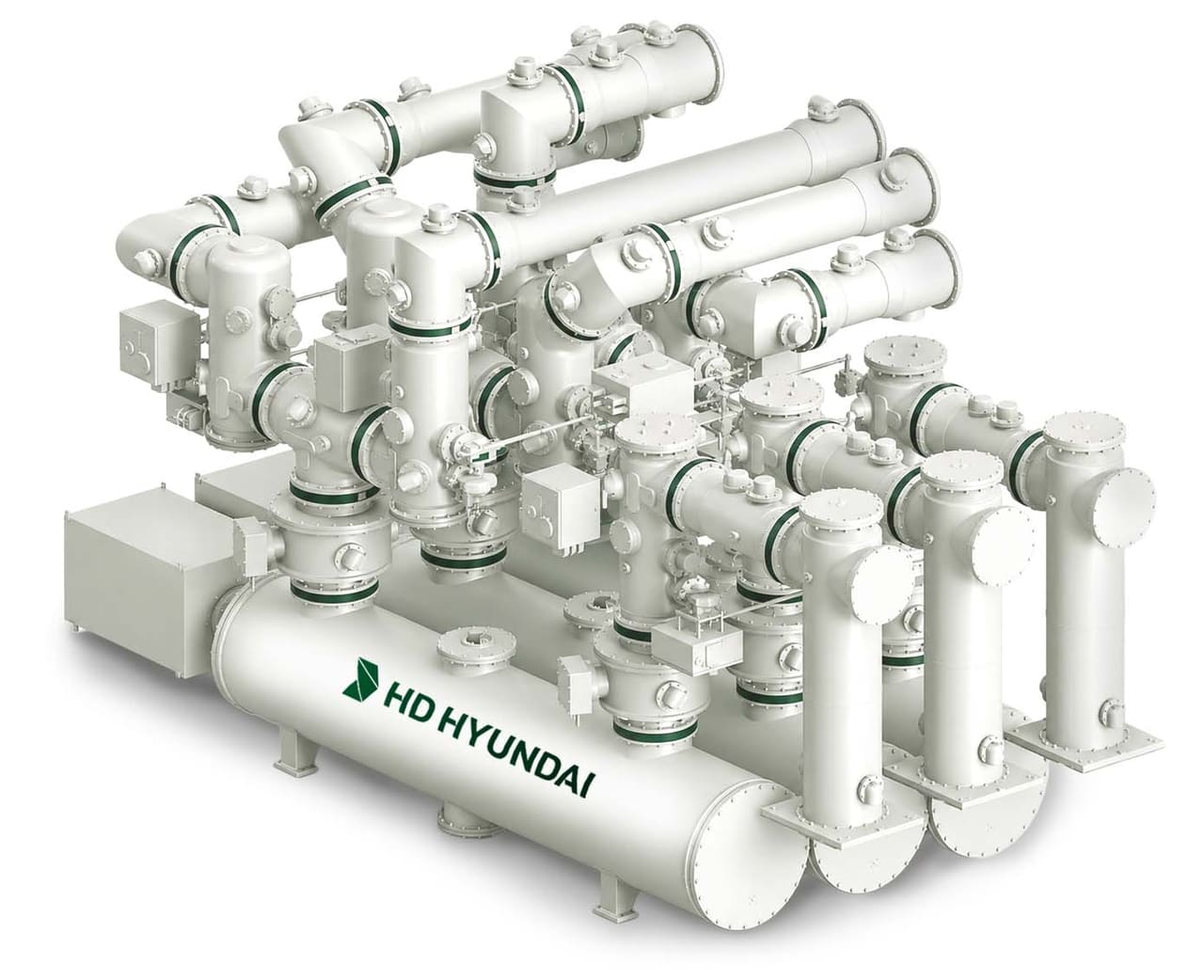
- ·HD Hyundai Electric completed Korea's first 420-kilovolt circuit breaker using C4 insulating gas instead of sulfur hexafluoride, which has 24,000 times the warming potential of carbon dioxide.
- ·The European Union's F-Gas Regulation will cut SF6 and HFC supply by nearly 80 percent by 2030, driving utilities to specify SF6-free equipment in new tenders.
- ·Korean and Chinese manufacturers are accelerating alternative insulation technology to compete in European markets where regulatory deadlines and climate procurement standards are tightening.
Korea's First SF6-Free High-Voltage Breaker
HD Hyundai Electric announced Monday it has completed development of Korea's first 420-kilovolt circuit breaker that eliminates sulfur hexafluoride, marking a technical shift as Asian manufacturers target stricter European environmental standards for power transmission equipment.
The unit substitutes C4-based insulating gas for SF6, a compound that has been standard in high-voltage switchgear for decades but now faces accelerating regulatory pressure across the European Union. SF6 carries a global warming potential roughly 24,000 times that of carbon dioxide over a 100-year period, making it one of the most potent greenhouse gases tracked under international climate agreements.
According to HD Hyundai Electric, the C4 alternative delivers comparable dielectric performance while sharply reducing the equipment's climate footprint. The company did not disclose the exact chemical composition of the C4 gas mixture but confirmed it meets the insulation and arc-quenching requirements for ultra-high-voltage applications.
Europe's Tightening Grip on Fluorinated Gases
The European Union has been ratcheting up restrictions on fluorinated greenhouse gases since the introduction of the F-Gas Regulation in 2014, with successive revisions phasing down allowable quantities and banning certain uses outright. The latest iteration, which took effect in early 2024, sets binding reduction targets that will cut the bloc's supply of hydrofluorocarbons and SF6 by nearly 80 percent by 2030 compared to 2015 levels.
For grid operators and equipment manufacturers, the rules translate into immediate procurement challenges. Utilities across Germany, France, and the Nordic countries have begun specifying SF6-free switchgear in new tenders, while retrofit programs are accelerating the replacement of legacy installations. The shift has opened a window for manufacturers that can deliver proven alternatives at scale.
HD Hyundai Electric's move into this segment reflects broader ambitions among South Korean industrial conglomerates to capture higher-value segments of the global energy transition. The company, part of the HD Hyundai group that also includes shipbuilding and construction machinery arms, has been expanding its footprint in Europe through partnerships with transmission system operators and renewable energy developers.
Technical Validation and Market Entry
The 420-kilovolt rating positions the new breaker for use in extra-high-voltage transmission networks, the backbone infrastructure that moves bulk power across national grids. These systems require equipment capable of interrupting fault currents in milliseconds while withstanding voltage stress and environmental extremes over multi-decade service lives.
HD Hyundai Electric has not yet disclosed whether the C4-based breaker has undergone third-party certification under IEC standards or received type-test approval from European grid operators, steps typically required before commercial deployment. The company indicated it is in discussions with potential customers in Europe but did not name specific utilities or project timelines.
The development comes as several global manufacturers race to commercialize SF6-free alternatives. ABB, Siemens Energy, and GE Vernova have all introduced circuit breakers and gas-insulated switchgear using alternative gases or vacuum technology in recent years. Competition in the segment is intensifying as regulatory deadlines approach and utilities seek to de-risk supply chains dependent on restricted substances.
Asia's Role in the Grid Equipment Transition
South Korea's push into SF6-free technology also reflects a strategic calculus around export competitiveness. While domestic grid operators have not imposed SF6 bans comparable to those in Europe, Korean manufacturers are keenly aware that future growth in power infrastructure markets will hinge on compliance with the most stringent environmental standards.
China has similarly accelerated development of alternative insulation technologies, with State Grid Corporation and equipment suppliers testing fluoronitrile and dry-air insulated switchgear in pilot projects. Japan's Toshiba and Mitsubishi Electric have also announced SF6 reduction initiatives, though commercialization timelines remain less aggressive than in Europe.
For HD Hyundai Electric, success in Europe could serve as a springboard into other markets weighing similar restrictions, including parts of North America and select Southeast Asian countries that are beginning to incorporate climate impact into grid procurement criteria. The company's ability to scale production and demonstrate long-term reliability will determine whether the technology gains traction beyond initial pilot deployments.
RELATED STORIES
Kolon Industries Begins Production of Bio-Based Medical Plastic
Cheng Wei-Lun · 3 min
SK Group and TerraPower Expand Nuclear Partnership to Power AI Infrastructure
Jun-ho Seo · 3 min

Nexon Posts Record First-Half Revenue as MapleStory and ARC Raiders Drive Global Growth
Jun-ho Seo · 3 min
Seoul Races to Salvage $200 Billion US Investment Rollout
Cheng Wei-Lun · 3 min
Spot something wrong? Email editor@briefasia.com. We log every correction publicly.