Asia · Business
South Korean Steel Trader GS Global Plants Flag in Houston Energy Hub
The Seoul-based commodities firm opens a dedicated Texas office to capture project steel demand from the US energy and infrastructure build-out.
KEY TAKEAWAYS
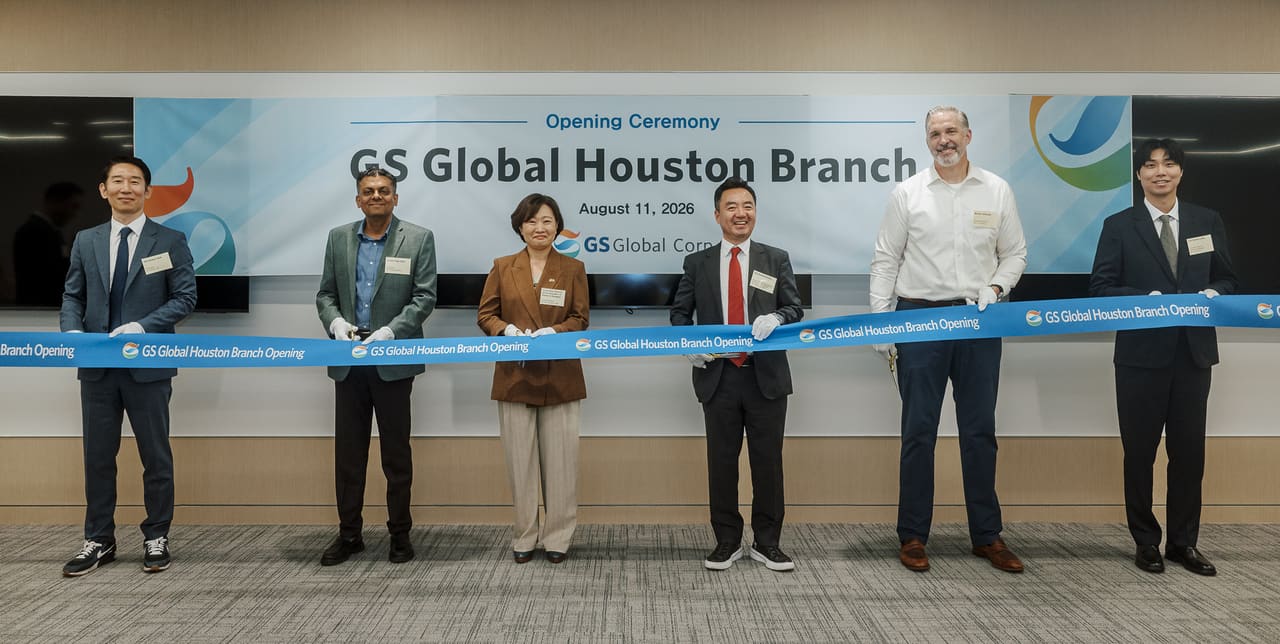
- ·GS Global opened a Houston office in the Uptown district to serve US energy and infrastructure clients, expanding beyond its existing Los Angeles base.
- ·The move targets rising project steel demand driven by increased capital spending on LNG terminals, pipelines, power grids, and industrial facilities across the US Gulf Coast.
- ·A local presence allows the Seoul-based trader to shorten response times, coordinate supply from Asian mills, and align deliveries with construction schedules in real time.
A New Beachhead in the Energy Capital
GS Global, the Seoul-headquartered commodities trading arm of GS Group, has established a physical presence in Houston's Uptown district, according to the company. The move positions the firm closer to the epicenter of North American energy and infrastructure investment, a market that has drawn increasing capital flows over the past two years.
Until now, the company managed the bulk of its US operations from Los Angeles. The decision to plant a second flag in Texas reflects a strategic bet that project-based steel demand tied to energy and power infrastructure will continue to climb as utilities, pipeline operators, and industrial developers ramp up capital expenditure.
The Steel-Energy Nexus
Houston sits at the intersection of two trends that matter to a commodities trader like GS Global: the geographic concentration of US energy capital and the steel-intensive nature of power and pipeline projects. Liquefied natural gas export terminals, petrochemical expansions, offshore wind fabrication yards, and electric transmission upgrades all require structural steel, plate, and pipe in volumes that dwarf typical construction demand.
By opening an office in the same metro area where energy majors, engineering firms, and project developers maintain headquarters or regional hubs, GS Global shortens the loop between demand signals and supply responses. In a commodity business where timing and logistics often determine margin, proximity translates into competitive advantage.
Faster Response, Tighter Execution
The company cited the ability to respond more quickly to shifting market conditions as a primary motivation for the Houston office. In practice, that means field sales teams can meet face-to-face with procurement managers, site visits become day trips rather than cross-country flights, and inventory staging decisions can be made with real-time visibility into project schedules.
For a trader, speed matters in two dimensions: securing supply from mills in South Korea, Japan, and elsewhere in Asia, and delivering that supply to job sites on schedules that align with construction milestones. A local office collapses the communication lag and reduces the risk of costly delays or mismatches between cargo arrivals and site readiness.
The Broader Asia-US Steel Corridor
GS Global's expansion is part of a wider pattern in which Asian trading houses and steelmakers have invested in US-facing logistics and distribution networks. South Korean conglomerates, Japanese trading companies, and Taiwanese steel processors have all built out North American footprints over the past decade, driven by the recognition that the US remains one of the world's largest end markets for specialty and project steel.
The timing of the Houston office opening also coincides with a period of elevated US infrastructure spending, supported by federal legislation and state-level initiatives aimed at grid modernization, port upgrades, and industrial reshoring. While exact figures on GS Global's US revenue were not disclosed, the decision to commit to a second office signals confidence that the pipeline of energy and infrastructure projects will sustain demand for imported and domestically sourced steel products well into the next cycle.
What Comes Next
GS Global has not announced plans for additional US offices, but the Houston launch sets a template: identify concentrations of capital-intensive activity, establish local presence, and tighten the supply chain from Asian mills to North American job sites. As the US energy transition gathers pace and infrastructure bottlenecks become more acute, traders with boots on the ground will be better positioned to capture margin in a market where specifications, delivery windows, and credit terms are negotiated project by project.
For now, the Houston office represents a tangible commitment by a mid-tier Korean trading house to deepen its exposure to the US energy and infrastructure cycle. Whether other Asian traders follow suit will depend on their read of the same market signals that prompted GS Global to open a second front in Texas.
RELATED STORIES
Seoul Races to Salvage $200 Billion US Investment Rollout
Cheng Wei-Lun · 3 min
Seoul's Industry Chief Returns to Washington as Trade Pressure Mounts
Cheng Wei-Lun · 2 min
Trump Exemption Opens US Naval Contracts to Foreign Yards
Cheng Wei-Lun · 3 min

Starbucks Korea Reports $13.4 Million Loss After Tumbler Controversy
Cheng Wei-Lun · 2 min
Spot something wrong? Email editor@briefasia.com. We log every correction publicly.