Asia · Business
Trump Exemption Opens US Naval Contracts to Foreign Yards
Presidential memorandum allows up to two ships built overseas for companies investing in American facilities, positioning South Korea's Hanwha for defense expansion
KEY TAKEAWAYS
- ·President Trump signed a memorandum allowing foreign companies investing in US shipyards to build up to two naval vessels at their home-country facilities, exempting them from longstanding domestic construction requirements.
- ·The policy positions South Korea's Hanwha Ocean to compete for US Navy contracts by building initial ships in Korean yards while establishing American operations, addressing fleet expansion bottlenecks.
- ·The exemption signals Washington's willingness to integrate allied Asian industrial capacity into defense supply chains, with potential implications for Japan and other regional partners.
A Century-Old Barrier Falls
President Donald Trump signed a memorandum Thursday that rewrites the playbook for US naval procurement, creating a narrow but significant exemption to laws that have kept American warship construction on domestic soil for decades. The directive permits foreign companies investing in American shipyards to build up to two vessels at their home-country facilities, a carve-out designed to accelerate fleet expansion while new US capacity comes online.
The policy marks a departure from the Jones Act framework and related statutes that have historically required military vessels to be constructed in American yards. Trump framed the move as essential to rebuilding both the Navy and the broader domestic shipbuilding base, arguing that the current industrial capacity cannot meet fleet modernization targets on the required timeline.
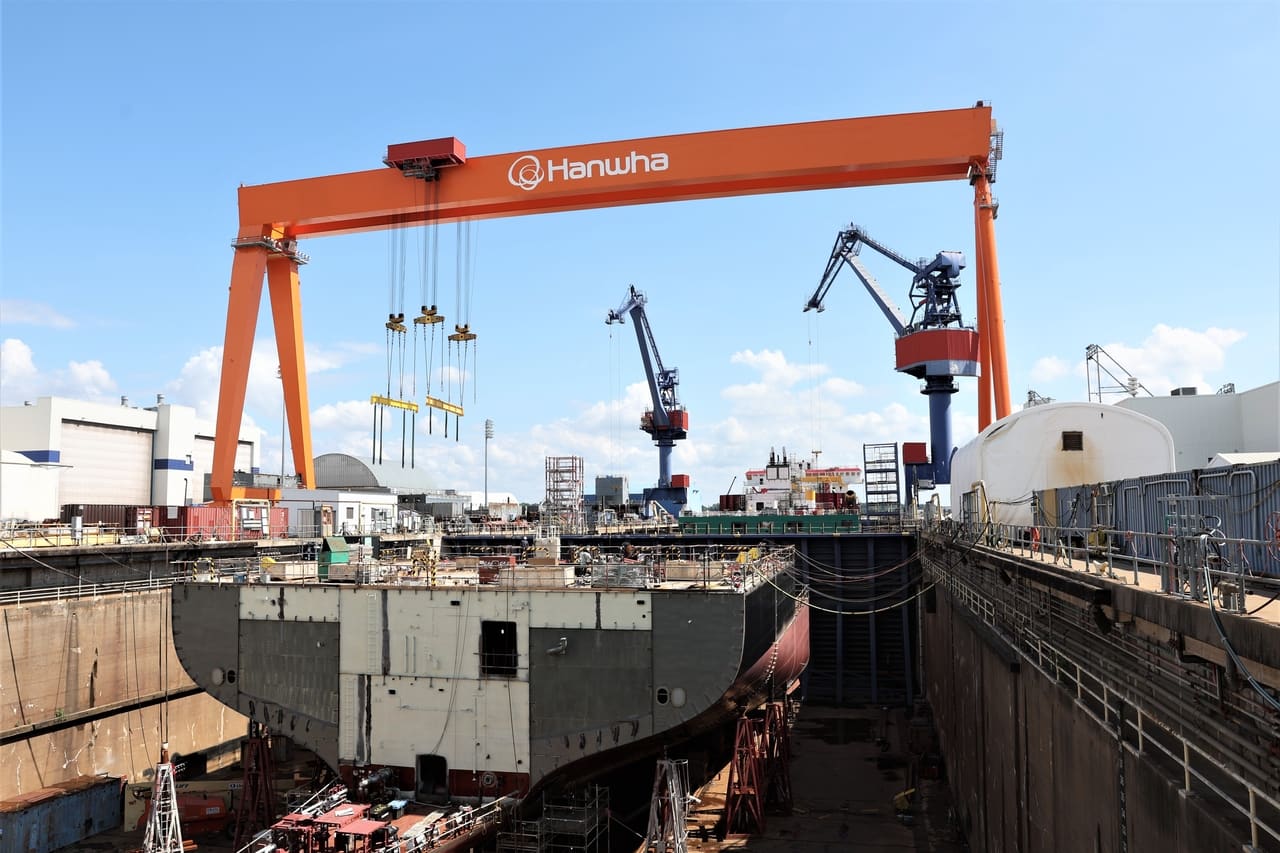
Hanwha Ocean, South Korea's second-largest shipbuilder, stands to benefit directly. The company has been positioning itself for deeper involvement in US defense contracts, including potential partnerships or facility investments on American soil. The memorandum offers a bridge: build initial vessels in established Korean yards while ramping up operations in the United States.
The Strategic Calculus
The exemption addresses a tension at the heart of US naval policy. Washington wants a larger, more modern fleet to counter China's rapid maritime expansion in the Indo-Pacific. But American shipyards, after decades of consolidation and underinvestment, lack the throughput to deliver vessels at the pace the Pentagon requires. The Navy's goal of a 355-ship fleet remains years behind schedule, with construction bottlenecks cited repeatedly in congressional testimony.
Allowing limited foreign construction creates a release valve. A company investing in a new or expanded US yard can begin delivering hulls immediately from its overseas facilities, generating revenue and building relationships with the Navy while its American operations scale up. The two-ship cap ensures the arrangement remains transitional rather than structural.
South Korean yards bring formidable capabilities. Hanwha Ocean and its domestic competitors operate some of the world's most advanced shipbuilding infrastructure, with experience in both commercial and military vessel construction. South Korea has also emerged as a key US defense partner in Asia, co-producing weapons systems and hosting American forces. The memorandum effectively extends that partnership into naval shipbuilding.
Asian Angle and Regional Implications
The decision carries weight beyond bilateral trade. It signals that Washington is willing to integrate allied Asian industrial capacity into its defense supply chain, a shift with implications for Japan, Singapore, and other maritime partners. Tokyo, which operates sophisticated shipyards and shares interoperability goals with the US Navy, could pursue similar arrangements if the exemption proves durable.
For South Korea, the opening comes at a pivotal moment. Hanwha has been aggressive in pursuing international defense contracts, recently securing deals in Europe and the Middle East. Access to US naval work would represent a step change in scale and prestige, cementing the company's position as a global player. It also aligns with Seoul's broader strategy of deepening defense-industrial ties with Washington amid regional security pressures.
The memorandum does not guarantee contracts. Hanwha and other foreign builders will still need to compete for Navy programs, meet stringent technical and security requirements, and demonstrate credible plans for US facility investment. But the policy removes a categorical barrier that previously made such competition impossible.
What Comes Next
Industry observers expect the exemption to face scrutiny from US labor unions and domestic shipbuilders, who have long defended the Jones Act and related protections as essential to preserving American shipbuilding jobs. The memorandum includes language emphasizing the rebuilding of domestic capacity, likely an effort to preempt criticism that the policy outsources defense work.
The Navy will need to define how the exemption applies to specific vessel classes and procurement programs. Smaller combatants, support ships, and certain auxiliary vessels are more plausible candidates than capital ships like aircraft carriers or ballistic missile submarines, which involve classified systems and long-term sustainment requirements.
Hanwha has not publicly detailed its US investment plans, but the company has been in discussions with American partners and regional development authorities about potential shipyard sites. The memorandum creates a clearer incentive structure: invest in American facilities, and the path to initial contracts becomes navigable.
For the broader US-Asia defense relationship, the policy reflects a pragmatic recognition that rebuilding American military-industrial capacity will require leveraging allied strengths. South Korean shipyards, Japanese precision manufacturing, and Taiwanese semiconductor fabs are increasingly viewed not as competitors to US industry but as extensions of a networked defense ecosystem. The exemption is a test case for how far that logic can stretch.
RELATED STORIES
Homeplus Reopens 67 Stores After Liquidity Crisis Leaves Shelves Empty
Jun-ho Seo · 3 min
Starbucks Korea Reports First Quarterly Loss After Tumbler Promotion Backlash
Jun-ho Seo · 2 min
Starbucks Korea Reports $13.4 Million Loss After Tumbler Controversy
Cheng Wei-Lun · 2 min
SK Hynix Workers Form Unified Union as Bonus Dispute Deepens
Cheng Wei-Lun · 4 min
Spot something wrong? Email editor@briefasia.com. We log every correction publicly.