Asia · Business
Starbucks Korea Reports First Quarterly Loss After Tumbler Promotion Backlash
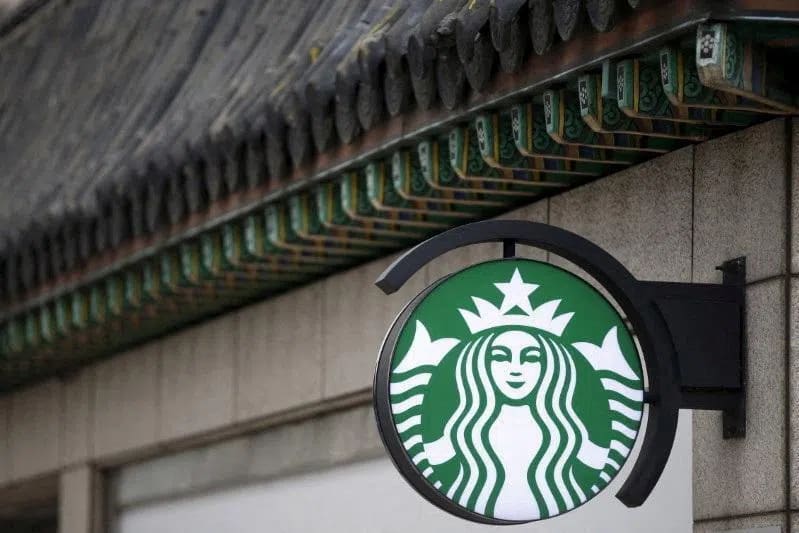
The coffee giant's Korean operation swung to an operating loss of 18.4 billion won as a boycott triggered by a poorly timed marketing campaign erased decades of profitability
KEY TAKEAWAYS
- ·Starbucks Korea reported an 18.4 billion won operating loss for the quarter ending June 2026, its first deficit in 27 years of operations.
- ·The loss followed a May promotion for Tank tumblers that coincided with the anniversary of the 1980 Gwangju pro-democracy uprising, triggering boycotts and executive dismissals.
- ·Police searched the company's Seoul headquarters last week as part of an investigation, while the firm closed all 2,000 stores in June for employee sensitivity training.
Twenty-Seven Years of Profit Erased
SCK Company, the operator of Starbucks in South Korea, recorded an operating loss of 18.4 billion won (USD 16.6 million) for the three months ending June 2026, according to the company's Aug. 13 statement. The figure marks a sharp reversal from the 40.3 billion won operating profit posted in the same quarter a year earlier.
The loss represents the first quarterly deficit since Starbucks launched its Korean operation in 1999, ending an unbroken run of profitability that spanned nearly three decades. Net sales declined 6.1 percent year-on-year to 747.3 billion won, even as the company expanded its footprint by 49 stores during the quarter. South Korea ranks as Starbucks' largest market outside the United States and China.
The Promotion That Triggered a Crisis
The financial damage stems directly from a marketing campaign in May that offered discounts on large "Tank" tumblers. The promotion coincided with the anniversary of the 1980 Gwangju uprising, a watershed moment in South Korean history when military forces deployed troops and tanks to suppress pro-democracy demonstrators.
The timing sparked immediate public outrage. Starbucks Corp., the Seattle-based parent company, issued a statement condemning the campaign as "unacceptable." The fallout was swift: Starbucks Korea's chief executive was removed from the position, and Chung Yong-jin, chairman of Shinsegae Group, appeared on television to deliver a public apology, bowing repeatedly as he accepted responsibility.
Shinsegae's E-Mart supermarket chain holds a 67.5 percent stake in SCK Company, with Singapore's GIC maintaining the remainder as a passive minority investor.
Operational Damage Control
By late May, Shinsegae executives acknowledged that the boycott had caused "substantial" revenue declines across Starbucks Korea's network. The company took the unusual step of closing all of its more than 2,000 Korean locations early on June 22, dedicating the time to employee training focused on modern Korean history and social sensitivity.
The controversy drew attention at the highest levels of government. President Lee Jae Myung publicly criticized the campaign, amplifying the pressure on the company. Last week, police conducted a search of Starbucks Korea's Seoul headquarters as part of an ongoing investigation into the marketing event.
Path to Stabilization
In its earnings statement, SCK Company said it will "concentrate on business stabilisation by restoring brand trust." The company faces the challenge of rebuilding consumer confidence in a market where historical memory runs deep and corporate missteps tied to national trauma carry lasting consequences.
The quarterly results underscore how rapidly brand equity can erode in Asia's hyper-connected consumer markets, where social media amplifies grievances and boycotts gain momentum quickly. For Starbucks Korea, the path back to profitability will depend on whether its remedial measures can convince Korean consumers that the company understands the weight of its mistake.
The loss also highlights the risks multinational brands face when local marketing teams fail to account for cultural and historical context. In a market as competitive and saturated as South Korea's coffee sector, trust and cultural fluency are as critical as store expansion and product innovation.
RELATED STORIES
Homeplus Reopens 67 Stores After Liquidity Crisis Leaves Shelves Empty
Jun-ho Seo · 3 min
South Korean Household Credit Breaches 2 Trillion Won for First Time
Jun-ho Seo · 3 min
South Korea's Economy Gains Momentum on Export Surge and Consumer Spending
Cheng Wei-Lun · 2 min
Seoul's KOSPI Climbs 3.2% on Semiconductor Rally
Cheng Wei-Lun · 3 min
Spot something wrong? Email editor@briefasia.com. We log every correction publicly.