Asia · Business
Homeplus Reopens 67 Stores After Liquidity Crisis Leaves Shelves Empty
South Korea's third-largest retailer draws shoppers with discounts as it emerges from court-led rehabilitation following severe cash crunch
KEY TAKEAWAYS
- ·Homeplus reopened 67 stores across South Korea on Thursday with promotional discounts after entering court-supervised rehabilitation earlier this year due to severe liquidity problems.
- ·The retailer had operated with largely empty shelves and sparse food sections earlier in August, forcing it to fill displays with household goods to mask inventory shortages.
- ·The reopening tests whether Homeplus can regain consumer trust in a market dominated by E-Mart and Lotte Mart, with online grocery platforms rapidly capturing share.
A Retail Lifeline
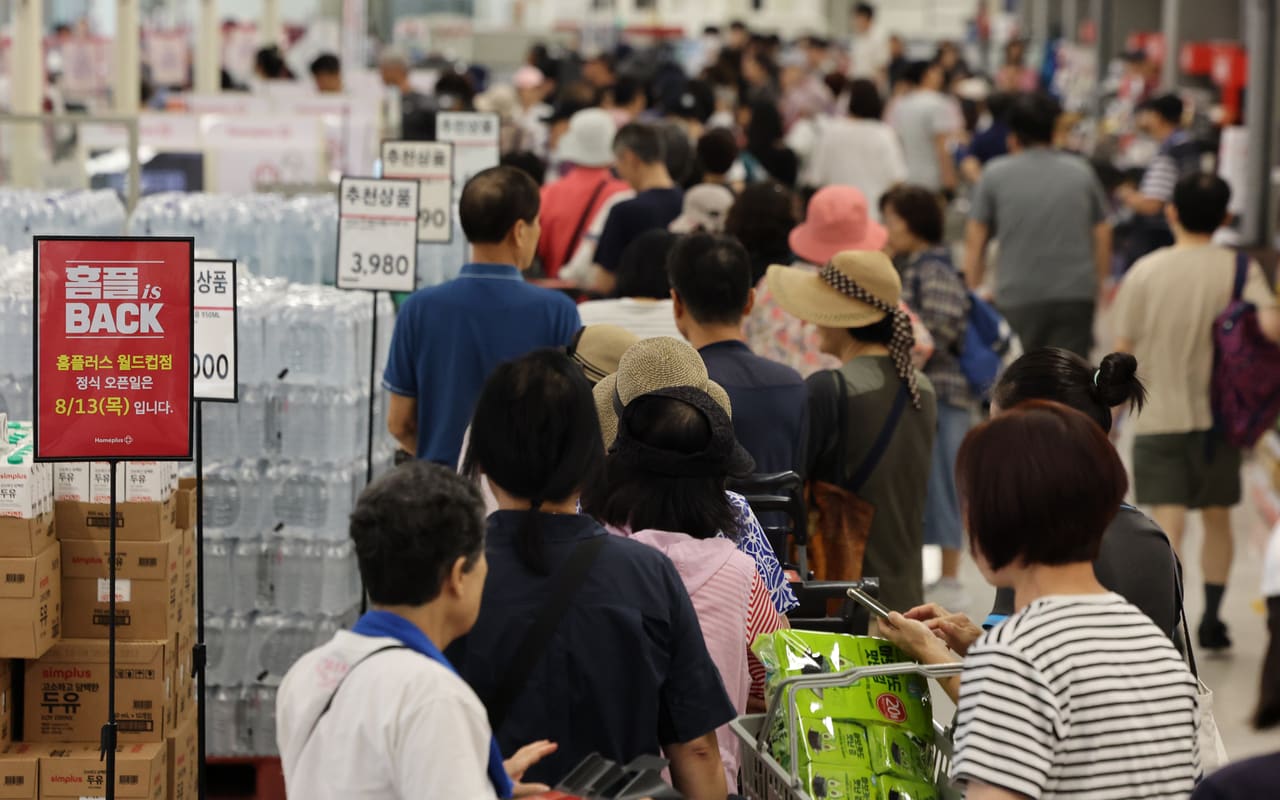
Homeplus threw open the doors of 67 stores across South Korea on Thursday, greeting shoppers with reopening discounts after weeks of operating in survival mode. The crowds returned to aisles that had been eerily sparse just days earlier, a visible shift for the country's third-largest retailer as it attempts to claw back from a cash crisis that nearly shuttered operations.
The contrast was sharp. Earlier in August, customers walking into Homeplus locations found food sections barely stocked, with household items awkwardly positioned to mask gaps where groceries should have been. The scene reflected the severity of the company's liquidity problems, which forced it into court-supervised rehabilitation.
The Numbers Behind the Comeback
South Korea's retail sector has watched Homeplus struggle under mounting debt and operational pressures. The company entered formal rehabilitation proceedings earlier this year, a legal mechanism designed to restructure insolvent firms while keeping them operational. The process typically involves creditor negotiations, asset sales, and operational overhauls.
The 67-store reopening represents a critical test of whether Homeplus can regain consumer trust and stabilize revenue streams. The retailer operates in a fiercely competitive market dominated by E-Mart and Lotte Mart, both of which have maintained stronger balance sheets through the post-pandemic period.
Industry observers note that South Korean hypermarket chains have faced structural headwinds since 2020, with online grocery platforms capturing market share and changing consumer habits. Homeplus, owned by private equity firm MBK Partners since 2015, has been particularly vulnerable due to its leveraged buyout structure and subsequent debt load.
What the Reopening Signals
The discount-driven reopening strategy aims to rebuild foot traffic quickly, a necessary step for a retailer dependent on volume sales and inventory turnover. Fresh produce, packaged goods, and household essentials restocked the shelves that had been nearly empty, signaling that supply chain relationships and vendor credit lines have been at least partially restored.
For suppliers and creditors, the reopening offers a measure of reassurance. A functioning store network generates cash flow, which is essential for meeting restructuring obligations. The alternative, a full liquidation, would likely result in steeper losses for all parties involved.
The broader implications extend beyond Homeplus. South Korea's retail landscape is consolidating, with weaker players exiting or merging. If Homeplus can stabilize, it preserves competition in a market where concentration has been increasing. If it fails, the void will likely be filled by the two dominant chains or by e-commerce platforms expanding their physical footprint.
Regional Retail Under Pressure
Homeplus is not alone in facing distress. Across Asia, traditional hypermarket formats are under pressure from shifting consumer preferences and digital disruption. In Japan, Seiyu has scaled back locations; in Taiwan, Carrefour sold its operations; in China, hypermarkets have closed thousands of stores in recent years.
South Korea's case is particularly acute because of the speed at which online grocery delivery has matured. Coupang and other platforms offer same-day delivery in major cities, eroding the convenience advantage that hypermarkets once held. Homeplus must now demonstrate that physical stores can offer something beyond mere product availability, whether through experience, pricing, or service.
The coming months will reveal whether the reopening is a genuine turnaround or a temporary reprieve. Investors and competitors alike are watching closely, as the outcome will shape expectations for distressed retail assets across the region.
RELATED STORIES
Starbucks Korea Reports First Quarterly Loss After Tumbler Promotion Backlash
Jun-ho Seo · 2 min
South Korean Household Credit Breaches 2 Trillion Won for First Time
Jun-ho Seo · 3 min
South Korea's Economy Gains Momentum on Export Surge and Consumer Spending
Cheng Wei-Lun · 2 min
Seoul's KOSPI Climbs 3.2% on Semiconductor Rally
Cheng Wei-Lun · 3 min
Spot something wrong? Email editor@briefasia.com. We log every correction publicly.