Finance · Markets
Seoul's KOSPI Climbs 3.2% on Semiconductor Rally
South Korea's benchmark index extends winning streak to four sessions as foreign and institutional investors pile into chip stocks
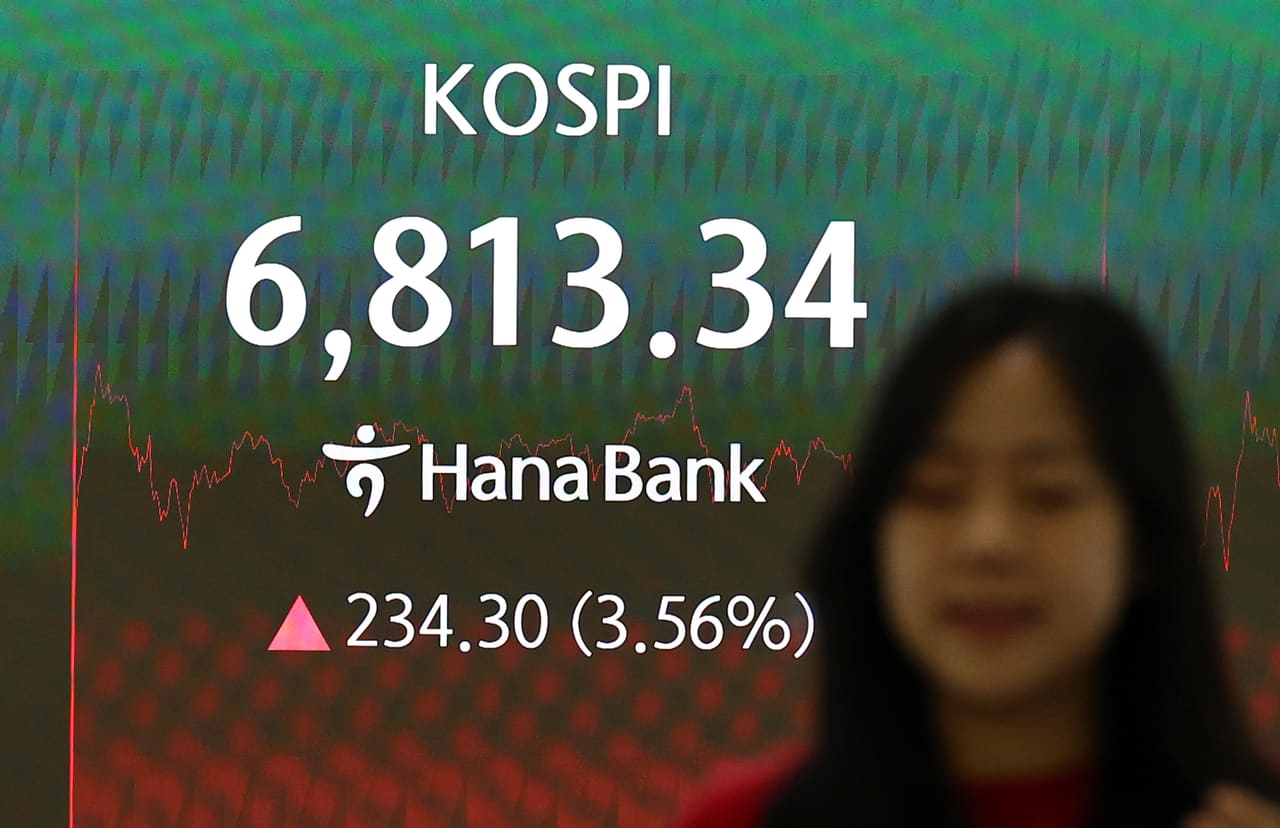
KEY TAKEAWAYS
- ·South Korea's KOSPI index climbed 210.97 points to close at 6,790.01, a 3.21% gain marking the fourth consecutive session of advances.
- ·Foreign and institutional investors drove the rally through heavy buying of semiconductor stocks amid improving chip sector fundamentals.
- ·The Korean won strengthened against the dollar alongside equity gains, signaling broader confidence in the domestic economy and potential for sustained inflows.
Chip Stocks Drive Benchmark Higher
South Korea's main equity gauge posted its strongest single-day gain in weeks Thursday, extending a four-session rally fueled by renewed appetite for semiconductor manufacturers. The KOSPI added 210.97 points to finish at 6,790.01, marking a 3.21% advance.
The benchmark opened nearly 3% higher and maintained momentum through the session as foreign and institutional buyers accumulated positions in major chip producers. The day's performance followed three consecutive sessions of gains totaling 5.06%, building a sustained upward trajectory for the index.
Capital Flows Shift Back to Seoul
The rally signals a notable shift in capital allocation toward Korean equities after a period of tepid investor sentiment. Foreign money managers, who had been cautious on the market in recent weeks, returned to net buying positions. Institutional investors joined the move, amplifying upward pressure on share prices.
Semiconductor stocks anchored the advance. The sector has benefited from a broader reassessment of memory chip pricing dynamics and expectations for stronger demand in the second half of the year. Major producers saw their valuations climb as investors positioned for a potential upturn in the global chip cycle.
Currency Gains Reflect Confidence
The Korean won strengthened against the dollar in parallel with the equity market's rise, suggesting broader confidence in the domestic economy. Currency appreciation typically accompanies robust foreign inflows into local assets, and Thursday's move aligned with that pattern.
The won's gains add to evidence that international investors are warming to Korean exposure. A stronger currency can support further equity inflows by reducing currency hedging costs and improving dollar-denominated returns for overseas portfolio managers.
Semiconductor Cycle Turns
The semiconductor industry's performance has been central to Korea's economic narrative. After a prolonged downturn in chip prices that weighed on earnings across the sector, recent months have brought tentative signs of stabilization. Inventory corrections at major buyers have progressed, while new applications in artificial intelligence and high-performance computing have created fresh demand pockets.
Korean manufacturers, which dominate global memory chip production, stand to benefit disproportionately from any sustained recovery. The country's two largest chipmakers together account for more than half of worldwide DRAM and NAND flash supply, giving them significant leverage in pricing negotiations as market conditions improve.
Market Breadth and Outlook
The breadth of Thursday's advance extended beyond semiconductors, though the sector's weight in the index made it the primary driver. Financial stocks and select industrial names also contributed to the gain, reflecting a more generalized risk-on sentiment among traders.
The four-day winning streak has lifted the KOSPI roughly 8% from its recent low, though the index remains well below its 52-week high. Analysts note that sustained momentum will depend on whether foreign buying continues and whether chip sector fundamentals deliver on current optimism.
Near-term catalysts include upcoming earnings reports from major technology companies and any shifts in global semiconductor demand indicators. Trade data from China and export figures from Korea itself will offer clues about whether the nascent recovery has staying power.
The rally also comes as regional markets have shown mixed performance, with Tokyo and Hong Kong trading in narrower ranges. Seoul's outperformance suggests investors see specific value in Korean equities, particularly in technology hardware, rather than simply riding a region-wide wave.
Currency stability will be another factor to watch. If the won continues to appreciate without central bank intervention, it could signal that capital inflows are structural rather than speculative. That would lend support to equity valuations and potentially attract additional foreign participation in the market.
RELATED STORIES
Seoul's Kospi Breaks 7,000 After Two-Week Slide
Cheng Wei-Lun · 2 min
Seoul's KOSPI Extends Rally to Fifth Day on Semiconductor Strength
Cheng Wei-Lun · 2 min
South Korea's Short Sellers Pile In as Tech Rebound Gathers Steam
Cheng Wei-Lun · 2 min
Toss Parent Viva Republica Posts 53% Revenue Growth in First Half
Cheng Wei-Lun · 3 min
Spot something wrong? Email editor@briefasia.com. We log every correction publicly.