Finance · Markets
Seoul's Kospi Breaks 7,000 After Two-Week Slide
South Korea's benchmark index climbed above the psychological threshold Friday morning, riding a wave of optimism from US tech gains before retreating slightly.
KEY TAKEAWAYS
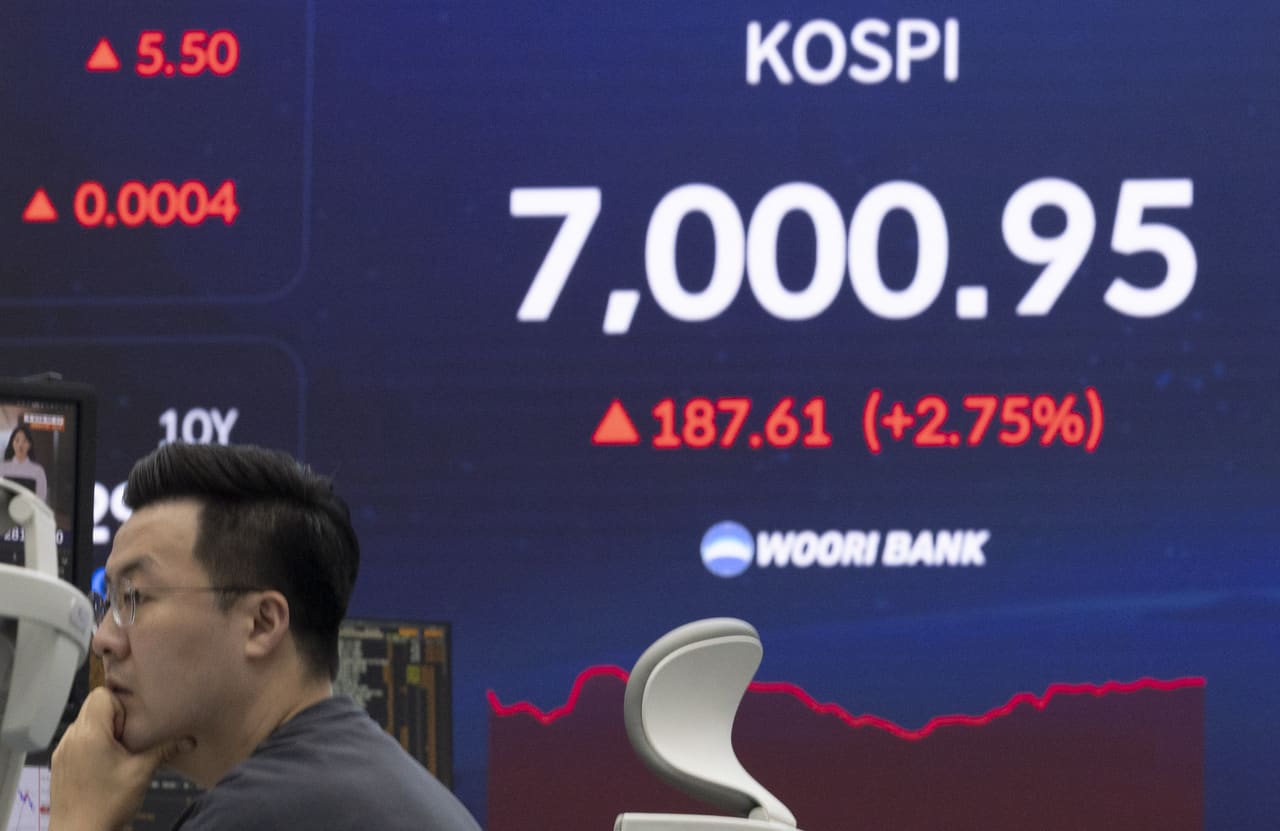
- ·South Korea's Kospi index reached an intraday high of 7,010.86 on Friday, its first move above 7,000 since July 24.
- ·The rally followed broad gains in US technology stocks, with the index later trading at 6,945.46, up 1.94 percent by mid-morning.
- ·Sustained gains will depend on semiconductor demand signals, Chinese manufacturing data, and currency stability in coming sessions.
Morning Rally Tests Key Threshold
South Korea's main stock index climbed back above 7,000 points during Friday morning trading, the first time the benchmark has cleared that level since late July. The Kospi touched an intraday peak of 7,010.86 in the opening session before pulling back to 6,945.46 by mid-morning, still holding a 1.94 percent gain from Thursday's close.
The two-week absence above 7,000 marks one of the benchmark's longer stretches below the psychological barrier this year. The last time the index closed above that mark was July 24, when Seoul markets rode a broader rally across Asian bourses. Since then, a combination of profit-taking, regional currency pressures, and mixed economic signals from Beijing had kept the index range-bound in the 6,800 to 6,950 zone.
Tech Momentum Flows Across Pacific
Friday's move higher came on the back of a strong session for US technology stocks Thursday, with semiconductor and platform companies posting broad gains. That momentum typically filters into Seoul trading given the heavy weighting of tech hardware and chipmakers in the Kospi. Samsung Electronics and SK Hynix, which together account for roughly a quarter of the index's market capitalization, often act as transmission channels for sentiment shifts in Nasdaq and the Philadelphia Semiconductor Index.
Traders in Seoul had been watching for signs that the July correction in chip stocks was exhausting itself. The intraday breach of 7,000, even without a close above that level, suggests some appetite is returning for cyclical tech exposure. Volume in the first hour of trading was elevated compared to recent sessions, indicating institutional participation rather than purely retail-driven moves.
Regional Context and Currency Factors
The Kospi's performance sits within a broader pattern across Northeast Asian markets, where export-heavy indexes remain sensitive to both US demand signals and the dollar-won exchange rate. The won has depreciated modestly against the dollar over the past fortnight, which can provide a tailwind for exporters' earnings but also raises input costs for companies reliant on imported components.
Seoul's market structure, with its concentration in semiconductors, autos, and petrochemicals, makes it particularly reactive to shifts in global manufacturing sentiment. A sustained move above 7,000 would likely require not just favorable US tech earnings but also stabilization in Chinese demand and clarity on semiconductor export controls, both of which remain open questions heading into the autumn earnings season.
What Comes Next
The index's ability to hold above 7,000 through the close Friday and into next week will be an early test of whether this is a durable shift or a short-covering bounce. Analysts are watching for follow-through volume and breadth across sectors beyond the megacap tech names. If financials, industrials, and consumer stocks join the rally, it would signal a more robust risk-on rotation rather than a narrow tech-driven move.
Seoul's market has historically shown sensitivity to both Wall Street's direction and its own domestic liquidity conditions. With the Bank of Korea expected to hold rates steady in the near term, equity flows are likely to remain tied to external factors, particularly the trajectory of US monetary policy and the health of China's manufacturing sector. For now, the return above 7,000, even briefly, offers a psychological lift after a prolonged stretch of consolidation.
RELATED STORIES
Seoul's KOSPI Extends Rally to Fifth Day on Semiconductor Strength
Cheng Wei-Lun · 2 min
Toss Parent Viva Republica Posts 53% Revenue Growth in First Half
Cheng Wei-Lun · 3 min
Korean Stocks Stall After First-Half Surge as Chip Cycle Concerns Mount
Cheng Wei-Lun · 3 min
Seoul Equities Jump 2.7% as Inflation Easing Lifts US Markets
Cheng Wei-Lun · 3 min
Spot something wrong? Email editor@briefasia.com. We log every correction publicly.