Finance · Markets
Seoul Equities Jump 2.7% as Inflation Easing Lifts US Markets
Korean chipmakers led Friday's rally after S&P 500 reached record high on cooling price pressures
KEY TAKEAWAYS
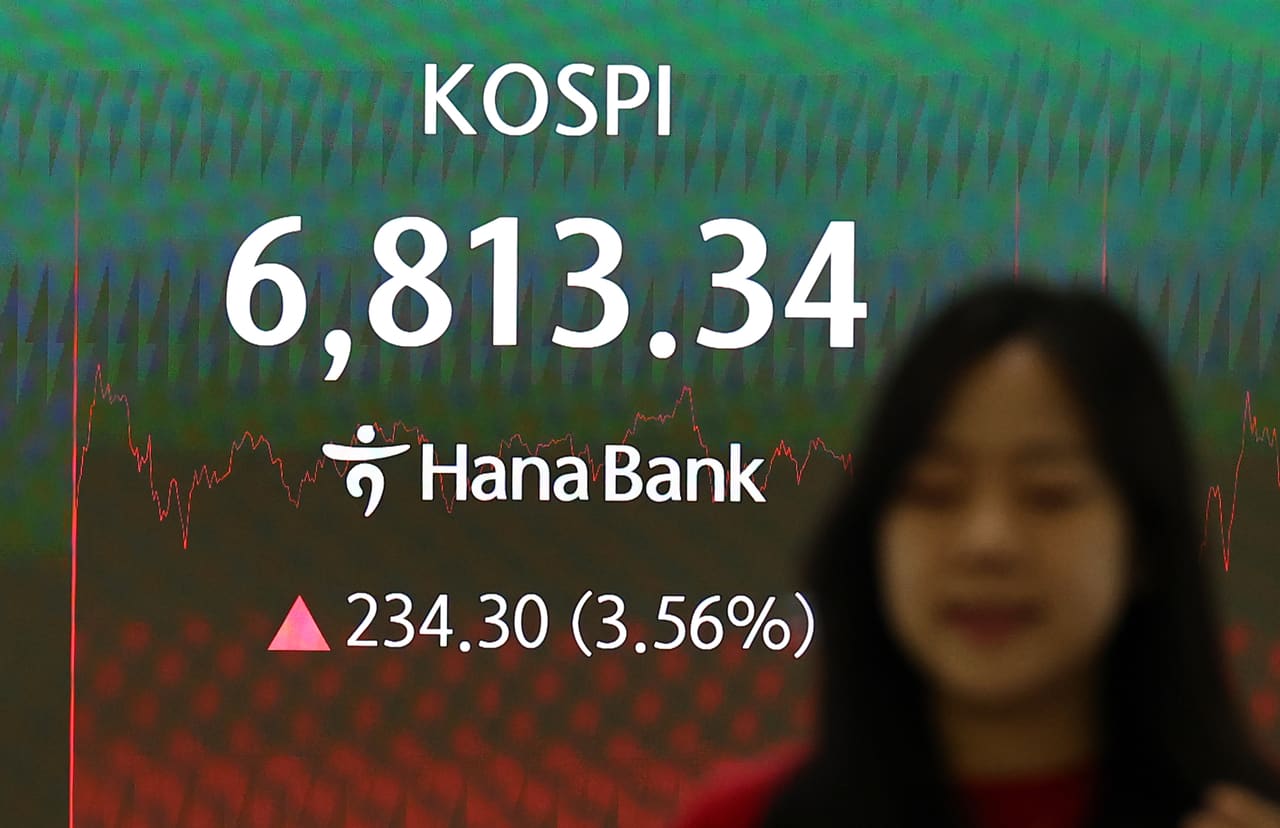
- ·South Korea's Kospi opened 2.7 percent higher at 6,995.67 points, led by chipmakers following the S&P 500's record close overnight.
- ·Recent US inflation data showed decelerating price growth and falling oil prices, easing concerns over prolonged high interest rates.
- ·Korean semiconductor stocks rose on expectations of sustained tech demand as the US economy expands without overheating.
Market Opens Strong
South Korean equities opened sharply higher on Friday morning, with the Korea Composite Stock Price Index climbing 182.33 points to reach 6,995.67 in early trading. The 2.7 percent gain reflected renewed investor confidence after Wall Street delivered a robust session overnight, propelled by semiconductor manufacturers and technology names.
The Seoul rally mirrored momentum from US markets, where the S&P 500 notched an all-time closing high. Chipmakers on the Kospi benefited from the positive sentiment, as investors interpreted recent US economic data as evidence that inflationary pressures may be moderating without tipping the economy into recession.
US Inflation Data Shifts Sentiment
Recent figures released in the United States showed price growth decelerating more than analysts had anticipated, easing concerns that persistent inflation would force the Federal Reserve to maintain elevated interest rates for an extended period. The data provided relief to technology and growth-oriented stocks, which are particularly sensitive to borrowing costs.
Energy prices also contributed to the improved outlook. Crude oil futures declined in recent sessions, reducing a key input cost across manufacturing and logistics sectors. Lower energy expenses typically translate to reduced headline inflation, giving central banks greater flexibility in monetary policy decisions.
The S&P 500 advanced 0.7 percent overnight, while the Dow Jones Industrial Average added 0.1 percent. The Nasdaq Composite, weighted heavily toward technology firms, posted gains that underscored investor appetite for growth assets when inflation fears recede.
Semiconductor Exposure Drives Korean Gains
South Korea's export-driven economy maintains significant exposure to global technology demand, particularly through its dominant semiconductor industry. Major chipmakers listed on the Kospi serve as suppliers to US technology giants and consumer electronics manufacturers worldwide, making Korean equities sensitive to shifts in American market sentiment.
When US tech stocks rally, Korean chip producers typically follow, reflecting their position in the global supply chain. Friday's opening surge in Seoul suggested traders expect sustained demand for memory chips, processors, and related components as the US economy continues expanding without overheating.
The Korean won's performance against the dollar also plays a role in equity valuations. A stable or strengthening currency can support foreign inflows into Korean stocks, while currency volatility often prompts caution among international investors.
Regional Context
Asian markets have tracked US performance closely in recent months, with investor sentiment hinging on Federal Reserve policy signals and macroeconomic data releases from Washington. The inflation trajectory in the United States carries implications for interest rate differentials across the Pacific, influencing capital flows and currency valuations throughout the region.
Seoul's benchmark had faced headwinds earlier in the year as rising US yields pressured emerging-market assets. The recent shift in inflation data offered a reprieve, allowing Korean equities to recover ground lost during periods of heightened monetary tightening expectations.
Japan's Nikkei and Hong Kong's Hang Seng have shown similar patterns, with technology-heavy indices benefiting disproportionately when US inflation data surprises to the downside. The interconnectedness of regional supply chains means that positive sentiment in one major market often spills over into neighboring bourses.
What Traders Watch Next
Market participants will monitor upcoming US retail sales figures and Federal Reserve commentary for clues about the pace of future policy adjustments. Any indication that inflation remains on a downward path could sustain the rally in risk assets, while unexpected price acceleration might reverse recent gains.
Korean export data, due later this month, will also shape near-term sentiment. Semiconductor shipment volumes and order backlogs provide real-time insight into global technology demand, offering investors a gauge of whether the current optimism is justified by underlying fundamentals.
Currency markets remain a wild card. Sharp moves in the dollar-won exchange rate can amplify or dampen equity performance, particularly for export-oriented stocks that report earnings in won but generate revenue in foreign currencies. Stability in foreign exchange markets would support the continuation of Friday's positive opening momentum.
RELATED STORIES
Seoul's Tech Stocks Rally While Wall Street Retreats on Iran Tensions
Cheng Wei-Lun · 5 min

Korean Stocks Stall After First-Half Surge as Chip Cycle Concerns Mount
Cheng Wei-Lun · 3 min
Korean Chipmakers Surge on Temasek Investment Report
Cheng Wei-Lun · 3 min
Seoul Tech Stocks Surge 5% as US Inflation Data Lifts Asian Markets
Cheng Wei-Lun · 3 min
Spot something wrong? Email editor@briefasia.com. We log every correction publicly.