Finance · Markets
Seoul's Tech Stocks Rally While Wall Street Retreats on Iran Tensions
Korea's benchmark index climbed 2.35 percent in early trading as semiconductor and technology shares defied overnight US market weakness tied to Middle East uncertainty
KEY TAKEAWAYS
- ·South Korea's KOSPI index rose 2.35 percent to 6,494.71 in early Wednesday trading, led by technology sector gains despite overnight US market losses.
- ·The rally diverged from Wall Street's retreat following reduced optimism about US-Iran diplomatic progress and Middle East stability.
- ·Korean technology stocks demonstrated resilience as investors focused on sector fundamentals rather than geopolitical sentiment affecting US markets.
Diverging Trajectories in Asian and US Markets
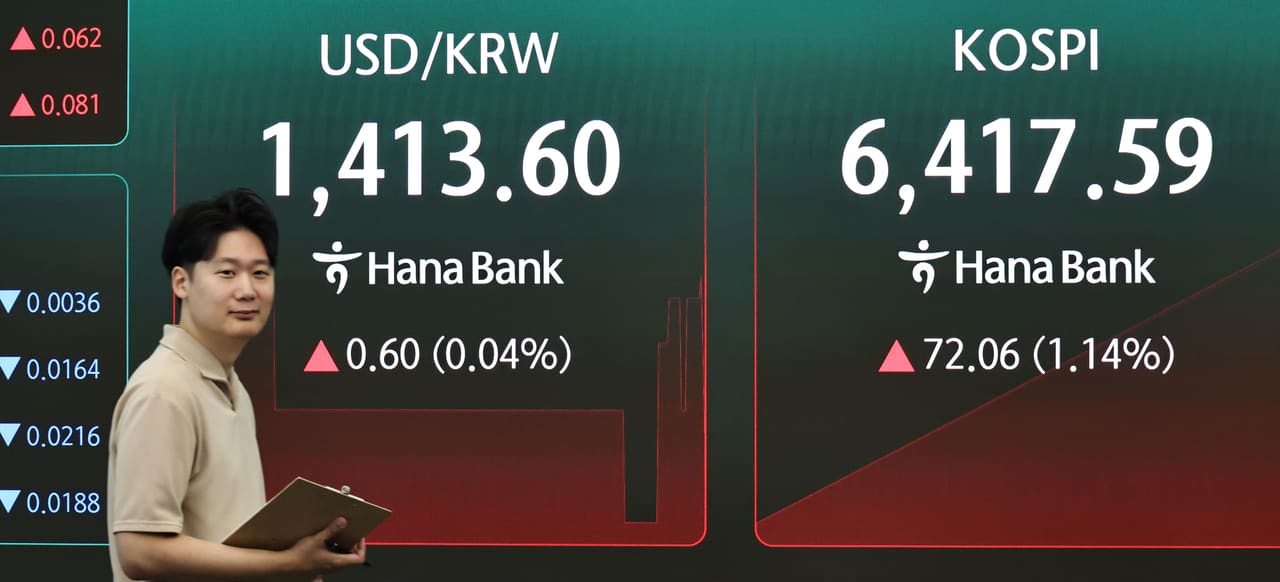
South Korea's equity market charted its own course Wednesday morning, with the Korea Composite Stock Price Index advancing 149.19 points to reach 6,494.71 by 9:15 a.m. local time. The 2.35 percent gain marked a stark departure from overnight declines across US bourses, where investor sentiment soured following developments in diplomatic talks involving Iran.
The benchmark index opened 1.47 percent higher before extending gains in the first fifteen minutes of trading. Technology stocks, which have anchored Korean market performance throughout 2026, provided the primary upward momentum. This sector strength has become a familiar pattern in Seoul trading, particularly during periods when global markets show hesitation.
The divergence highlights a recurring dynamic in Asian equity markets: domestic buying interest and sector-specific fundamentals can override negative sentiment imported from Wall Street. For Seoul specifically, the technology sector's weight in the KOSPI means that even modest gains among a handful of large-cap names can lift the entire index.
Regional Context and Market Positioning
Korea's stock market operates within a complex web of regional and global forces. The country's position as a major semiconductor exporter means its equity performance often reflects both cyclical demand patterns and geopolitical risk assessments. When US markets retreat on Middle East concerns, Korean investors frequently assess whether those risks materially affect Korean corporate earnings or represent temporary sentiment shifts.
Wednesday's opening suggested the latter interpretation dominated. Despite the pessimism that gripped Wall Street, Seoul market participants appeared to separate regional security concerns from the fundamental earnings outlook for Korean technology companies. This distinction matters because Korean semiconductor and display manufacturers derive substantial revenue from global customers, but their production facilities and supply chains remain geographically concentrated.
The technology sector's resilience also reflects ongoing structural trends. Korean chipmakers have benefited from sustained demand for memory products, logic chips, and advanced packaging services. Even when broader market sentiment turns negative, institutional investors often maintain or increase exposure to these names based on order book visibility and capacity utilization rates.
Diplomatic Uncertainty and Investor Calculus
The appointment of a new secretary to Iran's Supreme National Security Council triggered a reassessment of diplomatic prospects among US investors. Markets had previously priced in a moderate probability of a negotiated agreement that might reduce regional tensions and stabilize energy markets. When that probability declined, risk appetite contracted.
Yet this calculus plays out differently across geographies. US equity indices carry heavy weightings in energy, defense, and financial sectors, all of which respond directly to Middle East developments. Korean indices, by contrast, tilt heavily toward technology and industrial names whose earnings sensitivity to regional conflicts is more attenuated.
Energy price movements do affect Korean companies, but the transmission mechanism is indirect. Higher oil prices increase input costs for chemical manufacturers and logistics providers, but they also reflect broader demand dynamics that can support technology spending. This ambiguity means Korean investors sometimes look past short-term geopolitical noise to focus on company-specific catalysts.
Sector Dynamics and Market Breadth
The technology sector's leadership in Wednesday's rally underscores its outsized influence on Korean market direction. A handful of large-cap technology names account for a substantial portion of the KOSPI's total market capitalization. When these stocks rise, they pull the index higher even if breadth remains mixed across other sectors.
This concentration creates both opportunities and vulnerabilities. On days when technology sentiment is positive, the index can post impressive gains. Conversely, when sentiment shifts against the sector, declines can be equally pronounced. The current rally suggests investors see value in Korean technology stocks at recent price levels, particularly given the sector's earnings visibility heading into the second half of 2026.
Manufacturing data and export figures released earlier in the week may have also contributed to investor confidence. Korea's technology exports have shown resilience despite global economic headwinds, supported by demand for advanced chips used in artificial intelligence applications and data center infrastructure. This demand profile provides a buffer against cyclical downturns in consumer electronics.
Implications for Regional Capital Flows
Wednesday's performance may signal shifting risk appetite among Asian investors more broadly. When Seoul advances while US markets decline, it often reflects capital rotation within the region rather than fresh inflows from international funds. Domestic institutional investors and retail participants drive a significant portion of daily volume in Korean equities, and their behavior can differ markedly from foreign portfolio managers.
The pattern also raises questions about correlation structures in global equity markets. For much of 2025 and early 2026, Asian indices tracked US market movements closely, with overnight performance on Wall Street setting the tone for Tokyo, Seoul, and Hong Kong openings. Wednesday's divergence, while modest, suggests those correlations may be weakening as investors focus more on local fundamentals.
This shift could persist if Middle East tensions remain elevated but contained, meaning they influence oil prices and defense spending without triggering broader economic disruptions. In that scenario, Asian technology exporters might continue to trade on their own merit, supported by earnings growth and valuation support.
Looking Ahead
The sustainability of Seoul's morning gains will depend on several factors. Afternoon trading often sees volatility as domestic investors digest global headlines and adjust positions ahead of the close. If US futures remain weak or if additional negative news emerges from diplomatic channels, Korean stocks could pare their advances.
Equally important will be any corporate announcements or earnings updates from major technology companies. Korea's earnings season is underway, and investor attention is focused on guidance for the third quarter. Strong outlooks could reinforce the view that Korean technology stocks deserve premium valuations despite global uncertainty. Disappointing forecasts might prompt profit-taking and a return to closer alignment with US market trends.
For now, the morning's performance demonstrates that Korean equities retain the capacity to move independently, driven by sector strength and domestic investor conviction. Whether that independence endures will test both the resilience of technology earnings and the trajectory of geopolitical developments in the weeks ahead.
RELATED STORIES
Seoul Stocks Rebound on Tech Strength After Sharp Selloff
Cheng Wei-Lun · 2 min
Seoul Stocks Climb on Semiconductor Rally Amid Bargain Buying
Cheng Wei-Lun · 3 min
Seoul Stocks Retreat as Wall Street Pullback Weighs on Asian Markets
Cheng Wei-Lun · 3 min
SK Hynix-Linked Vehicle Takes Top Stake in Kioxia as Toshiba Exits
Cheng Wei-Lun · 3 min
Spot something wrong? Email editor@briefasia.com. We log every correction publicly.