Finance · Markets
Seoul Stocks Rebound on Tech Strength After Sharp Selloff
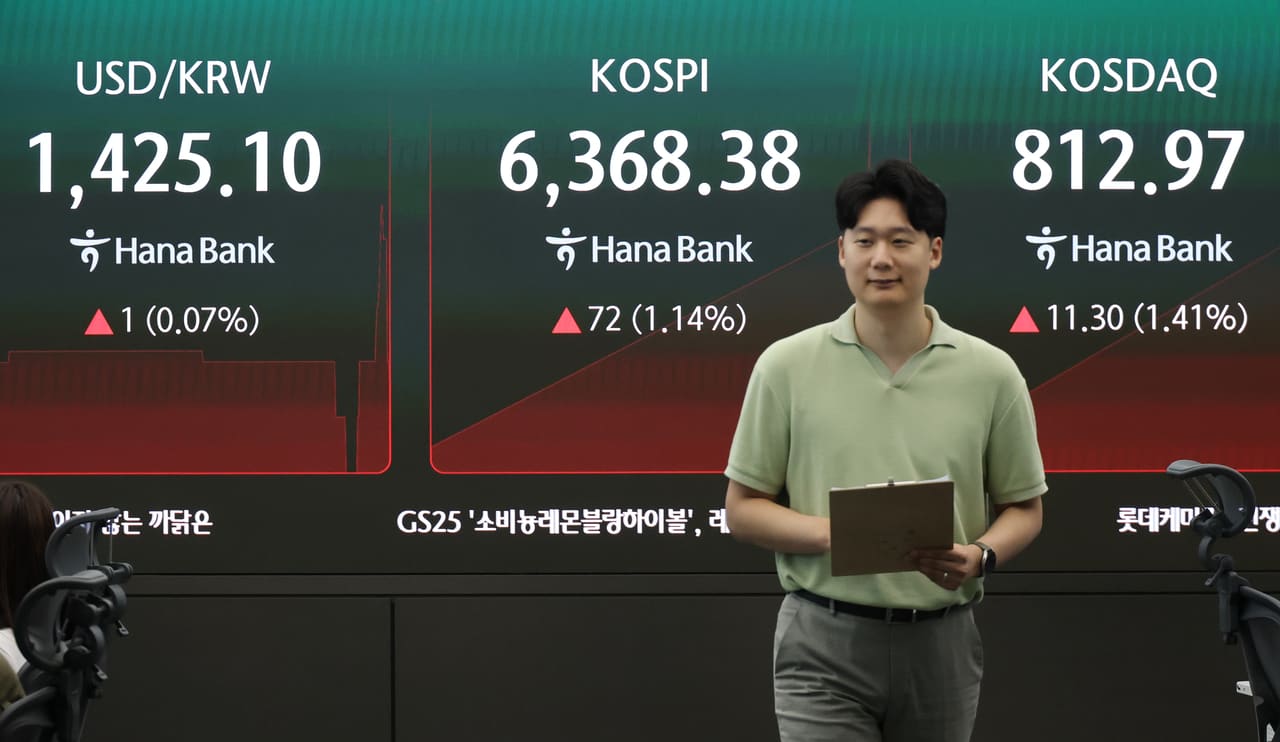
Korean equities climbed more than 1% in early trading as technology shares recovered from the previous session's steep losses, shrugging off Middle East tensions.
KEY TAKEAWAYS
- ·The Korea Composite Stock Price Index traded up 1.26 percent at 6,375.59 in early Friday trading, recovering from a 4.58 percent drop the previous session.
- ·Technology stocks led the rebound despite renewed geopolitical tensions in the Strait of Hormuz and a decline in the US Nasdaq Composite overnight.
- ·Institutional investors appeared to buy the dip, betting that Thursday's selloff pushed Korean tech valuations into attractive territory amid solid underlying fundamentals.
Tech Shares Lead Morning Recovery
Seoul's main equity benchmark opened sharply higher Friday morning, with technology stocks driving the rebound after one of the index's worst single-day performances in recent months. The Korea Composite Stock Price Index (KOSPI) traded at 6,375.59 at 9:15 a.m. local time, up 79.21 points or 1.26 percent from the previous close.
The gain came despite escalating tensions in the Strait of Hormuz, a critical oil transit chokepoint that typically rattles investor sentiment across Asian markets. The benchmark had shed 4.58 percent in Thursday's session, with technology stocks bearing the brunt of the selloff.
The morning's advance suggests institutional investors moved quickly to buy the dip, betting that the prior day's losses had pushed valuations into attractive territory. Korean tech names, particularly semiconductor and electronics manufacturers, have faced pressure in recent weeks from concerns about slowing global demand and export control measures affecting the industry's supply chains.
Mixed Signals from Wall Street
Overnight trading in the United States offered little clear direction. The Dow Jones Industrial Average edged up 0.85 percent, reflecting strength in traditional industrial and financial sectors. However, the technology-focused Nasdaq Composite declined, extending a pattern of weakness in high-growth stocks that had earlier weighed on Asian markets.
The divergence between US equity indexes underscores the sector-specific nature of current market volatility. Korean investors appeared to discount the Nasdaq's decline, instead focusing on the relative cheapness of domestic tech shares following Thursday's rout.
Regional Context and Capital Flows
Seoul's quick recovery highlights the resilience of Korean equity markets even as geopolitical risks simmer. The Strait of Hormuz tensions, while serious, have yet to materially disrupt oil shipments or trigger the kind of sustained risk-off moves that characterized previous Middle East flare-ups.
Korea's export-driven economy remains sensitive to both global demand conditions and energy prices. A sustained closure of Hormuz would push crude prices sharply higher, raising input costs for Korean manufacturers and potentially crimping consumer spending. Yet investors Friday morning appeared to judge the immediate threat as manageable.
The rebound also reflects broader patterns in Asian capital flows. After sharp selloffs, institutional buyers often step in quickly, particularly when underlying corporate fundamentals remain intact. Korean technology companies continue to report solid earnings from memory chip sales and display panel production, even as growth rates moderate from post-pandemic highs.
What Comes Next
Whether Friday's gains can hold will depend on several factors. Further escalation in the Middle East could reverse the morning's optimism, particularly if oil supply disruptions materialize. Equally important will be the performance of Korean tech stocks through the remainder of the session, given their heavy weighting in the KOSPI.
Traders will also watch for any policy signals from Seoul. Korean authorities have historically intervened in currency and equity markets during periods of acute stress, and Thursday's sharp decline may have put the index on their radar.
The morning's move offers a reminder that Asian markets can decouple from US trends when local conditions warrant. Korean equities had lagged regional peers in recent months, and the Thursday selloff may have created a technical setup for a relief rally, independent of developments in New York or the Persian Gulf.
RELATED STORIES
Seoul Market Climbs on Tech Rally After US Jobs Data
Cheng Wei-Lun · 3 min

Asian Tech Stocks Surge as Weak US Jobs Data Dims Rate Hike Outlook
Cheng Wei-Lun · 4 min
South Korea's Pension Giant Faces Questions Over Market Timing
Jun-ho Seo · 3 min
Samsung Settles Netlist Patent Fight With $897 Million Deal
Cheng Wei-Lun · 3 min
Spot something wrong? Email editor@briefasia.com. We log every correction publicly.