Finance · Markets
Seoul Market Climbs on Tech Rally After US Jobs Data
The Kospi jumped 1.62 percent in early trading as investors snapped up beaten-down technology shares following Wall Street's advance
KEY TAKEAWAYS
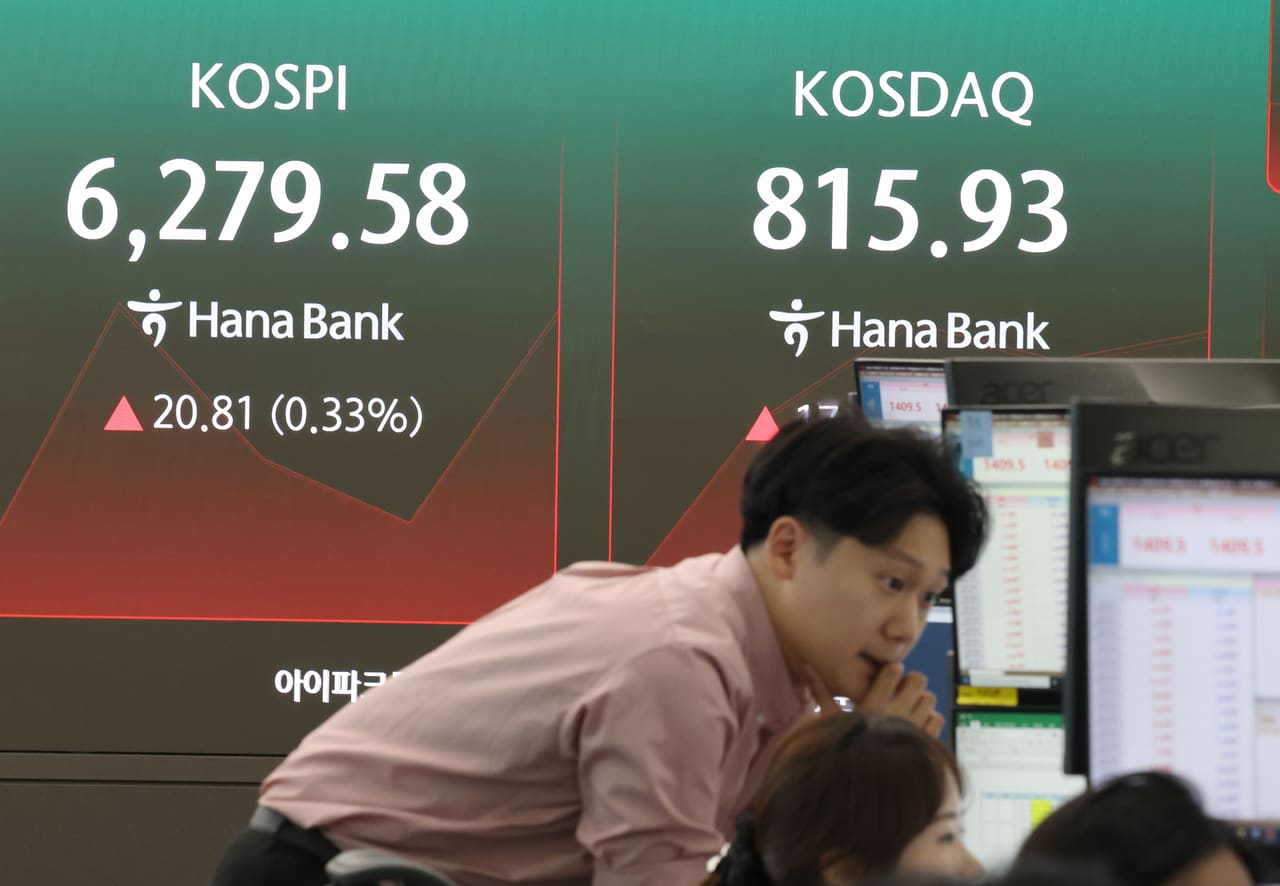
- ·Seoul's Kospi index rose 101.15 points to 6,359.92 in early Monday trading, a 1.62 percent gain driven by technology stock purchases.
- ·The advance followed two consecutive sessions of declines and came after Wall Street set records on strong US employment data released Friday.
- ·Investors engaged in bargain hunting after foreign selling pressure eased, betting that valuations had become attractive following the recent pullback.
Tech Stocks Drive Morning Surge
Seoul's main equity index opened sharply higher on Monday morning, propelled by technology stocks as investors moved to acquire shares at attractive valuations. The Korea Composite Stock Price Index gained 101.15 points to reach 6,359.92 at 9:15 a.m. local time, representing a 1.62 percent advance from the previous close.
The index opened the session with a 0.76 percent gain before momentum accelerated through the first fifteen minutes of trading. Technology shares led the advance, drawing investor interest after the benchmark had declined for two consecutive sessions through Friday's close.
Foreign Selling Pressure Eases
The previous week ended with continued downward pressure on Seoul equities, driven primarily by net selling from foreign institutional investors. That selling pattern, which weighed on the market through Thursday and Friday, appeared to reverse Monday morning as domestic and international investors returned to the market.
The shift in sentiment coincided with positive signals from US equity markets, where major indices posted gains on Friday following the release of employment data. The Dow Jones Industrial Average advanced 0.28 percent, setting a fresh record close and providing a supportive backdrop for Asian markets entering the new week.
Labor Market Data Bolsters Sentiment
US jobs figures released Friday showed resilience in the American labor market, easing concerns about economic momentum in the world's largest economy. The data gave investors confidence that consumer spending and corporate earnings could remain stable, reducing risk perceptions across global equity markets.
For Seoul, the connection runs through multiple channels. South Korean technology exporters depend heavily on US demand for semiconductors, displays, and consumer electronics. Stable employment in the United States typically translates to sustained purchasing power for those goods, supporting revenue projections for companies weighted heavily in the Kospi.
The employment report also influenced expectations around US Federal Reserve policy, with market participants interpreting the data as consistent with a soft-landing scenario rather than recession risk or overheating. That Goldilocks interpretation lifted risk appetite across asset classes and geographies.
Bargain Hunting Returns
Market participants described Monday's buying as opportunistic, with investors identifying value after the index's pullback erased some of the year's earlier gains. Technology stocks, which had borne the brunt of recent selling, attracted the strongest inflows as traders bet that valuations had become stretched to the downside.
The Kospi's two-session decline had taken the index below technical support levels that some analysts had identified as potential entry points. Monday's reversal suggested that those levels had indeed attracted demand, at least in the near term.
Regional Context
Seoul's performance Monday morning mirrored broader patterns across Asian equity markets, where technology-heavy indices in Taiwan and Tokyo also opened higher. The regional rally reflected renewed confidence in the semiconductor cycle and expectations that demand for artificial intelligence infrastructure would continue to support chip sales.
South Korean chipmakers and electronics manufacturers have benefited from the AI buildout, supplying memory and logic chips to US hyperscalers and device manufacturers. Any signal that US economic activity remains healthy tends to reinforce growth forecasts for those export-dependent firms.
The won traded slightly stronger against the dollar in early Monday trading, reducing pressure on importers while potentially crimping exporters' competitiveness at the margin. Currency movements have been relatively modest in recent sessions, leaving equity performance as the primary focus for market participants.
What Comes Next
Traders will watch whether the morning's gains hold through the afternoon session and into the rest of the week. Foreign investor flows remain a key variable, given the influence those participants wield over short-term index direction.
Corporate earnings season for the second quarter has largely concluded, shifting attention to macroeconomic data and central bank policy signals. Any further evidence of stable US growth or easing inflation could sustain the risk-on mood that lifted Seoul shares Monday morning. Conversely, disappointment on those fronts could revive the selling pressure that marked the end of last week.
RELATED STORIES
South Korea's Pension Giant Faces Questions Over Market Timing
Jun-ho Seo · 3 min

KT&G Posts Fourth Consecutive Quarter of Double-Digit Profit Growth
Cheng Wei-Lun · 3 min
South Korean Retail Investors Pivot to US Leveraged ETFs After Domestic Crackdown
Cheng Wei-Lun · 3 min
Seoul Stock Market Drops 4.6% as AI Profit Concerns Hit Tech Sector
Cheng Wei-Lun · 3 min
Spot something wrong? Email editor@briefasia.com. We log every correction publicly.