Finance · Markets
South Korean Retail Investors Pivot to US Leveraged ETFs After Domestic Crackdown
New regulations on single-stock leveraged products have triggered a wave of offshore trading, with capital flowing into American exchange-traded funds as local volumes collapse.
KEY TAKEAWAYS
- ·Trading volumes in South Korea's 16 single-stock leveraged and inverse ETFs have collapsed after regulators introduced tighter controls on these products.
- ·Retail investors are now opening accounts with overseas brokerages and shifting capital into US-listed leveraged ETFs instead of exiting high-risk instruments.
- ·The migration raises concerns that the crackdown is displacing speculative activity offshore rather than curbing it, reducing regulatory oversight and market revenue for Korean institutions.
A Regulatory Squeeze Sends Capital Offshore
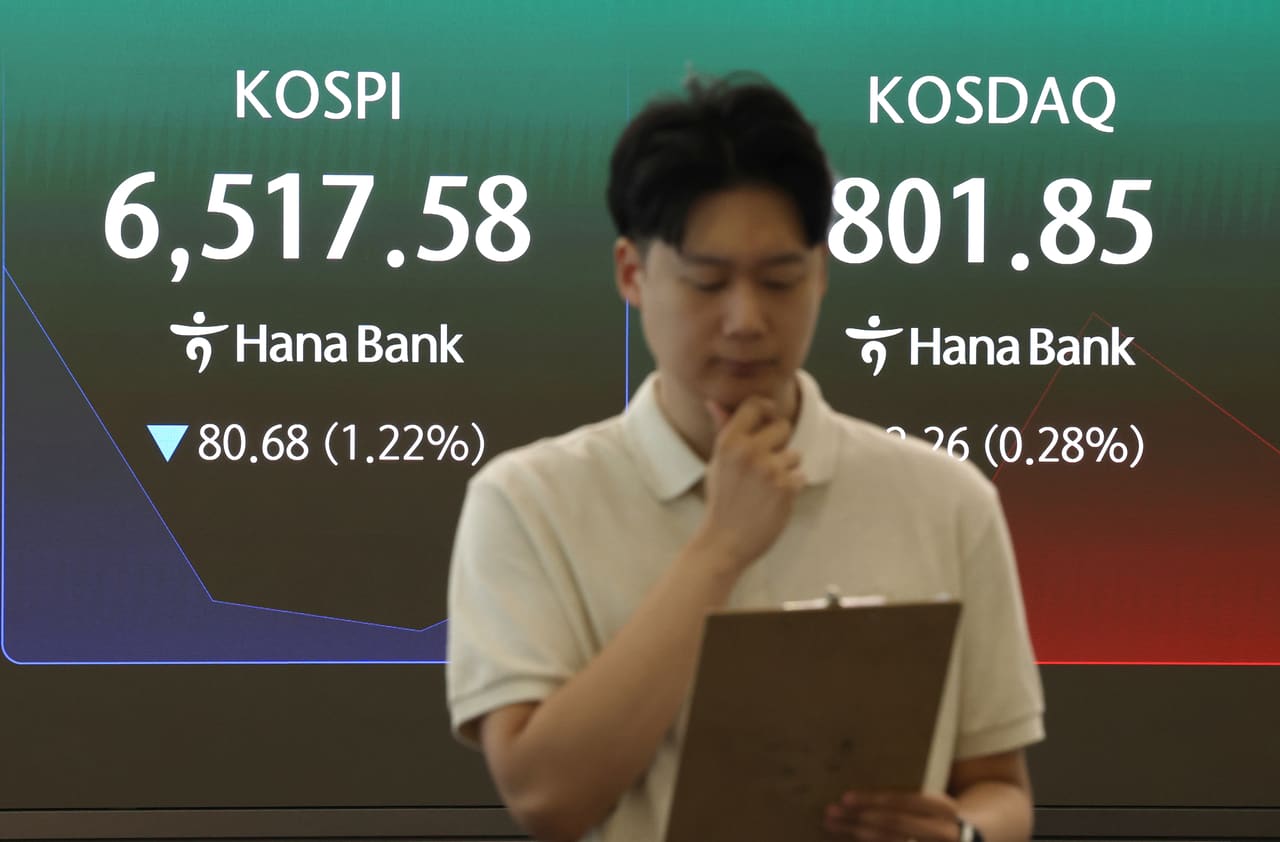
South Korea's retail investors are redirecting their appetite for leveraged bets from Seoul to New York. After financial authorities introduced stricter controls on single-stock leveraged and inverse exchange-traded funds traded domestically, trading volumes in these products have plummeted, according to Korea Exchange data. The combined trading value of the 16 single-stock leveraged and inverse ETFs listed locally has fallen sharply since the new measures took effect.
The regulatory intervention was designed to protect retail investors from the amplified risks inherent in leveraged products, which magnify both gains and losses. Yet the outcome appears to be a geographic shift rather than a behavioral one. Instead of stepping back from high-risk instruments, South Korean traders are opening accounts with overseas brokerages and pouring capital into US-listed leveraged ETFs, many of which carry similar or even greater leverage ratios.
The Appeal of American Markets
US leveraged ETFs offer South Korean investors access to a broader universe of underlying assets, from technology giants and volatility indices to sector-specific plays. American markets also provide deeper liquidity and round-the-clock trading during US hours, features that appeal to active traders seeking to capitalize on short-term price swings.
The migration reflects a pattern familiar to regulators across Asia: when domestic curbs are introduced without coordinating with offshore access, speculative capital tends to find alternative venues. South Korea's retail trading culture, one of the most active in the region, has historically shown resilience in adapting to regulatory constraints. The country's investors are known for their willingness to embrace complex financial products, a trait that has made them a significant force in both domestic and international markets.
Policy Questions and Unintended Consequences
The shift raises uncomfortable questions for Seoul's financial authorities. If the goal was to reduce exposure to leveraged instruments, the policy may have achieved the opposite by pushing investors into less transparent offshore products, where Korean regulators have limited oversight. US leveraged ETFs, while subject to American disclosure rules, operate in a different regulatory framework with distinct investor protections and risk disclosures.
From a capital flow perspective, the trend also means that trading commissions, bid-ask spreads, and other transaction-related revenues are now accruing to US brokerages and exchanges rather than Korean financial institutions. This leakage has implications for the competitiveness of Seoul's capital markets, which have been working to attract and retain domestic liquidity.
Broader Regional Context
South Korea is not alone in grappling with the tension between investor protection and market competitiveness. Hong Kong, Singapore, and Taiwan have all introduced measures to regulate leveraged products, with varying degrees of success in balancing risk management and market vibrancy. The challenge is particularly acute in jurisdictions with high retail participation, where demand for speculative products remains robust regardless of regulatory stance.
The Korean case also underscores the difficulty of ring-fencing domestic markets in an era of low-friction cross-border trading. Mobile apps and digital brokerages have made it easier than ever for retail investors to access foreign markets, often with minimal documentation and same-day account approval. This democratization of access has eroded the effectiveness of jurisdiction-specific curbs, forcing regulators to think beyond national boundaries when designing protective measures.
What Comes Next
Korean financial authorities now face a choice: accept the offshore migration as a cost of tighter domestic rules, or explore new frameworks that address leveraged trading in a more holistic way. Options include cooperation with foreign regulators, enhanced investor education campaigns, or even revisiting the design of the curbs themselves to make domestic products competitive without compromising safety.
For now, the data from Korea Exchange tells a clear story. Domestic leveraged ETF volumes are down, but the capital has not disappeared. It has simply moved to a different exchange, denominated in a different currency, and subject to a different set of rules. Whether that represents a policy success or a regulatory blind spot depends on how one defines the objective.
RELATED STORIES

KT&G Posts Fourth Consecutive Quarter of Double-Digit Profit Growth
Cheng Wei-Lun · 3 min
South Korea's Pension Giant Faces Questions Over Market Timing
Jun-ho Seo · 3 min
Seoul Market Climbs on Tech Rally After US Jobs Data
Cheng Wei-Lun · 3 min
Seoul Stock Market Drops 4.6% as AI Profit Concerns Hit Tech Sector
Cheng Wei-Lun · 3 min
Spot something wrong? Email editor@briefasia.com. We log every correction publicly.