Finance · Markets
Seoul Stock Market Drops 4.6% as AI Profit Concerns Hit Tech Sector
Korean equities erased two days of gains as investors renewed doubts about the commercial viability of artificial intelligence infrastructure spending
KEY TAKEAWAYS
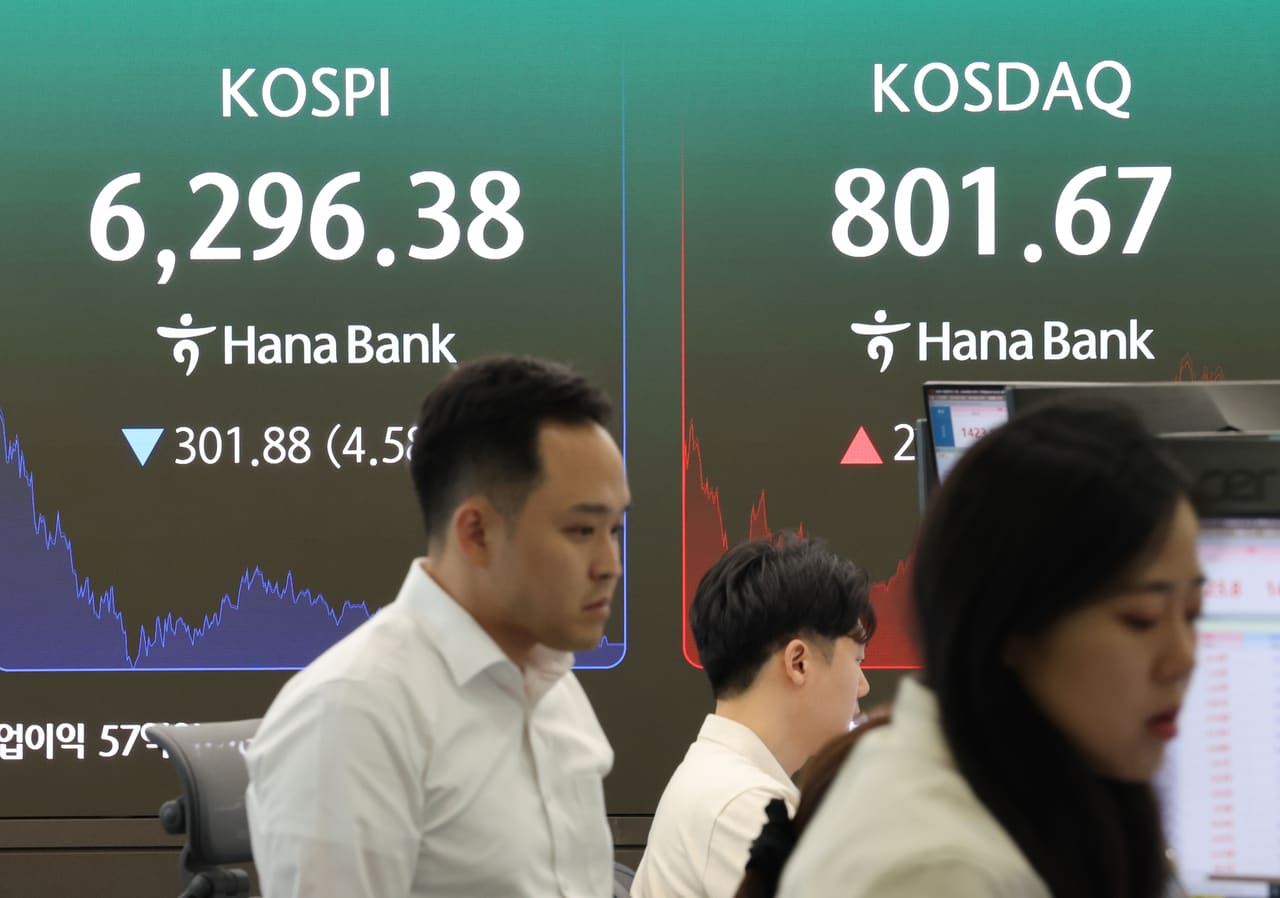
- ·South Korea's KOSPI index fell 4.58 percent to 6,296.38 Thursday, erasing two days of gains driven by technology sector losses
- ·Technology stocks declined sharply as investors renewed doubts about whether massive AI infrastructure spending will generate sufficient near-term profitability
- ·Upcoming earnings reports from major Korean semiconductor manufacturers will provide critical guidance on AI-related order books and customer inventory levels
Sharp Reversal for Korean Equities
South Korea's stock market suffered a sharp selloff Thursday, with the benchmark Korea Composite Stock Price Index plunging 4.58 percent to close at 6,296.38. The 301.88-point decline erased gains from the previous two sessions and marked one of the steepest single-day drops in recent months for the Seoul bourse.
The index briefly touched an intraday low of 6,238.32 before recovering slightly by the close. Trading volume remained heavy throughout the session as institutional and foreign investors unwound positions in technology-heavy stocks. The local currency strengthened against the US dollar during the session, providing a rare bright spot in an otherwise difficult trading day.
Technology Shares Lead the Decline
The selloff centered on technology stocks, particularly companies with significant exposure to artificial intelligence infrastructure and semiconductor manufacturing. Renewed skepticism about the profitability of massive AI-related capital expenditures triggered the wave of selling, reversing investor sentiment that had driven the index up 1.62 percent Tuesday and 3.76 percent Wednesday.
The two-day rally earlier in the week had been fueled by optimism that AI investments would eventually translate into sustained revenue growth for hardware manufacturers and cloud infrastructure providers. That confidence evaporated Thursday as market participants reassessed the timeline and magnitude of returns from AI spending.
Korean technology companies have poured billions of dollars into expanding production capacity for high-bandwidth memory chips, advanced logic semiconductors, and data center equipment. The current market turbulence reflects growing anxiety that demand may not materialize quickly enough to justify these capital-intensive buildouts.
Regional Context and Capital Flows
The Seoul market's volatility mirrors broader uncertainty across Asian technology hubs. Taiwan, home to the world's largest contract chipmaker, and Tokyo, where electronics conglomerates maintain substantial AI-related operations, have experienced similar swings in recent weeks as investors struggle to price in the uncertain trajectory of AI adoption.
Foreign capital flows into Korean equities have turned choppy in recent months. International institutional investors, who had been net buyers of Korean technology stocks through the first half of the year, have begun rotating toward more defensive sectors and markets with clearer near-term earnings visibility.
The won's appreciation against the dollar Thursday suggests currency traders are viewing the equity selloff as a sector-specific issue rather than a broader concern about Korea's economic fundamentals. A stronger won typically pressures export-oriented manufacturers by making their products less competitive in overseas markets, though it provides some cushion for companies with dollar-denominated debt.
Market Outlook and Investor Positioning
The sharp reversal leaves Korean equities in a precarious technical position. The index has now given back roughly half of its gains from the July low, and momentum indicators suggest further volatility ahead. Trading desks across Seoul are watching for signals about whether institutional investors will use any further weakness as a buying opportunity or continue reducing exposure.
Earnings season for major Korean technology companies begins in earnest next week, and guidance on AI-related order books will be closely scrutinized. Analysts expect semiconductor manufacturers to provide updated forecasts on high-bandwidth memory demand and commentary on inventory levels at key customers in the data center supply chain.
The current market environment underscores the tension between long-term optimism about AI's transformative potential and near-term questions about when that potential will translate into sustained profitability. For Korean equities, which derive substantial value from technology exports, resolving that tension will determine whether recent volatility represents a buying opportunity or the beginning of a more sustained correction.
RELATED STORIES
Seoul Market Climbs on Tech Rally After US Jobs Data
Cheng Wei-Lun · 3 min

KT&G Posts Fourth Consecutive Quarter of Double-Digit Profit Growth
Cheng Wei-Lun · 3 min
South Korean Retail Investors Pivot to US Leveraged ETFs After Domestic Crackdown
Cheng Wei-Lun · 3 min
South Korea's Pension Giant Faces Questions Over Market Timing
Jun-ho Seo · 3 min
Spot something wrong? Email editor@briefasia.com. We log every correction publicly.