Finance · Markets
Seoul Stocks Retreat as Wall Street Pullback Weighs on Asian Markets
Korea's benchmark index dropped nearly 1 percent in early trading as investors absorbed losses from US markets and oil price volatility tied to shipping disruptions
KEY TAKEAWAYS
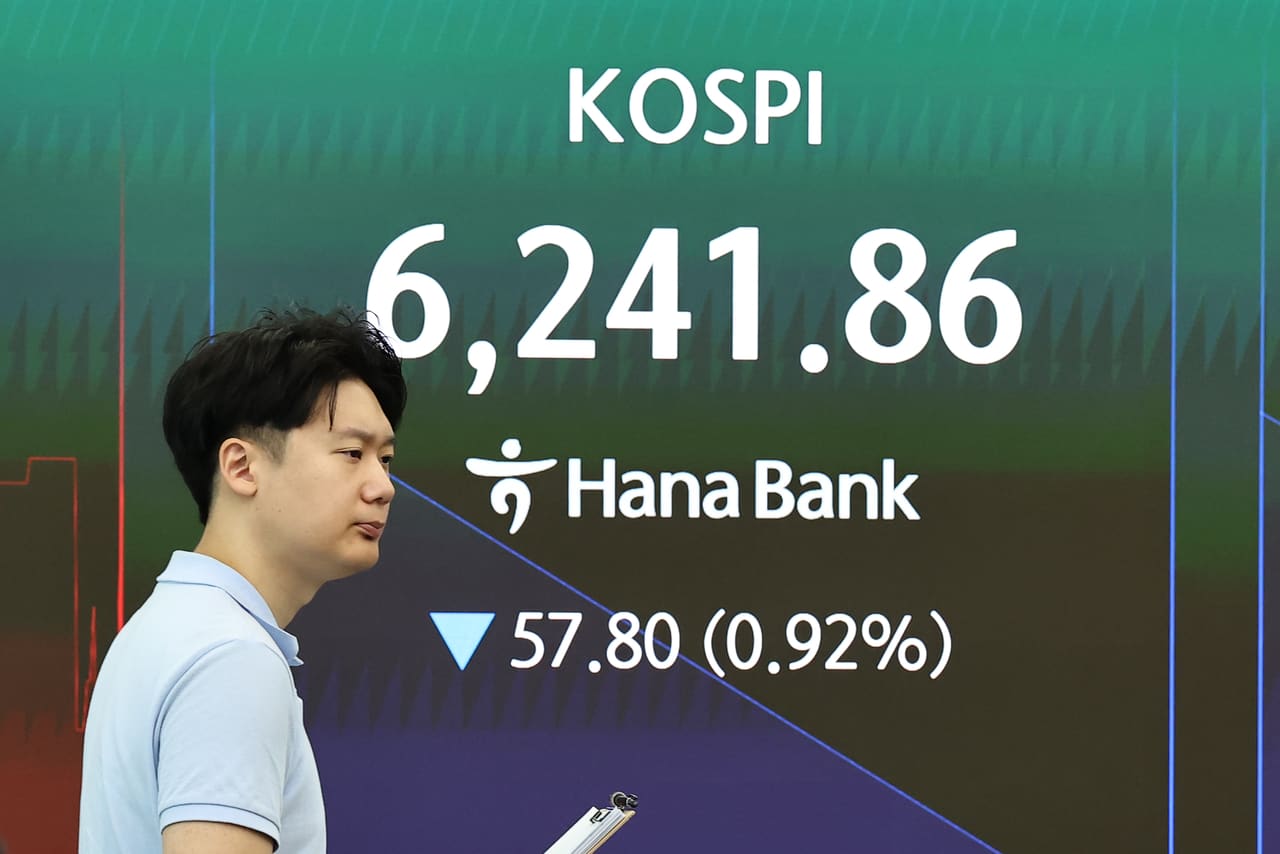
- ·Korea's KOSPI index dropped 57.86 points to 6,241.8 in early trading, down 0.92 percent as investors reacted to overnight losses in US markets.
- ·Wall Street retreated from record highs as oil prices climbed on uncertainty around the reopening of the Strait of Hormuz, a critical energy shipping route.
- ·Korean equities remain vulnerable to external shocks given the economy's heavy export orientation and structural sensitivity to energy price fluctuations.
Regional Markets React to US Pressure
Korean equities stumbled out of the gate Tuesday morning, with the benchmark Korea Composite Stock Price Index shedding nearly 1 percent in early trade. The KOSPI dropped 57.86 points to 6,241.8 as of 9:15 a.m. local time, reflecting investor caution after Wall Street retreated from record highs.
The opening decline of 0.95 percent underscored the tight linkage between Asian equity markets and overnight sentiment in New York. Korea's export-heavy economy makes its stock market particularly sensitive to shifts in global risk appetite, and Tuesday's session opened with investors digesting a modest but notable pullback in US indices.
Oil Prices and Shipping Bottlenecks
The catalyst for Wall Street's modest retreat lay in energy markets and geopolitical uncertainty. US stocks had posted an all-time high in the previous session but gave back gains as crude oil prices climbed on worries about the Strait of Hormuz, a critical shipping artery for global energy supplies.
The S&P 500 slipped 0.1 percent from its record level, while the Dow Jones Industrial Average also edged lower. Though the declines were measured, they broke a streak of gains that had pushed US equities to fresh peaks. The uncertainty surrounding when the Strait of Hormuz might reopen to normal shipping traffic injected volatility into commodity markets, spilling over into equities.
For Asian markets, the combination of a weaker Wall Street close and elevated oil prices created a headwind at the start of the trading week. Rising energy costs weigh on corporate margins across the region, particularly in manufacturing-intensive economies like South Korea, where industrial giants depend on stable input prices.
Korea's Export Sensitivity
The KOSPI's vulnerability to external shocks reflects the structure of Korea's economy. Major constituents of the index include global exporters in semiconductors, automobiles, and petrochemicals - sectors that face direct exposure to both demand trends in the US and input cost pressures from energy markets.
When US equity markets retreat, it often signals a shift in investor sentiment around global growth prospects. For Korean chipmakers and electronics firms that generate substantial revenue from American customers, even a minor pullback in New York can prompt reassessments of earnings outlooks.
The timing of Tuesday's decline also mattered. Early-week sessions in Asia often set the tone for regional trading, and a weak open in Seoul can ripple through to other bourses in the region. Investors watch the KOSPI as a barometer for risk appetite across emerging Asian markets, given Korea's status as a developed economy with deep integration into global supply chains.
Watching the Energy Channel
The oil price dynamic adds another layer of complexity. If shipping disruptions in the Strait of Hormuz persist or escalate, energy costs could remain elevated, squeezing margins for energy-intensive industries. Korea imports virtually all of its crude oil, making the economy acutely sensitive to supply shocks in the Middle East.
In recent years, Korean policymakers have worked to diversify energy sources and build strategic reserves, but the country remains structurally exposed to price spikes. For equity investors, sustained oil price increases could dampen earnings forecasts and weigh on sentiment, particularly if global growth begins to slow at the same time.
The interplay between US equity performance, commodity prices, and Asian market sentiment will likely remain a focal point for traders in the days ahead. If Wall Street stabilizes and oil prices ease, Korean stocks could recover lost ground quickly. Conversely, any further deterioration in either variable could deepen the pullback and test technical support levels on the KOSPI.
Market participants will also be watching corporate earnings updates and economic data releases from both Korea and the US for signals on whether the current weakness represents a brief correction or the start of a more sustained adjustment.
RELATED STORIES
SK Hynix Hits Trading Limit as Korean Chip Stocks Rally
Cheng Wei-Lun · 3 min
Seoul Stocks Snap Two-Day Slide on Chip Rally
Cheng Wei-Lun · 3 min
SK Hynix Eyes Investor for Chongqing Chip Plant as Korean Investment Accelerates
Cheng Wei-Lun · 2 min

South Korea's Tourism Recovery Delivers Ninefold Jump in Foreign Card Spending
Jun-ho Seo · 5 min
Spot something wrong? Email editor@briefasia.com. We log every correction publicly.