Finance · Markets
Seoul Stocks Snap Two-Day Slide on Chip Rally
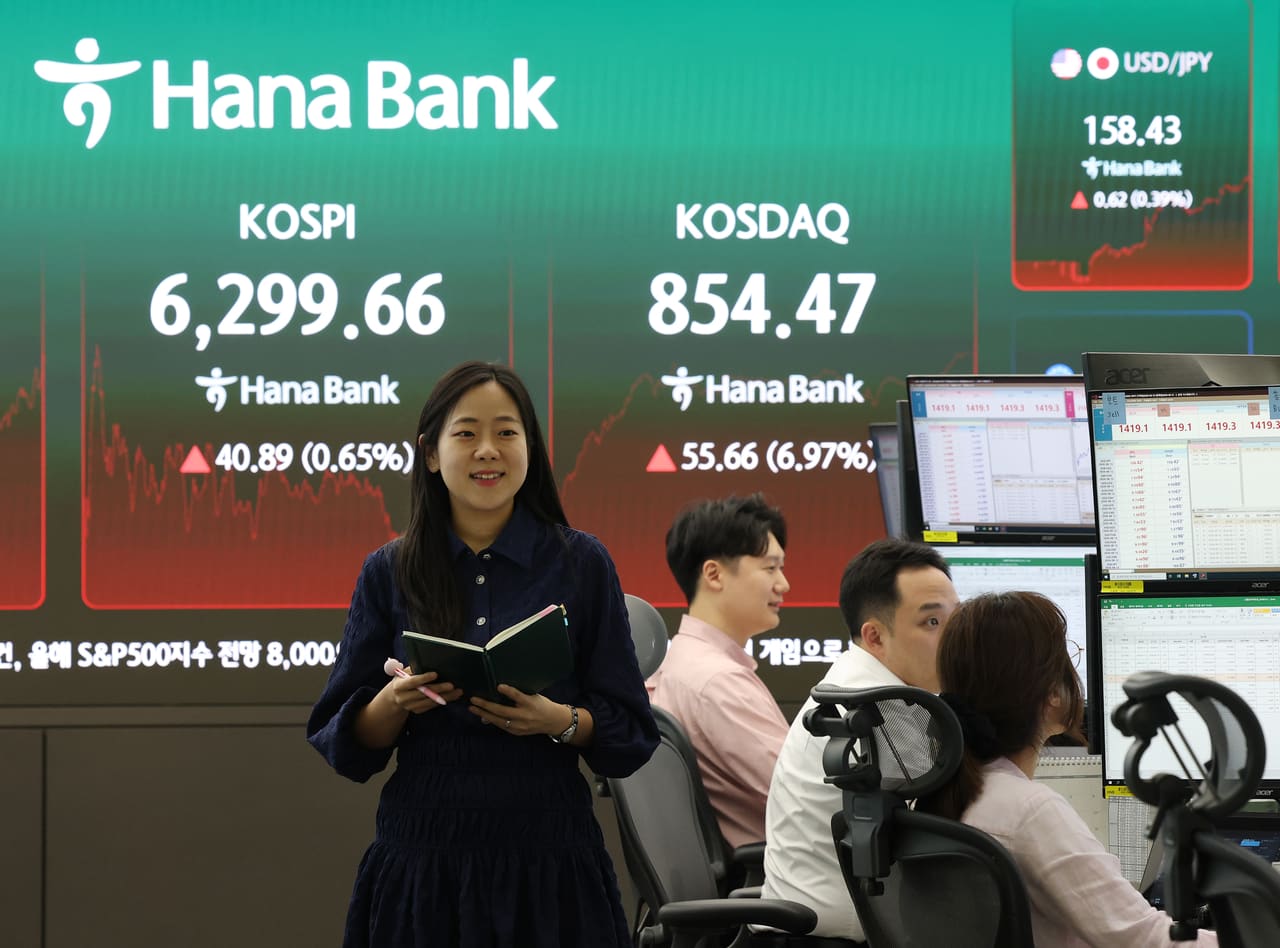
Bargain hunting in semiconductor names lifted the KOSPI 0.65 percent Monday, though early gains faded as the session wore on.
KEY TAKEAWAYS
- ·South Korea's KOSPI climbed 40.89 points to 6,299.66 on Monday, a 0.65 percent gain driven by chip stock bargain hunting.
- ·The index surged 2.16 percent in early trading before retreating, reflecting profit-taking and cautious investor sentiment.
- ·The Korean won weakened against the dollar, a move that can support exporter earnings and often accompanies equity rallies.
Bargain Hunting Drives Recovery
South Korean equities posted modest gains Monday, breaking a two-session decline as investors scooped up semiconductor shares following a record rally on Wall Street. The Korea Composite Stock Price Index added 40.89 points to settle at 6,299.66, marking a 0.65 percent advance.
The session opened with momentum, the index jumping 0.76 percent at the bell before surging as much as 2.16 percent in early trade. That enthusiasm cooled through the afternoon, with the benchmark surrendering a portion of its morning climb by the close.
Chip-related names led the rebound. Investors targeted technology stocks that had sold off in recent sessions, viewing current valuations as attractive entry points after US markets extended their bull run into new territory. The move reflects a familiar pattern in Seoul trading: foreign and institutional money flowing into exporters when global risk appetite improves.
Currency and Broader Market Context
The Korean won weakened against the dollar during the session, a divergence that often accompanies equity gains in Seoul. A softer currency can boost expectations for exporters' overseas earnings when converted back to won, providing additional support for multinational names that dominate the KOSPI.
Trading remained choppy throughout the day, with the index oscillating between gains and flat territory. Volume and breadth data suggest the rally lacked conviction beyond the chip sector, a sign that investors remain cautious about the sustainability of the rebound.
What Drove the Volatility
The early surge and subsequent fade point to conflicting forces at work. On one hand, Wall Street's strength and the prospect of stabilizing global demand gave buyers confidence to step in. On the other, lingering concerns about export growth, corporate earnings visibility, and regional economic headwinds kept participants from fully committing.
Seoul's equity market has grown increasingly sensitive to overnight moves in US technology stocks, particularly those in the semiconductor and hardware supply chain. When Nasdaq futures rise, Korean chip names often follow at the open, only to see gains evaporate if domestic or regional news turns sour.
Monday's session underscored that dynamic. The KOSPI's inability to hold its early highs suggests traders took profits after the initial jump, unwilling to chase the rally without clearer signals on demand or policy.
Regional Implications
South Korea's export-driven economy makes its equity market a barometer for broader Asian manufacturing sentiment. A rebound in chip stocks, even a modest one, signals that global supply chains may be stabilizing after weeks of mixed data from Taiwan, Japan, and mainland China.
For regional investors, Seoul's performance offers clues about demand for memory, foundry capacity, and consumer electronics components. The fact that bargain hunting concentrated in semiconductors rather than financials or industrials suggests that technology remains the primary lens through which money managers view Korean risk.
The won's weakness adds another layer. A softer currency can help exporters but also raises questions about capital flows and central bank policy. If the won continues to slide, the Bank of Korea may face pressure to adjust its stance, a development that would ripple through equity and bond markets alike.
Monday's session was a small step in a larger, uncertain dance. The KOSPI's modest gain snapped a losing streak, but the intraday volatility and profit-taking leave open whether buyers have conviction or are simply chasing momentum. For now, chip stocks remain the engine, and Wall Street the fuel.
RELATED STORIES
Seoul Market Climbs on Tech Rally After US Jobs Data
Cheng Wei-Lun · 3 min

KT&G Posts Fourth Consecutive Quarter of Double-Digit Profit Growth
Cheng Wei-Lun · 3 min
SK Hynix Eyes Investor for Chongqing Chip Plant as Korean Investment Accelerates
Cheng Wei-Lun · 2 min

Asian Tech Stocks Surge as Weak US Jobs Data Dims Rate Hike Outlook
Cheng Wei-Lun · 4 min
Spot something wrong? Email editor@briefasia.com. We log every correction publicly.