Perspectives · Analysis
Family vs. Meritocracy: What Toyota's Leadership Model Says About Asian Corporate Longevity
As the Toyoda clan prepares its next generation, the automaker's oscillation between dynasty and professional management offers lessons for regional conglomerates navigating succession.
KEY TAKEAWAYS
- ·Hiroshi Okuda's presidency from 1995 broke 28 years of Toyoda family leadership and established Toyota's global production network and hybrid technology foundation.
- ·Toyota's market capitalization more than doubled under Akio Toyoda between 2009 and 2023, demonstrating how founding-family patience enabled long-term strategic bets.
- ·The company now rotates professional managers through the president role while Daisuke Toyoda, Akio's son, is positioned as the next-generation family leader.
- ·Toyota's hybrid governance model, alternating between family and meritocratic leadership, offers a template for Southeast Asian conglomerates facing succession challenges.
The Okuda Inflection Point
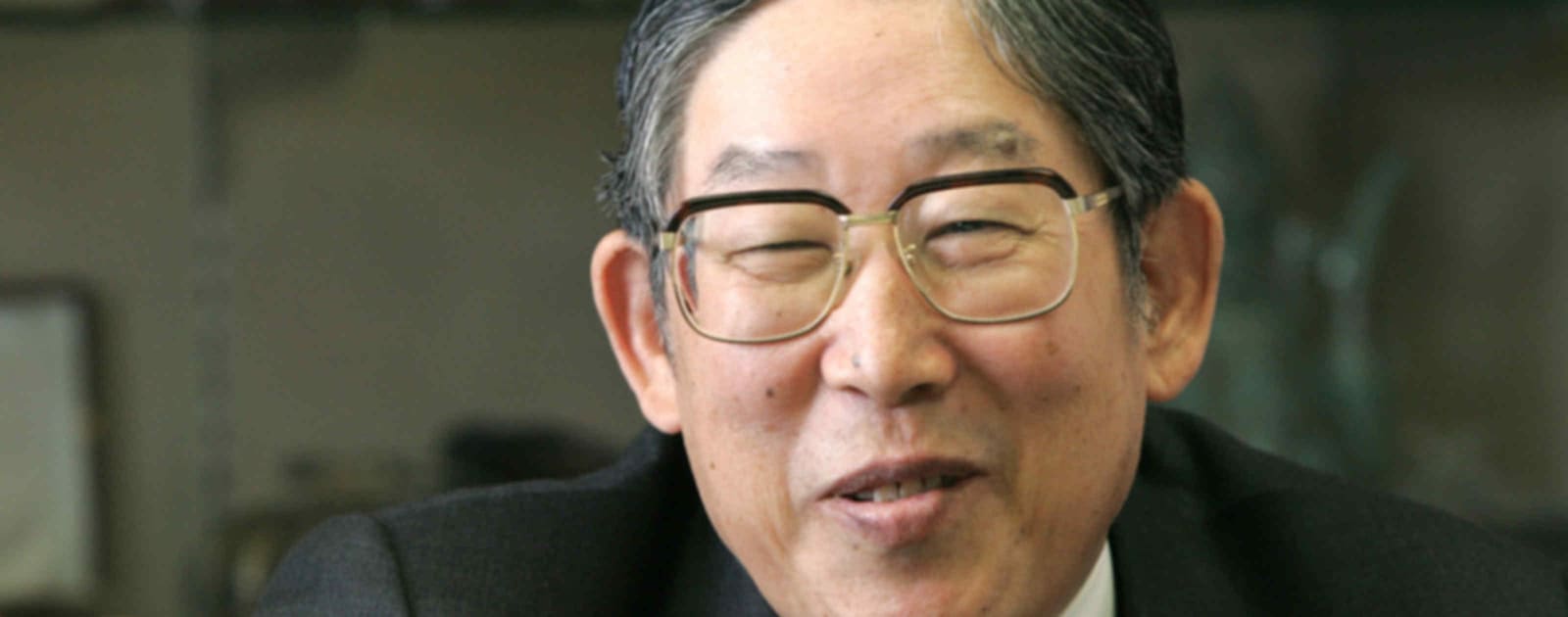
The death of Hiroshi Okuda at 93 marks the end of an era for Toyota Motor, but more importantly, it invites scrutiny of a governance experiment that has quietly shaped one of Asia's most valuable companies. When Okuda assumed Toyota's presidency in 1995, he broke a 28-year streak of Toyoda family leadership. His tenure established the global production footprint and hybrid technology platform that underpin Toyota's current dominance. Yet the company reverted to family control in 2009, installing Akio Toyoda, the founder's grandson, for a 13-year run that cemented Toyota's position as the world's largest automaker by volume.
This oscillation between bloodline and meritocracy is neither accidental nor unstable. It reflects a deliberate calculus about what different leadership archetypes can deliver at different inflection points. Okuda's era was about globalization and technological diversification, challenges that demanded an outsider's willingness to disrupt internal consensus. Akio Toyoda's tenure was about defending market share against electrification disruptors and Chinese scale, a mission that benefited from the long-term capital patience only a founding family can command.
The Economics of Dynastic Patience
Western institutional investors often view founding-family influence as a governance red flag, a potential source of nepotism and strategic inertia. Yet Toyota's performance under Akio Toyoda suggests the opposite dynamic can prevail. Between 2009 and 2023, Toyota's market capitalization more than doubled, even as the company navigated the 2011 Tōhoku earthquake, the Takata airbag crisis, and the existential threat posed by Tesla's valuation surge.
The family's willingness to absorb short-term margin pressure in order to maintain hybrid technology leadership, rather than pivot prematurely to battery-electric vehicles, now appears prescient. Toyota sold 3.7 million electrified vehicles in 2025, a category that includes hybrids, plug-in hybrids, and fuel-cell models. That volume dwarfs the pure-EV output of legacy Western automakers and positions Toyota to benefit from markets where charging infrastructure remains sparse.
This strategic patience is difficult for professional CEOs to sustain. Equity compensation tied to three-year performance windows and activist investor pressure create structural incentives to optimize for near-term earnings. A founding family with generational wealth tied to the enterprise can afford to play a longer game. The question is whether that advantage persists across multiple generations, or whether it decays into the complacency that has undone other Asian dynasties.
The Sato-Kon Interregnum
Toyota's current structure complicates any simple narrative. Akio Toyoda remains chairman, but day-to-day operations have passed to two successive presidents in rapid succession: Koji Sato in 2023, then Kenta Kon in early 2026. Both are career Toyota executives, not family members. Both have maintained notably lower public profiles than Okuda or the presidents who followed him. Industry observers interpret this arrangement as a holding pattern, a way to manage operational continuity while Daisuke Toyoda, Akio's eldest son, accumulates experience and credibility.
If that reading is correct, Toyota is engineering a soft succession that avoids the abrupt transitions that have destabilized other family-controlled conglomerates. Samsung's Lee family, by contrast, has faced repeated crises tied to abrupt leadership changes and legal entanglements. Hyundai Motor Group has navigated its own succession from Chung Mong-koo to his son Euisun, but the transition involved years of public speculation and internal jockeying.
Toyota's approach appears more methodical. By rotating professional managers through the president role while retaining family oversight at the board level, the company preserves institutional continuity and avoids the perception that leadership quality depends entirely on genetic lottery. It also creates optionality: if Daisuke Toyoda proves capable, the family can reclaim operational control; if not, the company has established a credible alternative path.
Regional Implications
Toyota's model holds particular relevance for Southeast Asian conglomerates, many of which face succession pressures as founding generations age. Thailand's Charoen Pokphand Group, Indonesia's Salim Group, and the Philippines' Ayala Corporation all grapple with similar questions: when to professionalize management, how to preserve family influence without stifling merit, and whether dynastic control enhances or undermines long-term value.
The evidence from Toyota suggests that rigid adherence to either model is suboptimal. Pure meritocracy can deliver operational excellence but may lack the capital patience required for transformational bets. Pure dynasty can provide strategic continuity but risks insularity and talent attrition if non-family executives see a capped ceiling.
A hybrid approach, rotating between family and professional leadership depending on strategic context, may offer the best of both. But it requires a level of self-awareness and institutional discipline rare in family-controlled enterprises. The Toyoda family's willingness to cede operational control in 1995, then reclaim it in 2009, then cede it again in 2023, demonstrates a pragmatism that transcends ego. That pragmatism, more than any individual leader's brilliance, may be Toyota's most durable competitive advantage.
The Test Ahead
The next decade will determine whether Toyota's succession model is genuinely robust or merely a function of favorable market conditions. The automaker faces simultaneous challenges: the accelerating regulatory shift toward zero-emission vehicles in Europe and California, intensifying competition from Chinese EV makers like BYD, and the capital demands of software-defined vehicle architectures that require entirely new organizational capabilities.
If Daisuke Toyoda eventually assumes the presidency, he will inherit a company far more complex than the one his father led. Toyota's 2025 revenue exceeded 45 trillion yen, with operations spanning 170 countries and territories. The margin for error is narrower, the competition more sophisticated, and the technological disruption more profound than anything Hiroshi Okuda confronted in the 1990s.
The question is not whether family leadership can work in principle, but whether this particular family, in this particular moment, can cultivate the capabilities required to sustain Toyota's dominance. If the answer is yes, it will validate a governance model that much of the Western investment community dismisses. If the answer is no, it will underscore the limits of dynastic control in industries where technological change outpaces generational succession.
Either outcome will shape how Asia's next wave of corporate giants thinks about leadership, ownership, and the delicate balance between continuity and renewal.
RELATED STORIES

Dentsu Plans to Cut 30% of Overseas Subsidiaries by 2028
Jun-ho Seo · 3 min
US Intervenes in Currency Markets to Shield Treasury Yields From Japanese Yen Volatility
Cheng Wei-Lun · 4 min

Japan's Core Inflation Edges Up to 1.8% Amid Energy Pressure
Aiko Nakamura · 2 min

Bank of Japan Eyes September Rate Increase and Faster Tightening Cycle
Aiko Nakamura · 3 min
Spot something wrong? Email editor@briefasia.com. We log every correction publicly.