Technology · Products
Taiwan's FSC Targets Late-2026 Trial Production for High-End Capacitors
Injection molding machinery maker pivots into passive components for AI and GPU markets
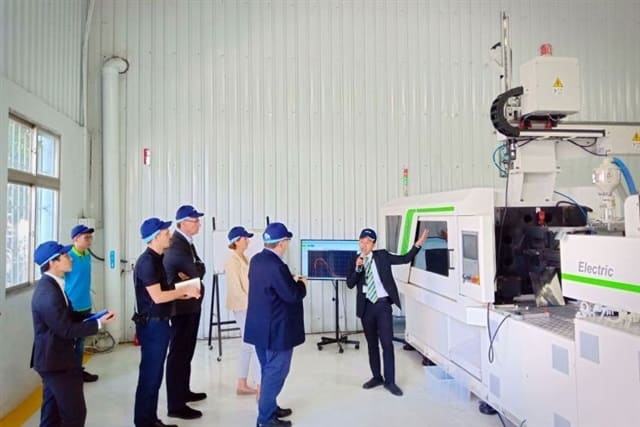
KEY TAKEAWAYS
- ·FSC plans to start trial production of multi-layer polymer capacitors by the end of 2026, targeting AI and GPU supply chains.
- ·The move diversifies FSC beyond its core injection molding machinery business into high-value passive components with tighter specifications.
- ·Taiwan aims to capture more semiconductor supply chain value as competition intensifies with Japanese and South Korean capacitor incumbents.
A Manufacturing Pivot
FSC, a Taiwanese manufacturer historically known for plastic injection molding machinery, has set an internal deadline to begin trial production of multi-layer polymer capacitors by the fourth quarter of 2026. The company disclosed the timeline alongside its second-quarter financial results, framing the capacitor initiative as a strategic expansion into components used in high-performance computing and graphics processing units.
The MLPC product line represents solid-state capacitor technology designed for high-frequency and high-density applications. While FSC has not publicly detailed capital expenditure or production volume targets, the company positioned the move as a response to growing demand from AI infrastructure and GPU module manufacturers.
Why Passive Components Matter Now
Passive components, including capacitors, resistors, and inductors, form the backbone of power delivery networks in advanced semiconductors. As GPU designs push toward higher core counts and tighter power budgets, the specifications for supporting components have become more stringent. Multi-layer polymer capacitors offer lower equivalent series resistance and better thermal stability compared to conventional ceramic or electrolytic designs, making them attractive for next-generation accelerator cards.
Taiwan already hosts a mature ecosystem for passive component production, with established players like Yageo and Walsin Technology dominating ceramic capacitor output. FSC's entry suggests the company sees margin opportunity in specialized, higher-value segments where incumbent suppliers may face capacity constraints or technical differentiation challenges.
Diversification Beyond Core Machinery
FSC's core business in injection molding equipment serves automotive, consumer electronics, and packaging industries. The shift into electronic components marks a departure from capital equipment sales cycles, which are typically longer and more cyclical. Passive components, by contrast, are consumable at scale and tied to unit shipments of end products like servers, workstations, and data center accelerators.
The company has not announced partnerships with specific GPU or AI chip designers, but trial production timelines typically precede formal qualification processes with original equipment manufacturers. If FSC meets its end-2026 target, commercial volume production would likely follow in early 2027, pending customer validation and yield stabilization.
Regional Context
Taiwan's push into advanced passive components aligns with broader industrial policy goals to capture more value in the semiconductor supply chain beyond foundry services. The island's electronics manufacturing base provides proximity to TSMC's packaging facilities and to regional assembly hubs in Southeast Asia, where GPU modules are often built.
Japan and South Korea remain formidable competitors in high-end capacitor technology, with firms like Murata and Samsung Electro-Mechanics holding significant intellectual property and production scale. FSC's ability to compete will depend on process yields, cost structure, and speed to market. The trial production phase will serve as an early indicator of whether the company can meet the reliability and performance benchmarks that AI hardware vendors require.
What Comes Next
FSC has not disclosed whether it plans to build dedicated cleanroom capacity or repurpose existing facilities for capacitor manufacturing. The company's second-quarter update did not include guidance on revenue contribution from the new product line, suggesting the segment remains in early development.
Industry participants will watch whether FSC secures design-in wins with major GPU vendors or tier-one server ODMs. Such partnerships are often announced during qualification phases, providing visibility into production ramp timelines. For now, the late-2026 trial shipment target sets a public milestone against which the company's execution will be measured.
RELATED STORIES
Taiwan Emerges as Critical Hub for Co-Packaged Optics Manufacturing
Cheng Wei-Lun · 3 min
Taiwan's Ennoconn Bets on Chip Expansion and Retail Tech for Growth
Cheng Wei-Lun · 2 min
Taiwan's Compal Braces for Sharp PC Decline as Memory Costs Squeeze Demand
Cheng Wei-Lun · 3 min

Formosa Plastics and Daicel Launch Chip Materials Joint Venture in Taiwan
Cheng Wei-Lun · 3 min
Spot something wrong? Email editor@briefasia.com. We log every correction publicly.