Technology · Products
Taiwan's Compal Braces for Sharp PC Decline as Memory Costs Squeeze Demand
The contract manufacturer projects second-half shipments to fall up to 17 percent year-on-year, even as AI server revenue surges toward double-digit growth

KEY TAKEAWAYS
- ·Compal Electronics expects second-half PC shipments to decline 15 to 17 percent year-on-year, driven by rising memory chip costs that are dampening enterprise and consumer demand.
- ·AI PCs now account for approximately 50 percent of Compal's notebook shipments, and the company's server business is on track to represent 10 percent of total revenue by year-end.
- ·Compal's second-quarter net profit surged 549 percent year-on-year to NT$3.13 billion, with AI servers contributing roughly 70 percent of total server revenue last quarter.
Memory Price Surge Chills Enterprise Appetite
Taiwan contract manufacturer Compal Electronics faces a steeper-than-expected contraction in PC volumes this year, with second-half shipments forecast to slide between 15 and 17 percent compared with the same period in 2025. Company president Anthony Peter Bonadero attributed the pullback to escalating memory chip costs that have made both corporate buyers and individual consumers hesitant to commit to new hardware purchases.
First-half shipments reached 12.1 million units, already down 14.2 percent year-on-year, according to Compal data. For the full year, the firm anticipates total volumes will retreat by a mid-teens percentage from the 28 million units it shipped in 2025. The pressure arrives despite a wave of replacement demand tied to the end-of-support cycle for Windows 10, which typically would have driven refresh activity across corporate fleets.
Bonadero told an online earnings briefing that component price inflation has outweighed upgrade urgency, prompting purchasing managers to delay orders or scale back deployment plans. Memory module costs have climbed steadily over recent quarters, squeezing bill-of-materials budgets and eroding the value proposition for standard notebook configurations.
AI PC Mix Lifts Unit Economics
Despite shrinking volumes, Compal has managed to keep PC segment profitability stable by shifting its production mix toward higher-value categories. Artificial intelligence PCs now represent roughly half of all notebook shipments leaving Compal's lines, and that proportion is expected to climb as the industry enters a broader AI-enabled refresh wave.
Commercial notebooks, which carry better margins than consumer models, also account for a growing share of output. Together with incremental selling-price gains and tighter operational efficiency, those dynamics have cushioned the margin impact of lower throughput, according to the company.
Gross margin for the second quarter came in at 4.6 percent, down from 5.3 percent in the prior quarter, reflecting the memory cost headwind. Operating margin edged down to 1.2 percent from 1.3 percent. Net profit, however, rose sharply to NT$3.13 billion (US$97.3 million), up 59 percent sequentially and 549 percent year-on-year, as server revenue and product mix improvements more than offset PC weakness. Earnings per share climbed to NT$0.73, compared with NT$0.45 in the first quarter and NT$0.11 a year earlier.
Server Revenue on Track for Double-Digit Share
Compal's server business continues to accelerate, with revenue expected to grow by a high double-digit percentage sequentially in the third quarter. Server sales are on course to reach 10 percent of total company revenue by year-end, Bonadero said, marking a notable diversification milestone for a manufacturer long associated with notebook assembly.
AI servers accounted for approximately 70 percent of Compal's total server revenue in the second quarter. The portfolio centers on systems built around Nvidia's B300 architecture, most of which have advanced to what the company calls "Level 10" production status, indicating full-scale manufacturing readiness.
Compal plans to begin assembling larger AI server rack configurations in the first quarter of 2027. Recent orders have come primarily from newer cloud infrastructure customers, and that momentum is expected to carry through the remainder of this year, according to the company.
As new manufacturing capacity comes online in Taiwan and Texas, Compal intends to broaden its server customer base next year to include tier-one cloud service providers and at least one major enterprise client. That expansion would reduce concentration risk and provide more stable demand visibility across quarterly cycles.
Non-PC Revenue Climbing Toward 40 Percent
Non-PC products contributed 34 percent of Compal's NT$238.3 billion in second-quarter revenue, and the company projects that share will reach 40 percent by the close of 2026. The shift reflects both the relative strength of server and other categories and the ongoing headwinds in traditional notebook markets.
Capital expenditure in the first half totaled NT$9 billion, with NT$6 billion to NT$7 billion directed toward server-related infrastructure in Taiwan and the United States. Compal expects full-year capex to approach NT$18 billion, underscoring its commitment to scaling AI server capacity even as PC demand softens.
The divergence between PC and server trajectories highlights the broader realignment underway across Asia's electronics supply chain. Contract manufacturers that once relied almost exclusively on consumer device assembly are now racing to capture share in data-center infrastructure, where margins are higher and growth rates remain robust despite macroeconomic uncertainty. For Compal, the question is whether server revenue can grow fast enough to offset a protracted PC downturn and sustain earnings momentum into 2027.
RELATED STORIES
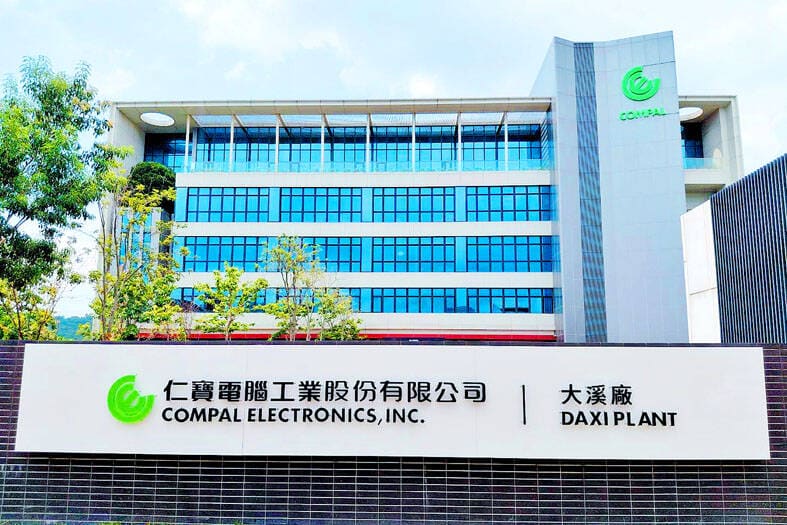
Compal Bets on AI Servers With Triple-Digit Growth Target
Cheng Wei-Lun · 3 min
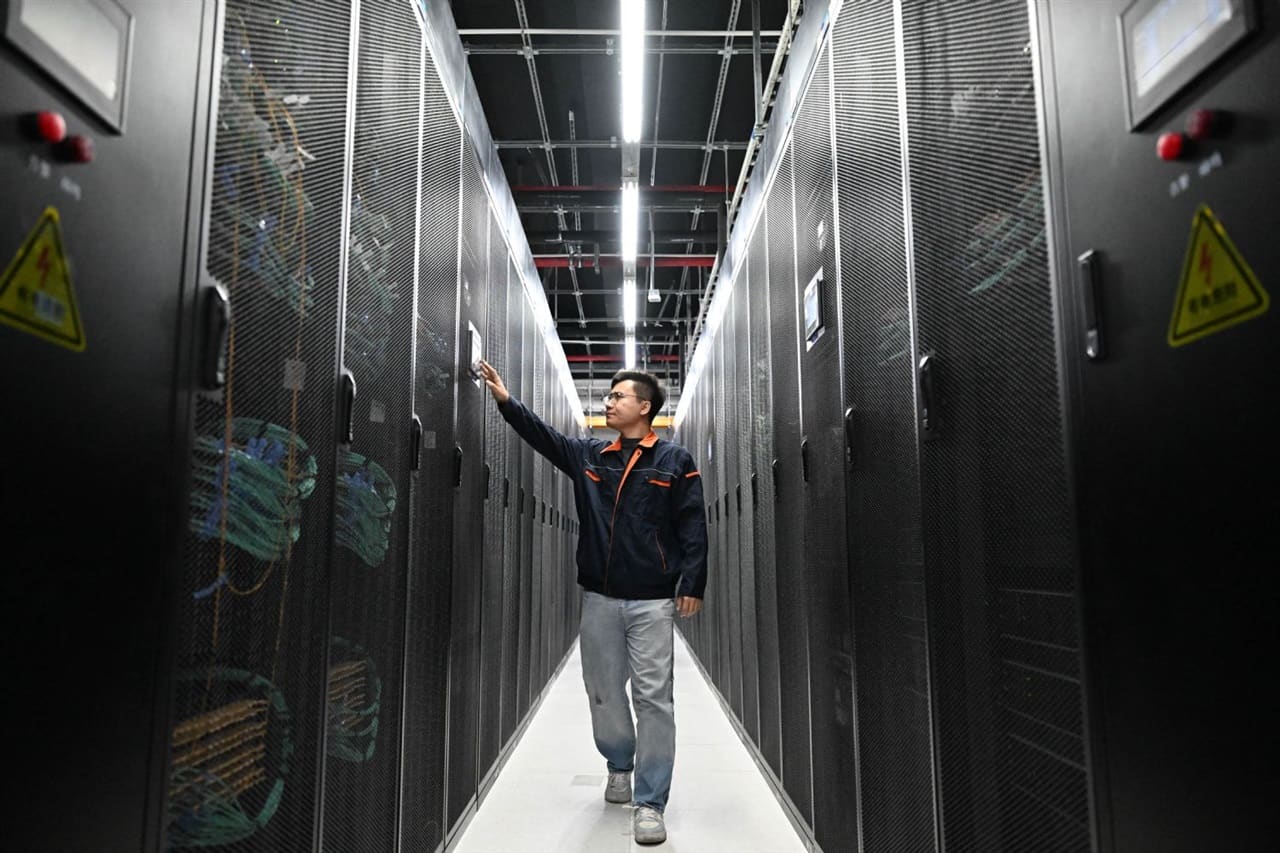
Taiwan's AI Server Supply Chain Reports Record July Revenue
Cheng Wei-Lun · 2 min
E Ink Cuts Revenue Forecast as Memory Prices Delay E-Reader Launches
Cheng Wei-Lun · 3 min

Taiwan's Server Supply Chain Posts Mixed July Results Amid AI Build-Out
Cheng Wei-Lun · 4 min
Spot something wrong? Email editor@briefasia.com. We log every correction publicly.