Technology · Dev
Taiwan's Server Supply Chain Posts Mixed July Results Amid AI Build-Out
King Slide, QCI, and AIC recorded the strongest annual growth as ODM and EMS giants maintained largest revenue share
KEY TAKEAWAYS
- ·King Slide, QCI, and AIC recorded the strongest year-over-year revenue growth in July among Taiwan's server component suppliers, driven by AI server demand.
- ·ODM and EMS contractors including Quanta retained the largest revenue share despite slower sequential growth as customers paused orders to manage inventory.
- ·Asia-Pacific data center expansion in Singapore, Tokyo, and India is fueling long-term demand for high-density server components and liquid-cooling chassis.
Revenue Growth Split by Segment
Taiwan's server supply chain posted uneven July results, with annual comparisons remaining in positive territory even as sequential momentum diverged across component categories and individual suppliers. ODM and EMS contractors continued to command the largest absolute revenue figures, yet smaller specialists in mechanical components and enclosures delivered the fastest year-on-year expansion.
King Slide, which manufactures telescopic rail kits used in rack-mounted servers, emerged among the leaders in annual growth. The Taichung-based firm has benefited from the shift toward higher-density AI infrastructure, where deeper racks and heavier GPU-laden chassis require more robust sliding mechanisms. Data center operators are installing servers that weigh significantly more than traditional compute nodes, driving demand for reinforced rail systems capable of supporting loads in excess of 100 kilograms per unit.
QCI, a contract manufacturer specializing in white-box and hyperscale server assembly, also recorded strong year-on-year gains in July. The company assembles systems for cloud service providers and enterprise customers who prefer direct procurement over branded hardware. As hyperscalers accelerate AI training cluster deployments, QCI has ramped production lines in both Taiwan and Southeast Asia to meet order books extending into the fourth quarter.
AIC, a chassis and thermal-solution supplier, posted similarly robust annual growth. The company's product portfolio includes GPU server enclosures with advanced liquid-cooling integration, a category that has seen brisk demand as power densities in AI racks climb past 50 kilowatts. AIC's engineering teams have been working closely with GPU module makers and ODMs to co-develop chassis that accommodate next-generation accelerator cards and direct-to-chip cooling loops.
ODMs Hold Revenue Scale
Despite the faster growth rates recorded by component specialists, ODM and EMS contractors retained the largest revenue share within the supply chain. Quanta, Wistron, Inventec, and Wiwynn collectively generated the bulk of July's server-related sales, reflecting their position as primary system integrators for hyperscale customers in North America and China.
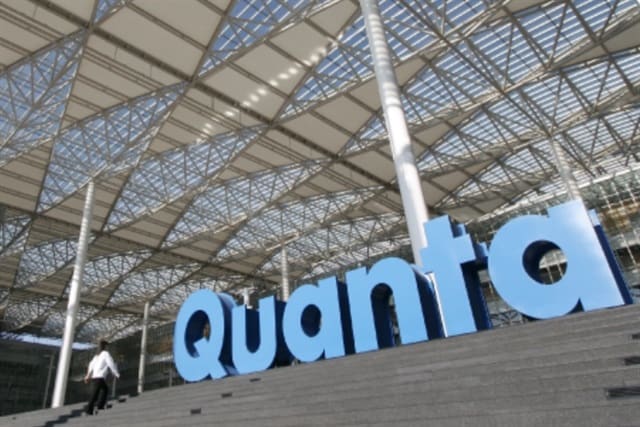
Quanta's July revenue benefited from sustained shipments of AI training servers to U.S. cloud providers, though the company's sequential performance was more subdued. Month-on-month comparisons showed a deceleration as certain customers paused orders to digest inventory and await the next wave of GPU availability. Quanta's management has indicated that visibility into the second half remains constructive, with order pipelines supported by enterprise refresh cycles and ongoing AI infrastructure investments.
Wistron's server business also contributed to the ODM cohort's dominance, with the company shipping both x86 and ARM-based systems in July. Wistron has diversified its customer base beyond traditional hyperscalers, adding telco and government clients in Southeast Asia and India who are building out regional cloud capacity. The company's Hsinchu campus has expanded production capacity for edge and enterprise servers, complementing its high-volume hyperscale lines.
Sequential Trends Diverge
While year-over-year comparisons painted a broadly positive picture, month-on-month revenue trends varied sharply. Several suppliers reported sequential declines in July, attributable to seasonality, inventory adjustments, and uneven GPU allocation from chipmakers. Component vendors serving multiple end markets saw more stable sequential performance, as industrial and telecom server demand provided a cushion against fluctuations in hyperscale orders.
King Slide's sequential revenue held relatively steady, supported by diversified exposure across enterprise storage, networking equipment, and AI server racks. The company's rail kits are specified in a wide range of 19-inch rack systems, giving it a more balanced demand profile than pure-play AI component suppliers.
AIC's sequential performance was similarly resilient, underpinned by long lead times for custom chassis projects. The company typically books orders six to eight weeks in advance, smoothing month-to-month volatility. AIC's liquid-cooling chassis have multi-quarter design-in cycles, and July shipments reflected orders placed in the spring.
Asia Data Center Buildout Drives Long-Term Demand
The Taiwan supply chain's performance is closely tied to data center construction activity across Asia-Pacific. Hyperscalers are expanding footprints in Singapore, Tokyo, Sydney, and Mumbai, with several announcing multi-billion-dollar commitments to GPU cluster deployments over the next two years. These projects require dense server configurations, high-power cooling, and ruggedized mechanical components, all areas where Taiwanese suppliers have established engineering leadership.
Singapore remains a focal point despite land and power constraints. Operators are deploying liquid-cooled AI racks that pack more compute into existing data hall space, a shift that favors suppliers like AIC and King Slide who can deliver high-load-bearing, thermally efficient enclosures and rails. Tokyo and Osaka are seeing similar investments, with Japanese cloud providers and financial institutions ordering GPU servers for machine-learning workloads in payments, trading, and language-model inference.
India's emerging hyperscale market is another growth vector. Domestic cloud platforms and multinational operators are building capacity in Mumbai, Pune, and Hyderabad, with procurement increasingly routed through Taiwanese ODMs and component makers. Wistron and QCI have both expanded sales teams targeting Indian customers, and King Slide has opened a technical support office in Bangalore to service local integrators.
The outlook for Taiwan's server supply chain remains constructive into the second half, contingent on GPU supply normalization and continued hyperscale capex. Component specialists are investing in capacity for next-generation cooling and mechanical systems, while ODMs are balancing production schedules against customer inventory levels. July's results underscore the sector's shift toward higher-value, AI-optimized hardware, even as month-to-month volatility persists.
RELATED STORIES
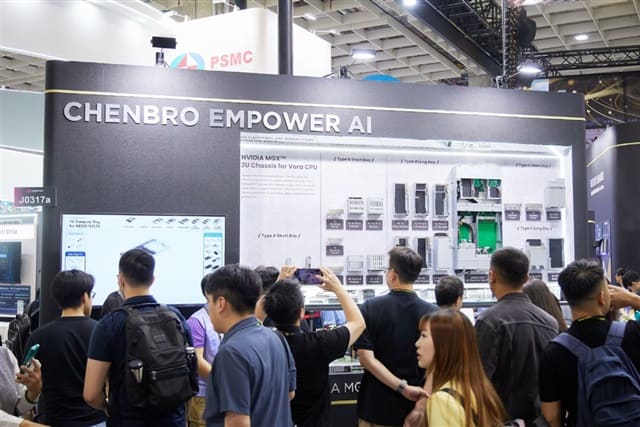
Chenbro Flags Seven Indicators for Second Half 2026 AI Demand Outlook
Cheng Wei-Lun · 3 min
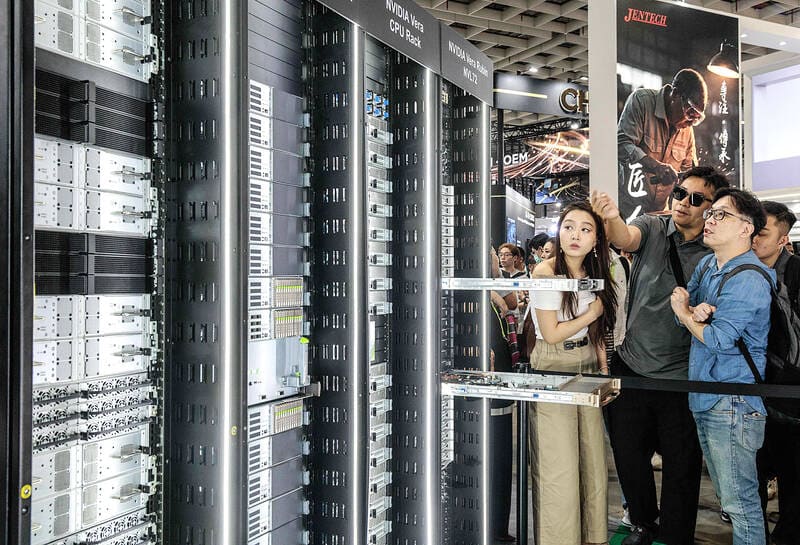
Wiwynn Profit Surges as Cloud Giants Accelerate AI Data Center Buildout
Cheng Wei-Lun · 4 min
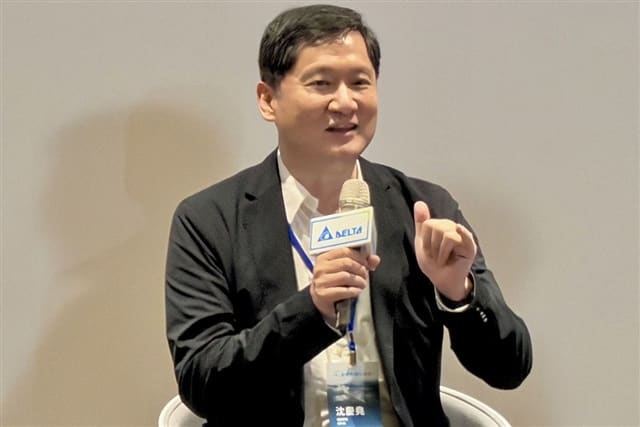
Power Constraints Emerge as AI Data Center Bottleneck
Cheng Wei-Lun · 2 min
Taiwanese Display Maker Qisda Bets on AI Servers to Reverse Monitor Slump
Cheng Wei-Lun · 3 min
Spot something wrong? Email editor@briefasia.com. We log every correction publicly.