Finance · Deals
Taiwanese Display Maker Qisda Bets on AI Servers to Reverse Monitor Slump
The Taipei-based group plans liquid-cooled infrastructure and 1.6-terabit networking switches as traditional IT sales stall
KEY TAKEAWAYS
- ·Qisda reported second-quarter net profit of NT$594 million, up 67 percent year-on-year, with gross margin improving to 17.27 percent as business solutions and medical equipment offset weak monitor demand.
- ·The company plans to ship 1.6-terabit networking switches to a major North American customer by end-August, with low-volume production starting before year-end and material revenue contribution expected in 2027.
- ·AEWIN Technologies, a Qisda subsidiary, secured orders for new AI server products and is developing two-phase direct liquid-cooling systems, targeting data-center thermal management bottlenecks.
Shifting Revenue Mix
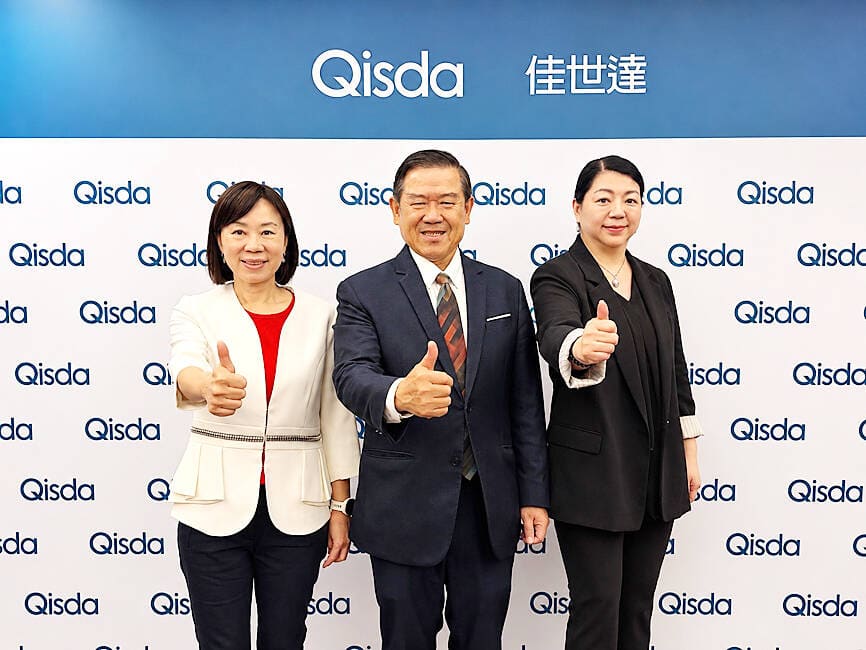
Qisda's leadership outlined a strategic pivot during an earnings briefing yesterday, signaling that AI infrastructure and medical solutions would drive the group's performance through year-end after legacy IT product lines showed weakness. Chairman Peter Chen confirmed that quarterly consolidated sales would climb sequentially in the current period, reversing a 1 percent annual decline that brought second-quarter turnover to NT$52.73 billion.
The company's traditional display and projector operations, which still represent 42 percent of group revenue in the first half, face headwinds from soft desktop monitor demand. Business solutions, medical equipment, and networking now account for the remaining majority, with business solutions alone capturing 21 percent of the top line.
Chen told analysts that business solutions, bolstered by server products under subsidiary AEWIN Technologies, would lead growth in the coming months. Medical and networking divisions are also expected to accelerate, positioning the group to exceed the NT$104.3 billion recorded in the first six months of the year.
Infrastructure Push
AEWIN has secured orders for new server designs, with initial shipments scheduled to begin in the third quarter. Qisda is also preparing two-phase direct liquid-cooling systems and expects to deliver sample units to prospective clients soon. The cooling technology addresses thermal challenges in dense compute environments, a bottleneck as rack power densities climb.
On the networking side, Qisda is developing 1.6-terabit switches tailored for data-center backbone fabric. Sample units are slated to reach a major North American customer by the end of August, with low-volume production beginning before year-end. If pilot runs proceed as planned, management expects AI-related hardware to contribute meaningfully to both revenue and margin in 2027.
President Cally Ko emphasized that the company's IT business would increasingly concentrate on AI vision and display applications, smart manufacturing, and healthcare. That includes ruggedized and medical-grade displays, autonomous mobile robots for factory floors, cashierless retail solutions, and ultrasound and rehabilitation systems for clinical settings.
Margin Recovery
Net profit in the second quarter reached NT$594 million, up 87 percent from the prior quarter and 67 percent year-on-year. Earnings per share rose to NT$0.38, compared with NT$0.20 in the first quarter and NT$0.18 a year earlier. Gross margin improved to 17.27 percent, gaining 60 basis points sequentially and 113 basis points annually.
The margin expansion reflects a more favorable product mix as higher-value solutions offset pricing pressure in commodity monitors. Management indicated that continued strength in business solutions and medical equipment would support profitability even as the company ramps new AI infrastructure lines.
Regional Context
Qisda's push into liquid cooling and high-speed networking mirrors efforts across Asia's contract manufacturing and ODM sector, where companies are racing to capture share in the buildout of AI compute capacity. Taiwanese firms, from server assemblers to thermal solution providers, are competing for design wins with hyperscale operators in North America and domestic Chinese cloud providers.
The 1.6-terabit switch program places Qisda in direct competition with established networking vendors and emerging ODM entrants. Success hinges on meeting stringent latency, power efficiency, and reliability requirements that data-center operators demand for AI training clusters. Early sample delivery to a North American customer suggests Qisda has cleared initial design validation, though volume ramps and margin profiles remain to be seen.
Qisda's medical and smart retail operations provide diversification beyond the cyclical dynamics of IT hardware. The company's ultrasound systems and liquid biopsy products target hospital procurement cycles, while cashierless store solutions address retail automation trends in Southeast Asia and Greater China. Those businesses carried the group through weaker periods in display sales and are expected to sustain double-digit growth rates into 2027.
Outlook
Management projects that second-half revenue will surpass the first-half figure, driven by sequential gains in each of the next two quarters. The timeline for AI infrastructure contributions remains conservative, with material impact expected in 2027 rather than late 2026. That cadence reflects the typical lag between sample approval, pilot production, and full-scale deployment in customer facilities.
Qisda's ability to execute on liquid cooling and high-speed networking will determine whether the company can offset structural headwinds in desktop monitors. The display business, once the core of the group, now serves as a platform for higher-margin AI vision applications rather than a volume growth engine. As traditional IT hardware matures, Qisda's revenue composition is shifting toward infrastructure and vertical solutions that command premium pricing and longer design cycles.
RELATED STORIES
Wiwynn Profit Surges as Cloud Giants Accelerate AI Data Center Buildout
Cheng Wei-Lun · 4 min
Chenbro Flags Seven Indicators for Second Half 2026 AI Demand Outlook
Cheng Wei-Lun · 3 min

Asian Tech Stocks Surge as Weak US Jobs Data Dims Rate Hike Outlook
Cheng Wei-Lun · 4 min

Franklin Templeton Restructures Leadership With Two Senior Appointments
Priyanka V. Rao · 4 min
Spot something wrong? Email editor@briefasia.com. We log every correction publicly.