Technology · Dev
SK Keyfoundry Commits $64 Million to Expand 8-Inch Wafer Capacity
South Korean foundry breaks from maintenance-only strategy with rare capital injection as Chinese clients strain mature-node supply
KEY TAKEAWAYS
- ·SK keyfoundry approved KRW90 billion (US$64 million) to expand 8-inch foundry capacity, breaking from its historical focus on maintaining existing lines.
- ·The investment responds to strained mature-node supply driven by surging demand from Chinese semiconductor customers and utilization rates exceeding 90 percent.
- ·New capacity is expected online in late 2027 or early 2028, positioning SK keyfoundry to capture incremental revenue without competing in advanced-node manufacturing.
Breaking the Pattern
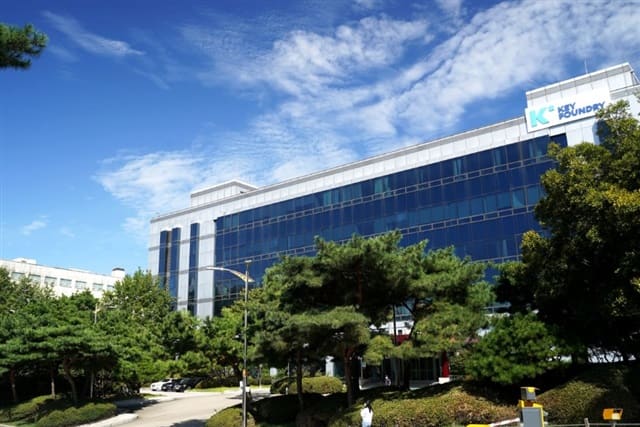
SK keyfoundry has authorized KRW90 billion (approximately US$64 million) in capital expenditure to expand its 8-inch semiconductor foundry capacity. The investment represents a departure from the company's long-standing operational approach, which has centered on maintaining existing production infrastructure rather than scaling output.
The South Korean foundry operator made the decision against a backdrop of tightening supply in the mature-node segment, where demand from Chinese customers has intensified pressure on available capacity. Eight-inch wafers remain the workhorse of analog, power management, and mixed-signal chips that underpin automotive electronics, industrial controls, and consumer devices across Asia.
China's Role in Capacity Strain
Chinese semiconductor firms have accelerated their procurement of foundry services on mature process nodes in recent quarters, a trend that industry observers link to both domestic market growth and strategic efforts to secure supply amid geopolitical friction. This surge has strained the global 8-inch foundry ecosystem, where capacity additions have been modest compared to the expansion seen in advanced nodes.
SK keyfoundry's decision to inject capital into capacity expansion rather than routine equipment upgrades signals that the company views current demand dynamics as durable rather than cyclical. The foundry has historically operated with a conservative capital allocation framework, prioritizing yield optimization and equipment longevity over aggressive capacity builds.
Strategic Calculus
The KRW90 billion outlay will fund additional production tools and infrastructure at the company's existing fabrication facilities. While SK keyfoundry has not disclosed a target date for the new capacity to come online, industry lead times for 8-inch equipment installations typically range from twelve to eighteen months, suggesting meaningful output increases could materialize in late 2027 or early 2028.
The investment also reflects broader market conditions in the foundry sector. Leading Taiwanese and South Korean foundries have reported utilization rates above 90 percent for 8-inch lines in recent quarters, with order books extending into the second half of 2027. Pricing power has returned to foundry operators after a period of margin compression, making capacity expansions more financially attractive.
Regional Implications
For Asia's semiconductor supply chain, SK keyfoundry's move underscores the persistent demand imbalance in mature-node manufacturing. While leading-edge capacity garners headlines and massive capital commitments, the 8-inch segment remains critical for industries that depend on proven, cost-effective processes.
Chinese fabless firms and integrated device manufacturers have emerged as significant customers for South Korean foundries, filling gaps left by capacity constraints at domestic Chinese fabs and limited access to certain Taiwanese foundry services. This dynamic has created opportunities for mid-tier foundries like SK keyfoundry to capture incremental revenue without competing directly in the capital-intensive race toward 3-nanometer and smaller nodes.
What Comes Next
The expansion positions SK keyfoundry to capitalize on sustained demand through the remainder of the decade, assuming Chinese electronics production continues its upward trajectory and automotive electrification drives analog and power chip consumption. However, the company will need to balance capacity growth with the risk of a demand correction if macroeconomic headwinds cool electronics markets or if new 8-inch capacity from competitors floods the market.
Industry watchers will monitor whether other mid-tier foundries follow suit with their own capacity announcements. If SK keyfoundry's bet proves prescient, the KRW90 billion investment could mark the beginning of a broader capacity cycle in mature nodes, reversing years of disciplined capital restraint across the sector.
RELATED STORIES
Samsung Eyes R&D Facility Conversion to Boost Foundry Output
Cheng Wei-Lun · 2 min

Samsung Recruits AI Specialists to Drive Semiconductor Manufacturing Overhaul
Cheng Wei-Lun · 3 min
Samsung Fold8's Wider Aspect Ratio Pulls New Buyers into Foldable Market
Jun-ho Seo · 3 min
Nvidia Robotics Executive Heads to LG South Korea Site Days After Partnership Deal
Cheng Wei-Lun · 3 min
Spot something wrong? Email editor@briefasia.com. We log every correction publicly.