Technology · Products
Samsung Fold8's Wider Aspect Ratio Pulls New Buyers into Foldable Market
The redesigned dimensions attract first-time female users and younger demographics previously reluctant to adopt book-style foldables
KEY TAKEAWAYS
- ·Samsung's Fold8 adopts a wider, shorter aspect ratio that increases appeal among female buyers aged 13 to 39, a demographic the Fold series historically struggled to capture.
- ·The redesigned proportions improve one-handed ergonomics and split-screen usability, while the Fold8 outsells the taller Fold8 Ultra in consumer retail channels.
- ·The move addresses slowing foldable shipment growth in 2025 and differentiates Samsung as Chinese brands close the gap on build quality and hinge durability.
A Design Shift That Changed Perceptions
Kwon Ji-hyun spent years buying every iteration of Samsung's Galaxy Z Flip. The compact clamshell suited her. When she saw early photos of the Fold8, its squat, wide proportions looked wrong. Yet within days of switching, her view flipped entirely. Her husband's Fold8 Ultra, which kept the taller aspect ratio of previous generations, now struck her as the outlier.
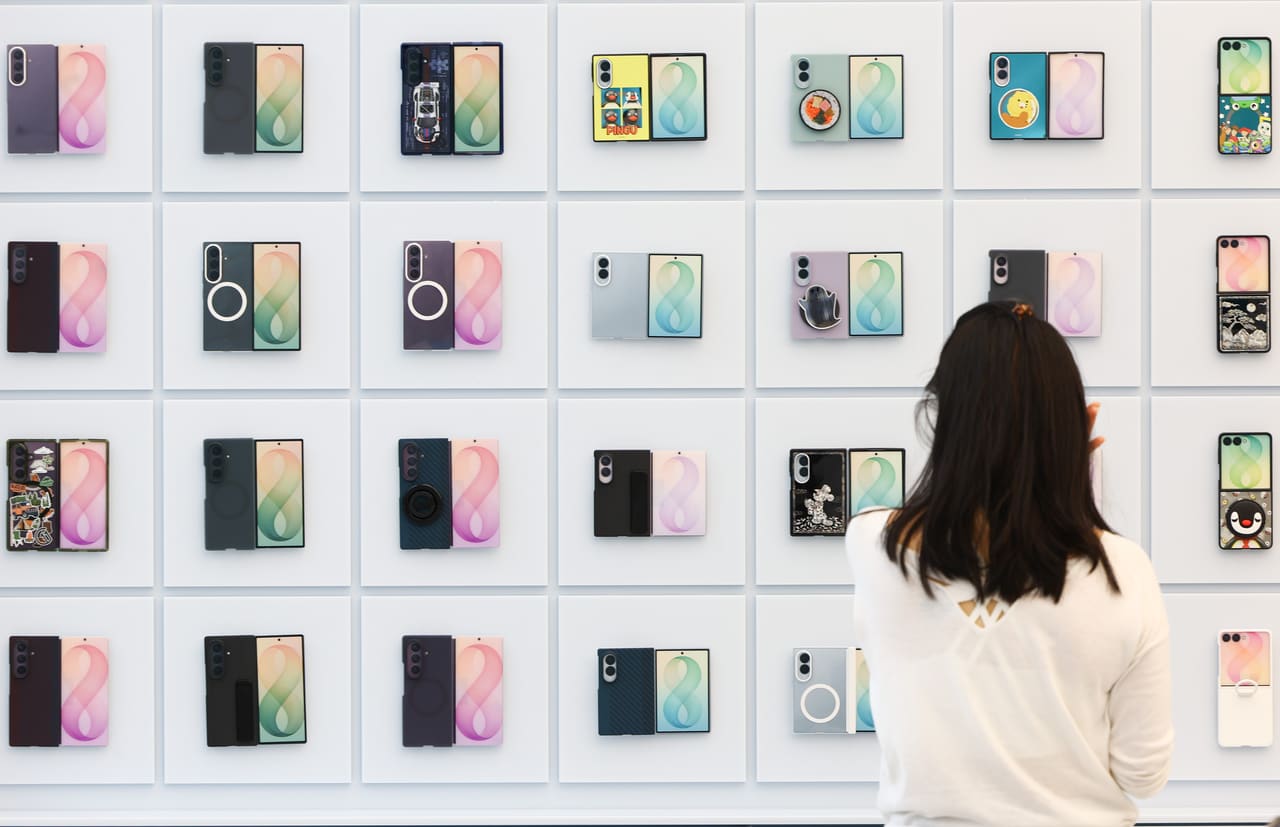
That reversal captures what Samsung achieved with the Fold8. The company abandoned the narrow, elongated silhouette that defined book-style foldables since their debut. Instead, it adopted a shorter, wider frame that feels less like unfolding a remote control and more like opening a small notebook. The result is a device that reads as approachable rather than experimental.
New Demographics Enter the Category
Samsung announced that female buyers aged 13 to 39 now represent a measurably larger share of Fold8 sales compared to the Fold7 cycle. The company did not release exact figures, but internal data shared with retail partners in Seoul shows double-digit percentage-point gains in that segment during the first three weeks of availability. Kwon's profile fits the pattern: a long-time Flip user who had never considered a Fold until the form factor changed.
The shift matters because book-style foldables have historically skewed toward male buyers in their 40s and 50s, particularly in South Korea and Japan. Flip models captured younger and more gender-balanced audiences, but Fold devices remained niche. By altering the aspect ratio, Samsung appears to have lowered the psychological barrier that kept potential buyers at a distance.
Ergonomics Over Tradition
The Fold8's width increases the unfolded screen's usability for split-screen multitasking, which Samsung's software team optimized for side-by-side app layouts. The shorter height makes the device easier to grip with one hand when folded, a practical consideration for users with smaller hands or those accustomed to standard-width smartphones.
Samsung's decision to offer both the Fold8 and the Fold8 Ultra, the latter retaining a more traditional aspect ratio, reflects confidence in the wider design while hedging against backlash from existing power users. Early sales data suggests the standard Fold8 is outselling the Ultra in consumer channels, while enterprise and B2B orders tilt toward the Ultra's larger canvas.
Competitive Pressure from China
Samsung's design pivot arrives as Chinese manufacturers continue to refine their own foldable offerings. Brands like Oppo, Vivo, and Honor have iterated rapidly on hinge durability and screen crease reduction, chipping away at Samsung's lead in build quality. The Fold8's wider frame differentiates it in a crowded field where specs alone no longer guarantee preference.
The company's foldable division faced slowing growth in 2025, with shipment volumes plateauing after years of steady gains. Expanding the addressable audience became a strategic priority. Internal presentations reviewed by Samsung's component suppliers in Suwon emphasized "format experimentation" as a lever to restart momentum.
Retail Response and Inventory Dynamics
Carrier stores in Seoul and Busan report that Fold8 demo units see higher engagement than previous Fold models, with more customers asking to hold the device and fewer expressing hesitation about the form factor. One retail manager in Gangnam noted that the Fold8's width makes it photograph better in selfie mode, a detail that resonates with younger buyers who prioritize social media use cases.
Inventory allocation reflects the bet Samsung is making. The company shipped a higher ratio of standard Fold8 units to consumer retail channels compared to the Fold7 launch, when it emphasized the Ultra equivalent more heavily. That suggests internal forecasts anticipated stronger mainstream demand for the wider design.
What Comes Next
Samsung has not disclosed whether future Fold iterations will continue the wider aspect ratio or revert to a middle ground. The Fold8's reception will likely determine the path. If sales sustain through the holiday quarter and into early 2027, the wider format may become the new baseline for the category.
For now, the Fold8 represents a calculated departure from foldable orthodoxy. By making the device feel less exotic and more functional, Samsung has opened a door to buyers who previously saw book-style foldables as a curiosity rather than a tool. Whether that door stays open depends on how well the design holds up under daily use and whether competitors respond with their own aspect ratio experiments.
RELATED STORIES

Samsung Eyes R&D Facility Conversion to Boost Foundry Output
Cheng Wei-Lun · 2 min

Samsung Recruits AI Specialists to Drive Semiconductor Manufacturing Overhaul
Cheng Wei-Lun · 3 min

South Korea's Chip Design Talent Crunch Deepens as Memory Giants Chase HBM4 Engineers
Cheng Wei-Lun · 3 min

SK Keyfoundry Commits $64 Million to Expand 8-Inch Wafer Capacity
Cheng Wei-Lun · 3 min
Spot something wrong? Email editor@briefasia.com. We log every correction publicly.