Technology · AI
Nvidia Robotics Executive Heads to LG South Korea Site Days After Partnership Deal
Madison Huang's visit to an LG R&D facility signals swift execution of the physical AI collaboration announced last week
KEY TAKEAWAYS
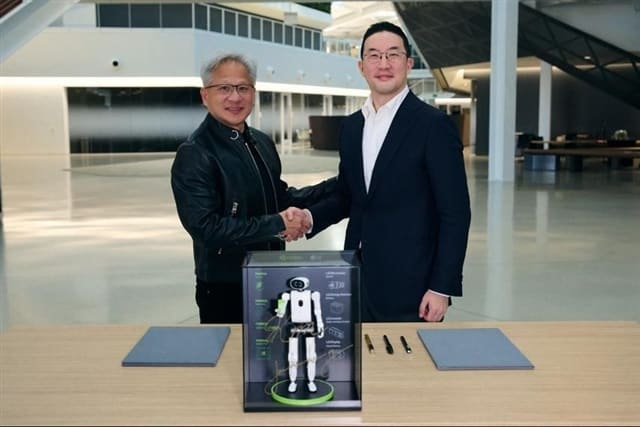
- ·Madison Huang, Nvidia's senior director for Omniverse and robotics, is visiting an LG R&D facility in South Korea less than a week after the companies signed a strategic MOU.
- ·The rapid timeline from agreement to on-site engagement suggests pre-existing technical groundwork and prioritization of fast execution in physical AI development.
- ·The partnership positions LG to integrate Nvidia's simulation and inference tools with its robotics hardware, potentially creating a reference architecture for Asian manufacturers.
Fast-Track Implementation
Madison Huang, Nvidia's senior director of product marketing for Omniverse and robotics, is preparing to visit South Korea and travel directly to one of LG's primary robotics research and development facilities. The visit comes less than a week after LG Group and Nvidia formalized a strategic memorandum of understanding.
The swift movement from signed agreement to on-site technical engagement suggests both companies are prioritizing speed in their physical AI collaboration. Huang's role spans Nvidia's Omniverse platform and robotics product strategy, positioning her as a key liaison for integrating simulation infrastructure with LG's hardware development pipeline.
Physical AI in Asia's Manufacturing Core
South Korea has emerged as a critical testing ground for industrial AI applications, with both established conglomerates and startups racing to deploy autonomous systems across manufacturing, logistics, and service sectors. LG's robotics divisions have been expanding investments in vision systems, manipulation algorithms, and edge compute modules designed for factory floors and commercial spaces.
Nvidia's Omniverse platform serves as a digital twin environment where robot behaviors can be trained and validated before physical deployment. The partnership positions LG to accelerate iteration cycles by running thousands of simulated scenarios in parallel, reducing the time and cost traditionally required for hardware prototyping.
The collaboration also reflects broader capital flows into physical AI infrastructure across Asia. Japanese, South Korean, and Taiwanese manufacturers are integrating GPU-accelerated compute into production lines, driven by labor shortages and the rising complexity of assembly tasks in electronics and automotive sectors.
What the Partnership Covers
While the full scope of the MOU has not been disclosed, the structure of Huang's visit points to joint work on robotics platforms that combine LG's sensor and actuator expertise with Nvidia's simulation and inference software. LG has been developing mobile robots for commercial real estate, autonomous delivery units, and assistive devices for elder care, all areas where real-time vision processing and path planning are critical.
Nvidia's robotics stack includes Isaac Sim for synthetic data generation, Isaac GEM for pre-trained foundation models, and Jetson modules for onboard inference. Linking these tools to LG's manufacturing scale could yield a reference architecture that other Asian OEMs might adopt, amplifying the partnership's influence beyond the two companies.
The timeline matters. Huang's visit, scheduled within days of the MOU signing, bypasses the typical months-long planning phase that often follows corporate announcements. This cadence suggests pre-existing technical groundwork and a shared urgency to move from concept to pilot deployments.
Broader Implications for Regional AI Development
South Korea's government has committed significant funding to AI and robotics as part of its industrial policy, viewing autonomous systems as essential to maintaining export competitiveness. LG's engagement with Nvidia aligns with national priorities and could unlock additional public-sector support for joint projects.
The visit also highlights the role of specialized executives in translating platform capabilities into vertical solutions. Huang's dual focus on Omniverse and robotics bridges the gap between simulation software and physical hardware, a combination that becomes more valuable as companies seek integrated workflows rather than point solutions.
For Nvidia, deeper ties with LG provide access to real-world deployment data and feedback loops that can refine its robotics software. For LG, the partnership offers a path to differentiate its hardware through tighter software integration, a strategy that has proven effective in adjacent markets like automotive compute and edge AI appliances.
The speed of execution will be closely watched by competitors and partners across Asia, as it may set a new benchmark for how quickly large-scale AI collaborations can move from announcement to operational milestones.
RELATED STORIES
LG and Nvidia Partner on Bipedal Humanoid Robot Development
Cheng Wei-Lun · 4 min
Nvidia Executive to Tour LG's Seoul Robot Data Facility
Cheng Wei-Lun · 3 min

Samsung Fold8's Wider Aspect Ratio Pulls New Buyers into Foldable Market
Jun-ho Seo · 3 min
SK Keyfoundry Commits $64 Million to Expand 8-Inch Wafer Capacity
Cheng Wei-Lun · 3 min
Spot something wrong? Email editor@briefasia.com. We log every correction publicly.