Technology · AI
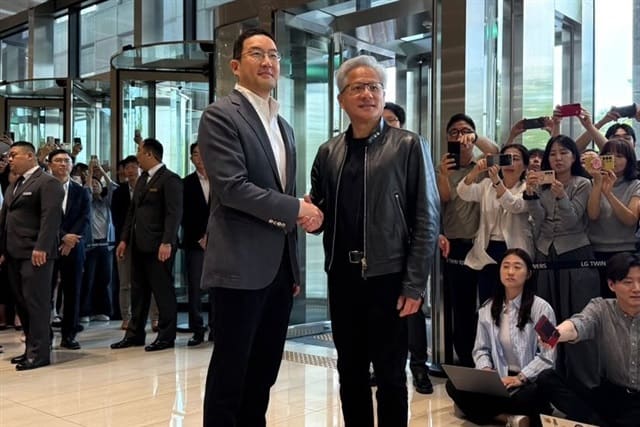
Nvidia Executive to Tour LG's Seoul Robot Data Facility
Madison Huang's visit signals deepening partnership between the chipmaker and Korean electronics giant on humanoid robotics development
KEY TAKEAWAYS
- ·Nvidia executive Madison Huang will tour LG Electronics' robot data factory in Seoul on August 18 and hold private talks on robotics partnership.
- ·The visit highlights LG's strategy to provide data infrastructure for humanoid development, a critical bottleneck requiring millions of labeled interaction hours.
- ·South Korea is positioning itself in the humanoid supply chain, with Samsung, Hyundai, and LG all pursuing robotics investments alongside Nvidia's compute platforms.
High-Level Meeting in Seoul
Madison Huang, a senior executive at Nvidia, will arrive at LG Electronics' Yangjae R&D campus in Seoul on August 18 for a site visit focused on the Korean manufacturer's robot data factory. The visit will include private discussions with LG leadership on expanding cooperation in robotics, LG announced.
The Yangjae facility houses LG's specialized infrastructure for generating and processing training data used in humanoid robot development. The factory produces annotated datasets that feed machine learning models, a critical bottleneck in scaling autonomous robot capabilities.
Strategic Alignment on Humanoid Hardware
The meeting follows both companies' public commitments to humanoid robotics over the past 18 months. LG has positioned robotics as a core pillar of its post-smartphone growth strategy, while Nvidia has expanded its Jetson and Isaac platforms to support real-time inference in mobile robots.
LG's robot data operation integrates motion capture, sensor fusion, and human task annotation to build proprietary datasets. The company has not disclosed the scale of its data library, but industry observers note that training humanoid models requires millions of hours of labeled interaction data, far exceeding the datasets available for industrial robotic arms.
Nvidia's participation suggests the chipmaker sees LG as a viable partner in the race to deploy general-purpose humanoids. Unlike Tesla or Figure AI, which develop both software and hardware in-house, LG brings manufacturing scale and supply chain reach across Asia.
Closed-Door Agenda
Details of the closed-door discussions remain undisclosed, but the timing aligns with broader industry moves. Several Asian electronics manufacturers have accelerated humanoid projects in recent quarters, betting that falling compute costs and improved actuator technology will enable commercial deployment by 2027.
LG has not announced a consumer humanoid product, but the company has filed patents related to bipedal locomotion and dexterous manipulation. Its existing robot portfolio includes service robots for hospitality and logistics, though these remain limited to fixed environments.
Nvidia's Isaac platform, which provides simulation and training tools for robotic developers, has gained traction among startups and research labs. The company has framed humanoids as a natural extension of its automotive and industrial automation businesses, both of which rely on real-time AI inference at the edge.
Asia's Humanoid Landscape
The Seoul meeting underscores South Korea's ambition to secure a position in the humanoid supply chain. Samsung has invested in Boston Dynamics, Hyundai Motor Group acquired the robotics firm outright in 2021, and smaller players like Rainbow Robotics have raised capital to scale bipedal platforms.
LG's data factory model reflects a pragmatic approach: rather than compete on algorithm innovation, the company is positioning itself as a data infrastructure provider. If humanoid robotics follows the trajectory of autonomous vehicles, high-quality training data will become a competitive moat, and partnerships with compute providers like Nvidia will be essential.
The visit also signals Nvidia's willingness to work with multiple partners simultaneously. The company supplies chips to nearly every major humanoid developer, from China's Unitree to California's Agility Robotics. By touring LG's data facility, Huang is likely assessing whether the Korean firm can contribute differentiated datasets that improve model performance across Nvidia's broader customer base.
What Happens Next
Neither company has announced joint product plans, and the August 18 meeting may remain exploratory. However, the convergence of manufacturing expertise, data infrastructure, and compute power represents the formula most analysts expect will unlock commercial humanoid robots.
LG's next earnings call and Nvidia's GTC conference in the coming months may offer further clarity on whether the partnership moves beyond data sharing into co-development or exclusive licensing arrangements. For now, the Seoul visit marks another step in Asia's push to lead the humanoid hardware race.
RELATED STORIES
LG Sets 2027 Launch for Humanoid Robot Powered by Nvidia AI
Jun-ho Seo · 4 min

LG and Nvidia Partner on Bipedal Humanoid Robot Development
Cheng Wei-Lun · 4 min
Nvidia Robotics Executive Heads to LG South Korea Site Days After Partnership Deal
Cheng Wei-Lun · 3 min

Samsung Fold8's Wider Aspect Ratio Pulls New Buyers into Foldable Market
Jun-ho Seo · 3 min
Spot something wrong? Email editor@briefasia.com. We log every correction publicly.