Technology · AI
LG Sets 2027 Launch for Humanoid Robot Powered by Nvidia AI
South Korean conglomerate's chairman traveled to California to formalize partnership covering robotics, autonomous driving, and AI infrastructure
KEY TAKEAWAYS
- ·LG will launch its first bipedal humanoid robot in early 2027, built on Nvidia's AI computing platform following an agreement signed in California.
- ·The partnership between LG and Nvidia extends to AI factory infrastructure and autonomous vehicle technology, positioning LG beyond consumer electronics.
- ·The 2027 timeline places LG in direct competition with Chinese and American robotics companies targeting commercial humanoid deployment in similar timeframes.
Strategic Partnership Sealed in Silicon Valley
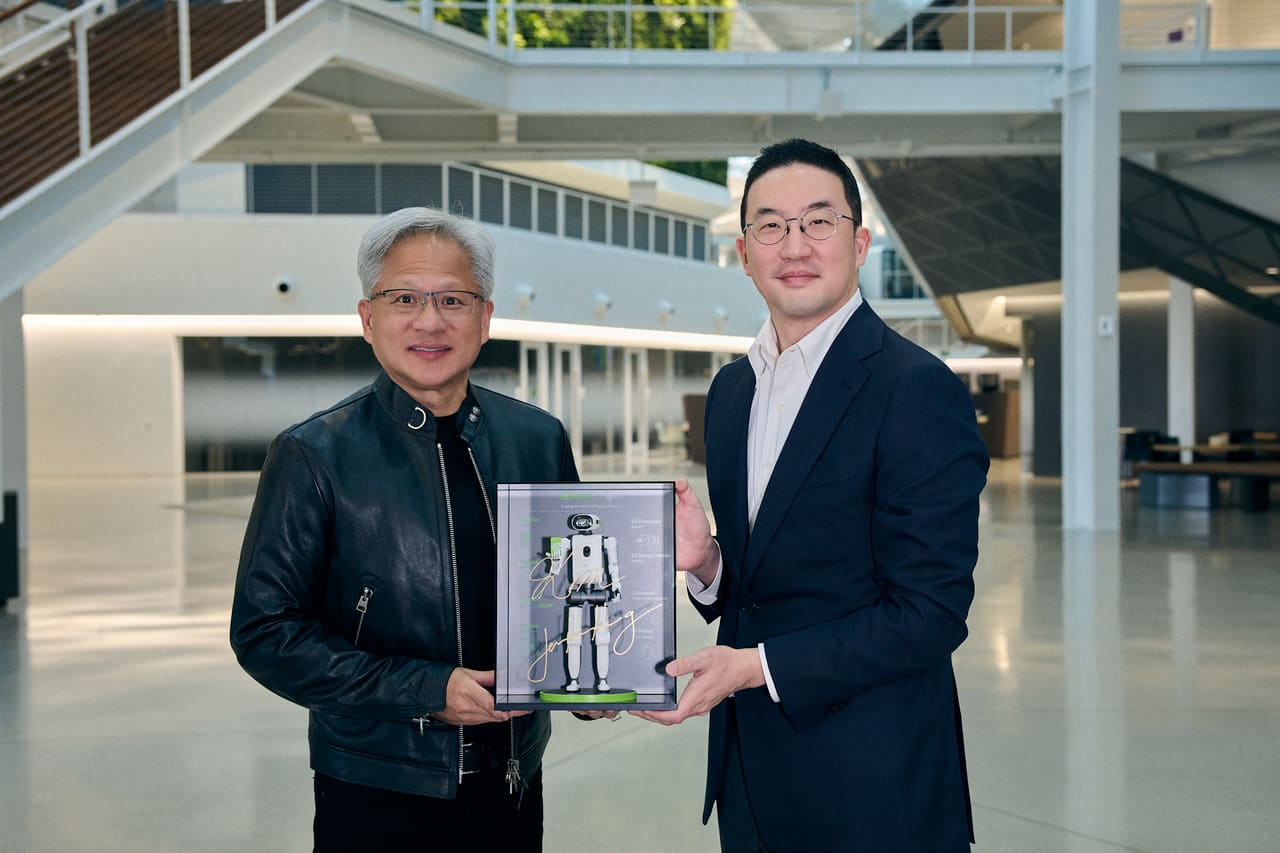
LG is moving into humanoid robotics with a bipedal machine scheduled to debut in early 2027, built on Nvidia's artificial intelligence platform. Chairman Koo Kwang-mo flew to Santa Clara, California, last week to sign a collaboration agreement with Nvidia founder Jensen Huang at the chipmaker's headquarters.
The partnership, announced by LG on Friday, extends beyond robotics to include AI factories and autonomous vehicle technology. The meeting between Koo and Huang took place Thursday, roughly two months after the executives first discussed potential collaboration in Seoul.
Asia's Robotics Race Intensifies
LG's entry into humanoid robotics positions the South Korean conglomerate alongside regional competitors already investing in the sector. Japanese manufacturers have spent decades developing industrial and service robots, while Chinese firms have accelerated humanoid development over the past three years with substantial government backing.
The choice of Nvidia as a technology partner reflects the semiconductor company's growing influence in robotics computing. Nvidia's AI chips and software platforms have become standard infrastructure for companies building autonomous systems, from warehouse robots to self-driving vehicles.
Beyond Consumer Electronics
For LG, the robotics initiative marks a strategic expansion beyond its core consumer electronics and home appliance business. The conglomerate has signaled ambitions in mobility and industrial automation, areas where humanoid robots could eventually find commercial application in manufacturing facilities, logistics centers, and service environments.
The 2027 timeline suggests LG is targeting a market window when humanoid technology may be reaching commercial viability. Several American and Chinese robotics companies have announced similar timeframes for deploying bipedal robots in real-world settings, creating pressure on established electronics manufacturers to demonstrate capability in the emerging category.
Computing Power and Control Systems
Nvidia's role in the partnership centers on providing the computational architecture that enables real-time decision-making in humanoid robots. Walking on two legs requires processing sensor data from dozens of inputs simultaneously, adjusting balance and movement hundreds of times per second. The AI models running these systems demand specialized hardware that Nvidia has optimized for robotics applications.
The agreement also covers AI factories, a term Nvidia uses to describe large-scale computing infrastructure for training and deploying AI models. LG's participation in this segment suggests the company intends to develop proprietary AI capabilities rather than relying entirely on third-party models.
Autonomous Driving Component
The partnership's autonomous driving dimension connects to LG's existing investments in automotive components and electric vehicle technology. Several LG subsidiaries already supply battery systems, displays, and sensors to automakers. Adding self-driving capability would position LG as a more comprehensive supplier to the vehicle industry's transition toward automation.
Nvidia dominates the market for autonomous vehicle computing platforms, with partnerships spanning traditional automakers and new electric vehicle manufacturers across North America, Europe, and Asia. LG's collaboration gives the Korean company access to this ecosystem and the software tools Nvidia has built for automotive AI development.
Investment and Execution Risk
Humanoid robotics remains an expensive and technically uncertain field. Numerous prototypes demonstrated over the past five years have yet to reach commercial deployment at scale. The gap between controlled demonstrations and robots that can operate reliably in unpredictable real-world environments has proven wider than many early projections suggested.
LG has not disclosed the financial scale of its robotics investment or how many units it plans to produce initially. The company's manufacturing expertise in consumer electronics may translate to robotics production, but the supply chains and quality control requirements differ significantly from those for televisions or refrigerators.
The 2027 target gives LG roughly two and a half years to move from partnership announcement to product launch. That timeline will test whether the combination of LG's manufacturing capability and Nvidia's AI platform can compress the development cycle that has challenged other robotics companies.
Regional Implications
The LG-Nvidia partnership adds another data point to Asia's expanding role in advanced robotics. South Korea has invested in robotics research for decades, primarily focused on industrial automation and specific service applications. A successful humanoid robot from LG would represent a more ambitious bet on general-purpose machines.
China's humanoid robotics sector has attracted billions in funding over the past three years, supported by national policies prioritizing robotics and AI. Japan maintains leadership in industrial robotics but has seen mixed results in humanoid development despite early pioneering work. LG's entry intensifies competition among Asian manufacturers to establish positions in a market that remains more promise than revenue.
The involvement of Nvidia, an American company, in multiple Asian robotics initiatives also highlights the continued centrality of US semiconductor and software platforms in the region's technology development. Whether Asian companies can build alternative AI computing ecosystems or will remain dependent on American suppliers is a strategic question with implications beyond robotics.
RELATED STORIES

South Korea Commits $880 Billion to AI and Chip Infrastructure
Jun-ho Seo · 3 min
South Korea's Southwestern Chip Hub Set to Double in Size
Cheng Wei-Lun · 3 min

H&M Confirms Security Incident Exposed Korean Customer Records
Jun-ho Seo · 3 min
SK Hynix Explores US Fab Sites Under Customer Pressure for Local Memory Production
Cheng Wei-Lun · 3 min
Spot something wrong? Email editor@briefasia.com. We log every correction publicly.