Asia · Politics
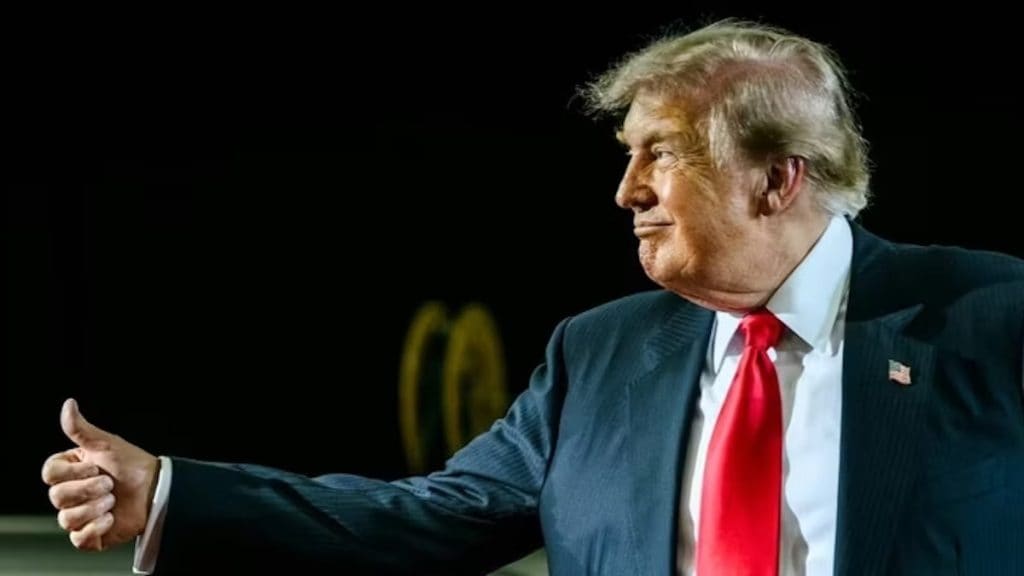
Trump Announces Plan to Declare Strait of Hormuz US Territory
The president's statement comes amid a five-month Iranian blockade of the critical waterway, escalating tensions in the Gulf region
KEY TAKEAWAYS
- ·President Trump announced plans to declare the Strait of Hormuz a US territory following a five-month Iranian blockade that has disrupted oil shipments to major Asian economies.
- ·The strait carries roughly one-fifth of global oil supplies, with Asian refiners from Japan to India bearing the brunt of supply disruptions and elevated shipping costs.
- ·The territorial claim raises complex international law questions and places Gulf states in a difficult position between US security ties and proximity to Iran.
A Bold Territorial Claim
President Donald Trump announced Friday his intention to declare the Strait of Hormuz a United States territory, a statement that immediately sent ripples through diplomatic circles and energy markets across Asia and beyond. The narrow waterway, which separates Iran from the Arabian Peninsula, serves as the primary passage for roughly one-fifth of global oil supplies.
The declaration comes as Iran maintains a blockade of the strait that has persisted for approximately five months. The standoff has already disrupted crude shipments to major Asian economies including Japan, South Korea, India, and China, all of which depend heavily on Gulf oil transiting through the 21-mile-wide channel at its narrowest point.
Trump's statement marks an unprecedented assertion of territorial control over international waters. The strait has historically been governed by international maritime law, with vessels from all nations entitled to transit passage through its shipping lanes.
Regional Implications
The potential territorial claim carries significant weight for Asian energy security. Countries throughout the region have watched crude prices climb as the Iranian blockade restricts supply routes. Singapore, a major oil trading hub, has seen increased volatility in benchmark pricing, while refiners in Northeast Asia have scrambled to secure alternative supply chains.
Maritime insurers operating out of Hong Kong and Tokyo have already raised premiums for tankers attempting to navigate the contested waters. Shipping data shows that several major carriers have rerouted vessels around the Cape of Good Hope, adding weeks to delivery times and substantially increasing freight costs.
The announcement also places Gulf Cooperation Council states in a delicate position. Saudi Arabia, the United Arab Emirates, and Qatar all rely on the strait for the majority of their oil exports to Asian markets. Any formal US territorial claim would require these nations to navigate between their security partnerships with Washington and their geographic proximity to Tehran.
Economic Pressures Mount
The timing of Trump's statement follows closely on the heels of new inflation data released earlier in the week. Energy costs have been a primary driver of price increases across consumer goods, with transportation and manufacturing sectors particularly exposed to oil price volatility.
Asian central banks have expressed concern about imported inflation stemming from the Gulf crisis. The Reserve Bank of India, Bank of Korea, and Bank Indonesia have all cited energy price uncertainty in recent policy statements, though none have moved rates in response to the strait situation alone.
For China, which imports roughly 10 million barrels per day of crude oil with a significant portion originating from Gulf producers, the blockade represents both an economic challenge and a strategic dilemma. Beijing has maintained diplomatic channels with Tehran while simultaneously seeking to protect its energy supply lines.
International Law Questions
Maritime law experts have raised questions about the legal framework that would support such a territorial declaration. The United Nations Convention on the Law of the Sea establishes the strait as an international transit corridor, with coastal states holding limited sovereignty rights.
Iran has long claimed territorial waters extending into the strait, while also recognizing the principle of transit passage for international shipping. Oman, which controls the southern shore, has historically maintained a neutral stance on Gulf disputes and has not commented on Trump's announcement.
Any attempt to formalize US territorial control would likely face challenges at the International Court of Justice and could prompt counterclaims from regional powers. The precedent would also raise concerns about other strategic waterways, including the Strait of Malacca, the Bosphorus, and the Taiwan Strait.
Market Response
Oil futures traded in Asian sessions showed immediate reaction to the news, with Brent crude climbing in electronic trading before settling as traders assessed the practical implications. Long-term contracts for liquefied natural gas, which also transits the strait from Qatar to Asian buyers, saw renewed interest from risk managers seeking to lock in supply.
Currency markets reflected the uncertainty, with safe-haven flows pushing the Japanese yen and Swiss franc higher against emerging market currencies. Equity markets in the Gulf states experienced modest declines, though major Asian bourses remained relatively stable.
The situation continues to evolve as regional governments assess their responses and legal experts parse the potential mechanisms through which such a territorial claim might be pursued or contested.
RELATED STORIES
Tehran Sets Conditions for Strait of Hormuz Access Despite Progress With Muscat
Priyanka V. Rao · 3 min
Brent Crude Climbs Above $83 as Iran Eyes Strait of Hormuz Toll Plan
Priyanka V. Rao · 3 min
Brent Crude Jumps 23 Percent as Iran Blocks Hormuz Exit
Priyanka V. Rao · 3 min
Crude Surges Past $90 as Hormuz Talks Stall
Cheng Wei-Lun · 3 min
Spot something wrong? Email editor@briefasia.com. We log every correction publicly.