Technology · Dev
South Korea's Southwestern Chip Hub Set to Double in Size
Gwangju cluster may expand from four to nine fabs as SK Group readies eastern Jeonnam investment
KEY TAKEAWAYS
- ·South Korea's Gwangju semiconductor cluster may expand from four planned fabs to nine as the government accelerates land, power, and infrastructure work.
- ·SK Group is expected to announce a major investment in eastern Jeonnam, adding to national efforts to decentralize chip production and reduce regional concentration risk.
- ·The expansion timeline depends on private investment decisions, infrastructure delivery, and competition from Taiwan, China, and Japan in attracting global semiconductor capacity.
Cluster Growth Accelerates
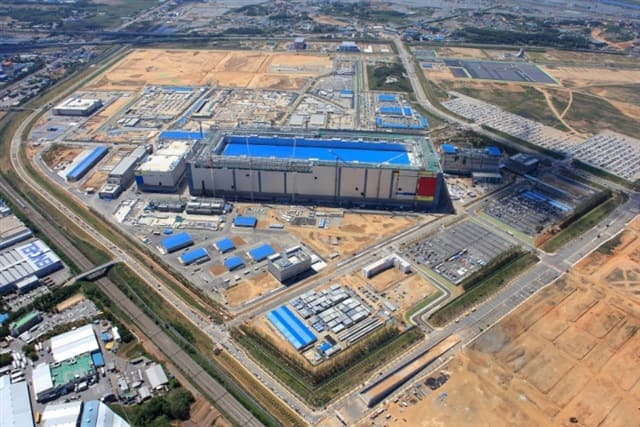
South Korea's push to build a major semiconductor manufacturing base in its southwestern provinces is gaining momentum. The Gwangju cluster, initially planned to house four fabrication facilities, may now accommodate as many as nine fabs as the government fast-tracks critical infrastructure including land allocation, power grid expansion, and transport links.
The expansion reflects Seoul's broader strategy to consolidate domestic chip production capacity amid global supply-chain pressures and mounting competition from China, Taiwan, and the United States. Gwangju, traditionally known for its automotive and photonics industries, has emerged as a focal point for the government's regional economic development and technology diversification efforts.
Government agencies have accelerated permitting and site preparation in the area, addressing bottlenecks that have historically slowed large-scale industrial projects in non-metropolitan regions. Power infrastructure, in particular, has been a constraint: semiconductor fabs require stable, high-capacity electricity supply, and the southwestern grid has needed upgrades to support the anticipated industrial load.
SK Group's Eastern Jeonnam Move
Local officials in South Jeolla Province have indicated that SK Group, one of the country's largest conglomerates and a significant player in semiconductors through SK hynix, is preparing to announce a substantial investment in the eastern part of Jeonnam. While details of the investment have not been disclosed, the timing aligns with national semiconductor policy and the conglomerate's own capacity expansion plans.
SK hynix has been ramping up production of advanced memory chips, including high-bandwidth memory used in artificial intelligence accelerators and data center applications. The company has faced capacity constraints at existing sites near Seoul and has been scouting for additional manufacturing footprint.
The eastern Jeonnam area offers several advantages: lower land costs compared to the capital region, proximity to port infrastructure for export logistics, and access to a labor pool that can be trained through partnerships with regional technical universities. The provincial government has also offered tax incentives and expedited approvals for qualified semiconductor projects.
Regional Stakes and National Strategy
The southwestern cluster is part of a national initiative to decentralize chip manufacturing, reduce concentration risk, and stimulate economic activity in regions that have lagged behind Seoul and the southeast industrial corridor. The government has committed tens of billions of dollars in subsidies, R&D funding, and infrastructure investment to support the semiconductor sector, which accounts for a significant share of South Korea's exports.
The expansion from four to nine fabs, if realized, would represent one of the largest regional industrial build-outs in Asia in recent years. Each fab typically requires several billion dollars in capital expenditure and employs hundreds of engineers and technicians, creating ripple effects through local supply chains and services.
However, the timeline and final fab count remain subject to private-sector investment decisions, global demand conditions, and the pace of infrastructure completion. Industry observers note that while the government can provide land and power, sustaining a competitive cluster depends on attracting anchor tenants, securing equipment supply, and building a talent pipeline.
The Gwangju and Jeonnam projects also face competition from other Asian hubs. Taiwan continues to dominate advanced logic production, China is subsidizing domestic capacity despite U.S. export controls, and Japan has re-entered the race with support for next-generation fabs. South Korea's ability to differentiate on speed, cost, and ecosystem depth will determine whether the southwestern cluster can attract not only domestic giants like SK and Samsung but also foreign partners and contract manufacturers.
What Comes Next
The next six to twelve months will be critical. SK Group's formal announcement, expected soon, will provide clarity on investment scale, technology nodes, and production timelines. Meanwhile, the government must deliver on infrastructure commitments, particularly power and water, which are non-negotiable for fab operations.
If the expansion proceeds as envisioned, the southwestern cluster could become a significant node in global semiconductor supply chains by the end of the decade, joining the established production zones around Seoul and the southern port cities. For now, the region is positioning itself as a credible alternative, betting that infrastructure, incentives, and industrial policy can overcome geographic distance from traditional chip-making centers.
RELATED STORIES
SK Hynix Explores US Fab Sites Under Customer Pressure for Local Memory Production
Cheng Wei-Lun · 3 min

South Korea Commits $880 Billion to AI and Chip Infrastructure
Jun-ho Seo · 3 min

South Korea Postpones App Payment Decision Against Tech Giants
Cheng Wei-Lun · 3 min
LG Sets 2027 Launch for Humanoid Robot Powered by Nvidia AI
Jun-ho Seo · 4 min
Spot something wrong? Email editor@briefasia.com. We log every correction publicly.