Technology · Dev
SK Hynix Explores US Fab Sites Under Customer Pressure for Local Memory Production
South Korean chipmaker evaluates American locations for front-end memory manufacturing as clients demand domestic supply amid geopolitical supply chain shifts
KEY TAKEAWAYS
- ·SK Hynix has spent over a month assessing US and other sites for a front-end memory fab as American customers request local wafer production capacity.
- ·The move reflects broader semiconductor supply chain diversification driven by geopolitical factors and US policy incentives under the CHIPS Act.
- ·Memory manufacturing economics and capital intensity pose hurdles, as competitive pricing requires massive scale typically concentrated in Asian hubs.
Scouting Mission Extends Beyond a Month
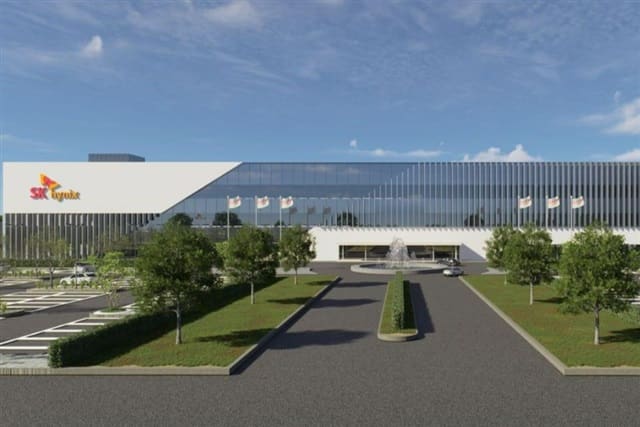
SK Hynix has devoted more than a month to evaluating potential sites in the United States and other regions for a front-end memory fabrication facility. The South Korean memory giant faces mounting requests from American customers seeking wafer production capacity closer to their operations.
The company has not disclosed which specific US states or metropolitan areas are under consideration, nor has it announced a timeline for finalizing a location. The site assessment remains in early stages, according to industry sources familiar with the matter.
Front-end fabs handle the most technically demanding steps of chip manufacturing, including wafer processing and circuit patterning. Establishing such a facility in the US would represent a substantial capital commitment, typically running into billions of dollars and requiring multi-year construction periods before production ramps.
Customer Demand Drives Geographic Shift
American clients have been pressing SK Hynix to expand wafer production capabilities within the US. The push reflects broader industry trends as companies seek to diversify supply chains and reduce reliance on concentrated manufacturing hubs in Asia.
Memory chips are foundational components in data centers, smartphones, automotive systems, and AI infrastructure. Any disruption to supply can cascade through entire technology ecosystems. For hyperscale cloud providers and AI platform operators based in the US, securing local memory supply offers both operational resilience and alignment with government incentives favoring domestic semiconductor production.
SK Hynix currently operates major memory manufacturing facilities in South Korea, with additional presence in China. The company has historically concentrated its most advanced production in its home market, where it maintains tight integration with research and development operations.
Policy Environment Shapes Manufacturing Decisions
The US CHIPS and Science Act, enacted in 2022, allocated USD 52 billion to boost domestic semiconductor manufacturing and research. Memory manufacturers have been slower to commit to US expansion compared to logic chipmakers, in part because memory production requires enormous scale to achieve cost competitiveness.
SK Hynix's site exploration follows similar moves by competitors. Samsung Electronics announced plans in 2021 to build a USD 17 billion chip fabrication plant in Taylor, Texas, though that facility focuses on logic chips rather than memory. Micron Technology, the largest US-based memory producer, announced in 2022 plans to invest up to USD 100 billion over two decades in a new memory manufacturing complex in upstate New York.
The geopolitical dimension of semiconductor supply chains has intensified since 2020. Export controls, tariffs, and national security reviews now shape where companies locate production. For SK Hynix, establishing a US footprint could ease regulatory friction and strengthen relationships with American customers who face their own compliance requirements.
Scale and Economics Remain Key Hurdles
Memory chip manufacturing is among the most capital-intensive segments of the semiconductor industry. Achieving competitive unit costs requires high-volume production, which in turn demands massive upfront investment in equipment and facilities.
SK Hynix will need to weigh customer demand against the economic realities of splitting production across multiple geographies. Memory pricing is cyclical and margins can compress quickly when supply outpaces demand. Adding a new fab in a higher-cost region like the US introduces structural cost increases that must be offset by pricing premiums, government subsidies, or strategic value.
The company has not indicated what memory types a potential US fab would produce. DRAM and NAND flash serve different markets and require distinct manufacturing processes. High-bandwidth memory, critical for AI accelerators, represents a fast-growing segment but remains a smaller volume market compared to mainstream DRAM and NAND.
Regional Implications for Asia's Memory Ecosystem
SK Hynix's exploration of US manufacturing carries implications for Asia's semiconductor ecosystem. South Korea remains the dominant hub for memory production, with SK Hynix and Samsung together controlling more than half of global DRAM output.
If SK Hynix proceeds with a US fab, it would mark a partial decentralization of that concentrated capacity. Other Asian suppliers and equipment vendors may face pressure to follow customers and anchor manufacturers into new geographic markets.
Taiwan and Japan have also positioned themselves as partners in memory and logic chip production for Western customers. Japan has attracted investment from TSMC, Micron, and others through government incentives. Singapore continues to host significant back-end assembly and test operations for memory products.
The competitive dynamics in memory markets mean that any major capacity addition by one player prompts strategic responses from rivals. If SK Hynix commits to US production, Samsung and other competitors will need to assess whether their own geographic footprints remain aligned with customer priorities and policy incentives.
RELATED STORIES
South Korea's Southwestern Chip Hub Set to Double in Size
Cheng Wei-Lun · 3 min
Samsung Eyes Vietnam for Legacy Memory Backend as HBM Demand Tightens Capacity
Cheng Wei-Lun · 3 min

South Korea Commits $880 Billion to AI and Chip Infrastructure
Jun-ho Seo · 3 min
South Korean Memory Exports Jump Nearly 280% While System Chips Stall
Cheng Wei-Lun · 3 min
Spot something wrong? Email editor@briefasia.com. We log every correction publicly.