Technology · Dev
South Korean Memory Exports Jump Nearly 280% While System Chips Stall
Server demand and rising DRAM prices drove a sharp divergence in Korea's semiconductor trade, with memory chips surging as logic shipments flatlined in July
KEY TAKEAWAYS
- ·South Korean memory chip exports rose 276.9% year-on-year in July, while system semiconductor shipments fell 0.7%, driven by divergent demand patterns.
- ·AI server build-outs and higher DRAM prices fueled the memory surge, with hyperscale data centers ordering high-capacity modules for machine learning workloads.
- ·System chips face softer smartphone and PC demand, with inventory corrections delaying a recovery expected only in early 2025.
A Tale of Two Chip Markets
South Korea's semiconductor export picture split sharply in July, with memory chips posting explosive growth while logic products stagnated. Memory chip export value climbed 276.9% compared to the same month a year earlier, according to official trade data. System semiconductors - the category that includes application processors, microcontrollers, and other logic chips - fell 0.7% over the same period.
The divergence underscores how unevenly the current chip cycle is playing out across product lines. Memory manufacturers are riding a wave of demand from hyperscale data centers building out AI infrastructure, while the broader logic market faces inventory corrections and softer consumer electronics demand.
Server Build-Outs Fuel Memory Appetite
Data center operators have been ordering high-capacity DRAM and NAND modules at an accelerating pace, driven by the computational requirements of large language models and machine learning workloads. These systems often require terabytes of memory per server rack, and lead times for high-bandwidth memory products have stretched in recent quarters.
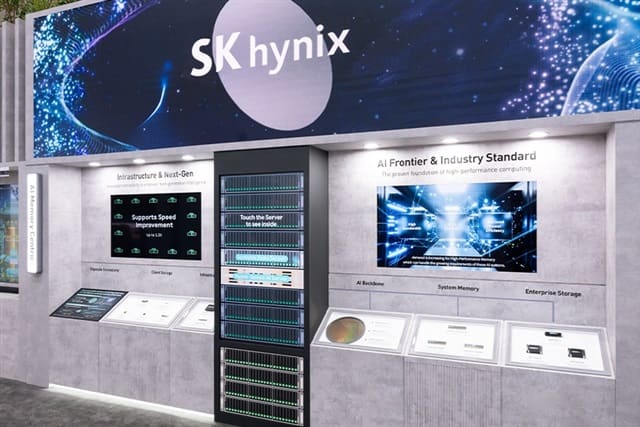
Korean memory makers Samsung Electronics and SK hynix dominate global production of HBM (high-bandwidth memory), the specialized DRAM used in AI accelerators. Both companies have reported capacity constraints and are expanding fabrication lines to meet orders from Nvidia, AMD, and cloud providers. SSD demand for enterprise storage has also recovered after a multi-quarter slump, adding to export momentum.
Pricing Power Returns
Memory chip prices have rebounded from the trough seen in late 2023 and early 2024. Contract prices for DDR5 DRAM modules rose through the first half of this year, and NAND flash prices stabilized after two years of declines. The combination of volume growth and higher average selling prices amplified the year-on-year export value surge.
Industry watchers note that memory pricing tends to be more volatile than logic chips, swinging sharply with supply-demand imbalances. The current upturn reflects both tighter supply discipline by manufacturers and genuine end-market strength in the server segment.
System Chips Face Headwinds
The slight decline in system semiconductor exports reflects weaker demand from smartphone and PC manufacturers, as well as ongoing inventory adjustments in automotive and industrial markets. Global smartphone shipments have been flat to down in recent quarters, and consumer appetite for hardware upgrades has softened.
Korean foundries and fabless chip designers have felt the slowdown more acutely than their memory counterparts. While memory production can shift relatively quickly between product types, logic fabs require longer design and qualification cycles, making them slower to respond to demand shifts.
Regional Implications
South Korea's export performance matters beyond its borders. The country supplies roughly 60% of global DRAM and 30% of NAND flash, making it a critical node in the semiconductor supply chain. Strong memory exports support employment in Gyeonggi Province and the broader Seoul Capital Area, where Samsung and SK hynix anchor industrial clusters.
The memory boom also has implications for capital expenditure across Asia. Korean chipmakers are investing tens of billions of dollars in new fabs, much of that spending flowing to equipment suppliers in Japan, the Netherlands, and the United States. Taiwan's TSMC and other regional players watch Korean memory cycles closely, as they signal broader trends in data center spending.
What Comes Next
The memory upcycle shows no immediate signs of stalling. Analysts expect data center demand to remain robust through the second half of the year, supported by continued AI model deployments and cloud capacity expansion. However, the system chip segment faces a longer recovery timeline, with most forecasters penciling in a return to growth only in early 2025.
Trade data for August and September will reveal whether the memory rally can sustain its pace or whether pricing pressure begins to build as new capacity comes online. For now, South Korea's chip exporters are enjoying a windfall concentrated in one segment, even as the other half of the industry treads water.
RELATED STORIES
South Korea Commits $880 Billion to AI and Chip Infrastructure
Jun-ho Seo · 3 min
SK Hynix Explores US Fab Sites Under Customer Pressure for Local Memory Production
Cheng Wei-Lun · 3 min
South Korea's Southwestern Chip Hub Set to Double in Size
Cheng Wei-Lun · 3 min
H&M Confirms Security Incident Exposed Korean Customer Records
Jun-ho Seo · 3 min
Spot something wrong? Email editor@briefasia.com. We log every correction publicly.