Technology · AI
LG and Nvidia Push for 100,000 Hours of Humanoid Robot Training Data
The Korean electronics giant and the chipmaker are accelerating their robotics collaboration as the race to commercialize humanoid platforms intensifies across Asia
KEY TAKEAWAYS
- ·LG Electronics and Nvidia are working to accumulate 100,000 hours of training data for humanoid robots, with Nvidia's robotics leadership visiting LG's Seoul R&D campus this week.
- ·The collaboration centers on building datasets that teach humanoid robots real-world tasks, using both physical testing and synthetic data generated through Nvidia's simulation platforms.
- ·South Korea is positioning itself as a regional hub for humanoid development, with LG's partnership mirroring similar efforts across Asia as companies race to commercialize general-purpose robots.
Asia's Humanoid Data Race
LG Electronics has set an ambitious target with Nvidia to accumulate 100,000 hours of training data for humanoid robots, according to the company. The goal underscores how Asian manufacturers are positioning themselves in the emerging robotics sector, where machine learning datasets have become as critical as hardware capabilities.
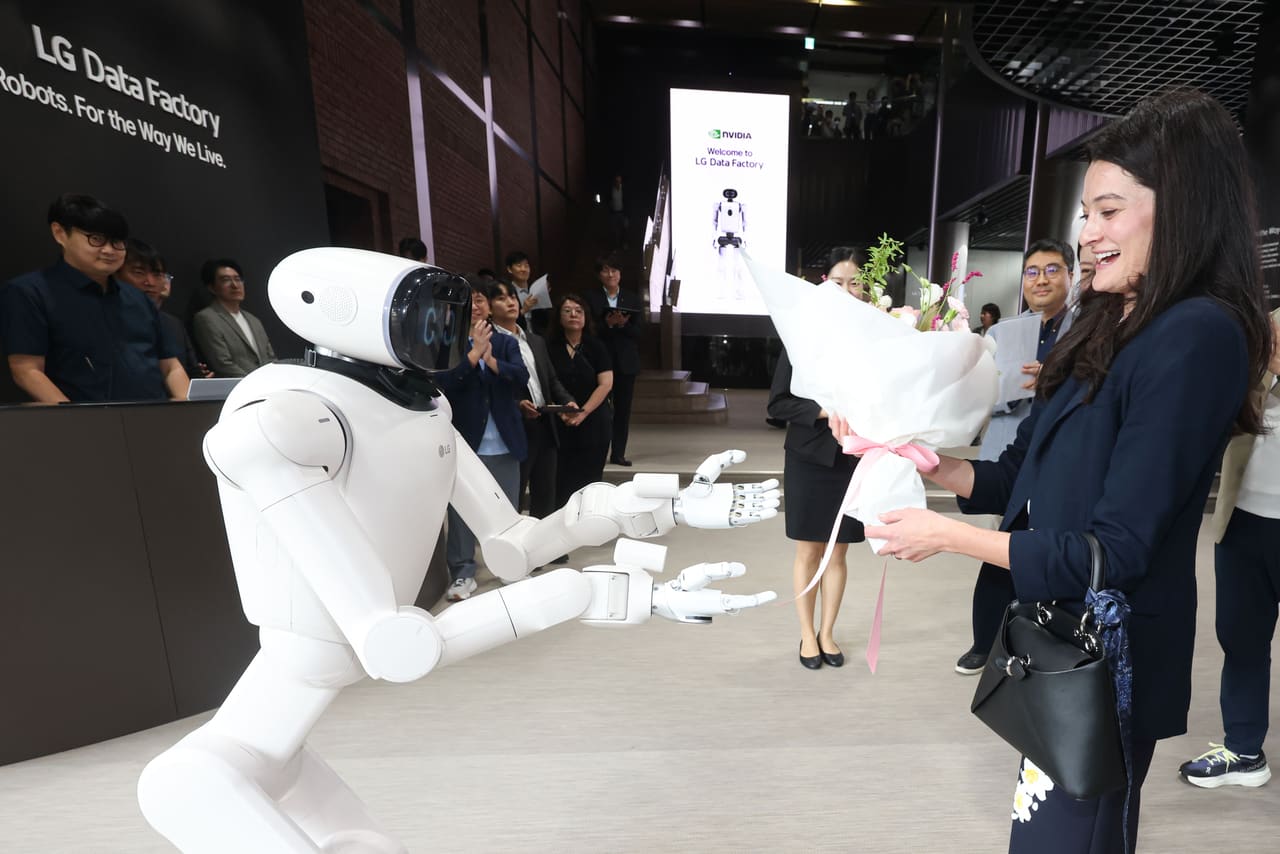
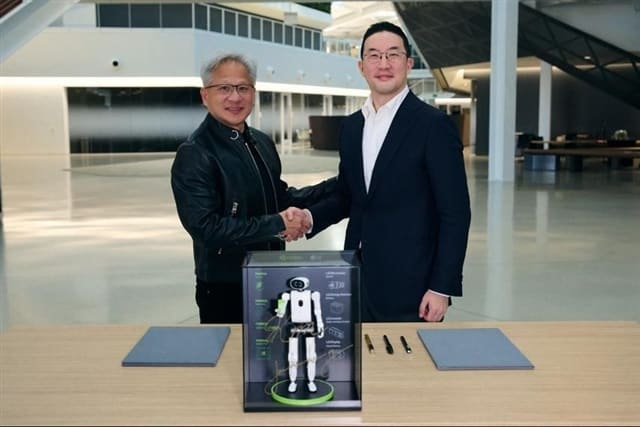
Madison Huang, senior director of product marketing for omniverse and robotics at Nvidia, visited LG's Yangjae research and development campus in southern Seoul on Tuesday to review the company's robotics data factory. The visit followed a meeting between LG Group Chairman Koo Kwang-mo and Nvidia CEO Jensen Huang last Friday, signaling executive-level commitment to the partnership.
The collaboration centers on building comprehensive datasets that teach humanoid robots to navigate real-world environments, manipulate objects, and respond to varied scenarios. Training data of this scale requires capturing thousands of hours of simulated and physical robot interactions, a resource-intensive process that has become a bottleneck for companies developing general-purpose humanoids.
Why the Volume Matters
One hundred thousand hours translates to more than eleven years of continuous operation if captured sequentially. In practice, robotics firms generate this data through parallel simulations and physical testing across multiple units. The dataset volume reflects the complexity of teaching machines to perform tasks humans learn through years of embodied experience.
LG has been expanding its robotics portfolio beyond consumer appliances, eyeing commercial and industrial applications where humanoid form factors offer advantages in spaces designed for human workers. The company operates what it calls a "data factory" at its Yangjae facility, a dedicated infrastructure for capturing, labeling, and processing the sensor inputs, movement patterns, and environmental interactions that train neural networks.
Nvidia supplies the simulation platforms and compute infrastructure that allow robotics developers to generate synthetic training data at scale. Its Omniverse platform creates photorealistic virtual environments where digital twins of robots can practice tasks millions of times faster than real-world testing would permit. The synthetic data is then blended with real-world captures to improve model robustness.
Regional Context
South Korea has emerged as a focal point for humanoid development in Asia, with both LG and Samsung investing in robotics capabilities. The country's strength in electronics manufacturing, display technology, and battery systems provides a natural foundation for vertically integrated robot production. LG's partnership with Nvidia mirrors similar collaborations between Chinese robotics startups and compute providers, as well as Japan's ongoing humanoid research through institutions like the University of Tokyo and corporate labs.
The timing aligns with broader industry momentum. Multiple humanoid platforms entered pilot deployments in 2025, and companies from Tesla to Figure AI have emphasized the importance of large-scale data collection. Access to proprietary datasets is increasingly seen as a competitive moat, particularly for firms targeting general-purpose robots rather than narrow industrial applications.
LG has not disclosed a timeline for when the 100,000-hour dataset will be complete, nor how it plans to deploy the resulting models. The company's existing robotics products include service robots for airports and hotels, as well as delivery units for logistics applications. A humanoid platform would represent a step-function increase in complexity and capability.
The partnership also highlights Nvidia's expanding role in robotics beyond its traditional GPU business. The company has positioned itself as an end-to-end platform provider, supplying chips, simulation software, and increasingly, reference architectures for robot developers. Madison Huang's visit to LG's facility suggests hands-on collaboration rather than a simple vendor relationship.
For LG, the robotics push is part of a broader strategy to diversify revenue beyond consumer electronics, where margins have compressed amid commoditization. Chairman Koo has identified robotics, electric vehicle components, and smart home platforms as growth pillars for the conglomerate. A commercially viable humanoid would open applications in manufacturing, healthcare, and hospitality, sectors where labor shortages are acute across East Asia.
The 100,000-hour target is ambitious but not unprecedented. Leading autonomous vehicle programs have logged tens of millions of miles, which translates to comparable training hours when accounting for sensor data rates. Robotics, however, faces higher-dimensional challenges, with manipulation tasks requiring fine motor control and real-time adaptation that surpass the demands of navigation alone.
Whether LG and Nvidia can hit their data milestone, and more importantly, whether that volume proves sufficient for general-purpose humanoid deployment, will become clearer as the partnership matures. For now, the collaboration signals that Asia's electronics incumbents see robotics as a category worth substantial investment, and that the race to build foundational datasets is well underway.
RELATED STORIES
Nvidia Robotics Executive Heads to LG South Korea Site Days After Partnership Deal
Cheng Wei-Lun · 3 min

LG Electronics Logs Record Appliance Subscription Revenue in First Half
Cheng Wei-Lun · 3 min
South Korean Battery Giants Pour $2.84 Billion Into Capacity Despite EV Demand Slump
Cheng Wei-Lun · 3 min

Samsung Fold8's Wider Aspect Ratio Pulls New Buyers into Foldable Market
Jun-ho Seo · 3 min
Spot something wrong? Email editor@briefasia.com. We log every correction publicly.