Finance · Deals
SK hynix Unveils $28.7 Billion Share Buyback as Memory Sector Braces for Volatility
The record treasury-share cancellation lifted Seoul's benchmark index and triggered speculation that Samsung may follow suit
KEY TAKEAWAYS
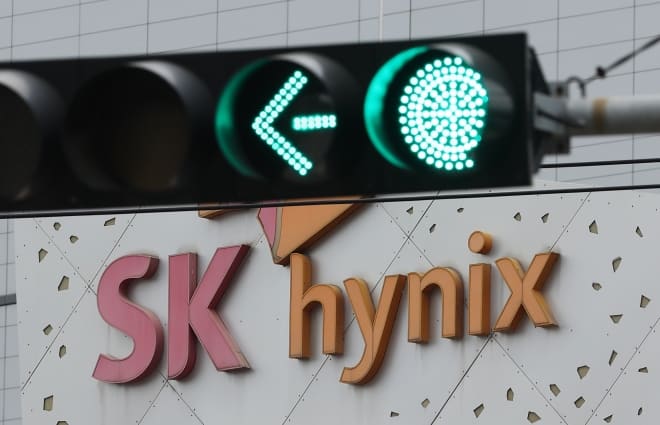
- ·SK hynix announced a 40 trillion won ($28.7 billion) share buyback and cancellation, the largest treasury-share retirement by a Korean-listed company, sending its stock up 12.73 percent to close at 1.691 million won.
- ·The rally lifted Seoul's Kospi index and pushed Samsung Electronics nearly 10 percent higher in morning trading, as investors speculated the rival chipmaker may launch a similar capital-return program.
- ·Korean memory makers have built substantial cash reserves from AI-driven demand for high-bandwidth memory, and Seoul's government is encouraging shareholder distributions to narrow the persistent valuation discount on domestic equities.
Record Buyback Lifts Seoul Equities
SK hynix shares climbed 12.73 percent on Thursday, closing at 1.691 million won, after the memory chipmaker announced a 40 trillion won ($28.7 billion) share buyback and cancellation program. The company said the move represents the largest treasury-share cancellation ever undertaken by a Korean-listed firm.
The announcement came as Asia's memory sector faces uncertainty over demand from artificial intelligence infrastructure builders and smartphone manufacturers. Investors had been pressing Korean chipmakers to return more cash after a recovery in DRAM and NAND pricing through early 2026.
Contagion to Samsung and the Kospi
The SK hynix rally helped push Seoul's Kospi index higher and spilled into Samsung Electronics, which gained nearly 10 percent in morning trading. Market participants immediately began speculating that Samsung, which has faced pressure from activist investors over capital allocation, might announce its own enhanced buyback or dividend.
Samsung's share-price movement suggests the market is pricing in a higher probability of shareholder-return initiatives at Korea's largest conglomerate. The company has historically been more conservative in capital returns compared to global peers such as Micron and Taiwan Semiconductor Manufacturing Company.
Why Memory Makers Are Opening the Vault
Several factors converge to make large-scale buybacks attractive for Korean memory producers now. First, both SK hynix and Samsung have built substantial cash reserves during the post-pandemic memory cycle, when data-center customers stockpiled high-bandwidth memory for AI training clusters.
Second, valuations for Korean chipmakers remain below regional averages despite their leadership in HBM3E and next-generation DRAM. SK hynix trades at a discount to its Taiwanese and U.S. competitors, even as it commands premium pricing for AI-optimized memory products.
Third, Seoul's government has signaled support for measures that boost domestic equity markets. The Ministry of Economy and Finance introduced tax incentives earlier this year to encourage listed companies to increase shareholder distributions, part of a broader effort to narrow the so-called "Korea discount" that has persisted for years.
Execution and Market Impact
Details of the SK hynix buyback timeline and cancellation schedule have not been disclosed. Typically, Korean firms execute such programs over 12 to 18 months, purchasing shares in open-market transactions and then retiring them to reduce the outstanding float.
The scale of the program is significant even by global standards. At $28.7 billion, it exceeds the market capitalization of many mid-tier semiconductor firms and rivals buyback announcements from U.S. technology giants in recent quarters.
Broker systems briefly hit trading limits on SK hynix stock Thursday morning as order volumes surged. The sudden liquidity demand underscores how thinly traded Korean equities can be during periods of high volatility, despite the size of the companies involved.
What Comes Next for Korean Chips
Attention now turns to Samsung's next earnings call and any indication from management about capital-return plans. Analysts expect Samsung to address shareholder concerns directly, especially if SK hynix's buyback continues to widen the valuation gap between the two.
For SK hynix, the buyback commitment signals confidence in sustained profitability from its HBM and data-center DRAM franchises. The company has secured long-term supply agreements with Nvidia and other AI accelerator makers, providing revenue visibility that supports aggressive capital allocation.
Broader implications extend to how Asia's semiconductor industry navigates the tension between reinvestment in leading-edge fabs and returning cash to investors. With capital intensity rising in advanced packaging and chiplet integration, buybacks of this magnitude will test whether memory makers can maintain both shareholder rewards and technology leadership.
RELATED STORIES
Seoul Stocks Rebound After Sharp Tech Selloff
Cheng Wei-Lun · 3 min
SK Hynix Eyes Solidigm IPO to Recover Investment and Fund US Chip Expansion
Cheng Wei-Lun · 3 min
Woori Bank Completes First Cross-Border Bond Settlement via ICSD Network
Cheng Wei-Lun · 3 min
Samsung Bets on Volume Over Margin as Memory Costs Squeeze Mobile Profits
Cheng Wei-Lun · 3 min
Spot something wrong? Email editor@briefasia.com. We log every correction publicly.