Technology · Products
Samsung Bets on Volume Over Margin as Memory Costs Squeeze Mobile Profits
The Korean electronics giant is prioritizing market share expansion in smartphones even as component prices erode profitability, signaling a strategic shift in its mobile division.
KEY TAKEAWAYS
- ·Samsung's mobile division will prioritize market share expansion over near-term profitability as elevated memory chip prices squeeze margins.
- ·Co-CEO Roh Tae-moon told employees that profit pressure could persist while component costs remain high, signaling a strategic shift for the second half.
- ·The volume-focused approach reflects competitive pressure in Asia, where Chinese rivals have gained ground in mid-range and budget smartphone segments.
Strategy Shift Amid Cost Pressure
Samsung Electronics is choosing volume over profitability in its smartphone business, a strategic pivot that underscores the margin pressure facing even the world's largest mobile device maker. The company's mobile division head signaled the shift during an internal management session this week, telling staff that the business would focus on expanding market share even as component costs squeeze earnings.
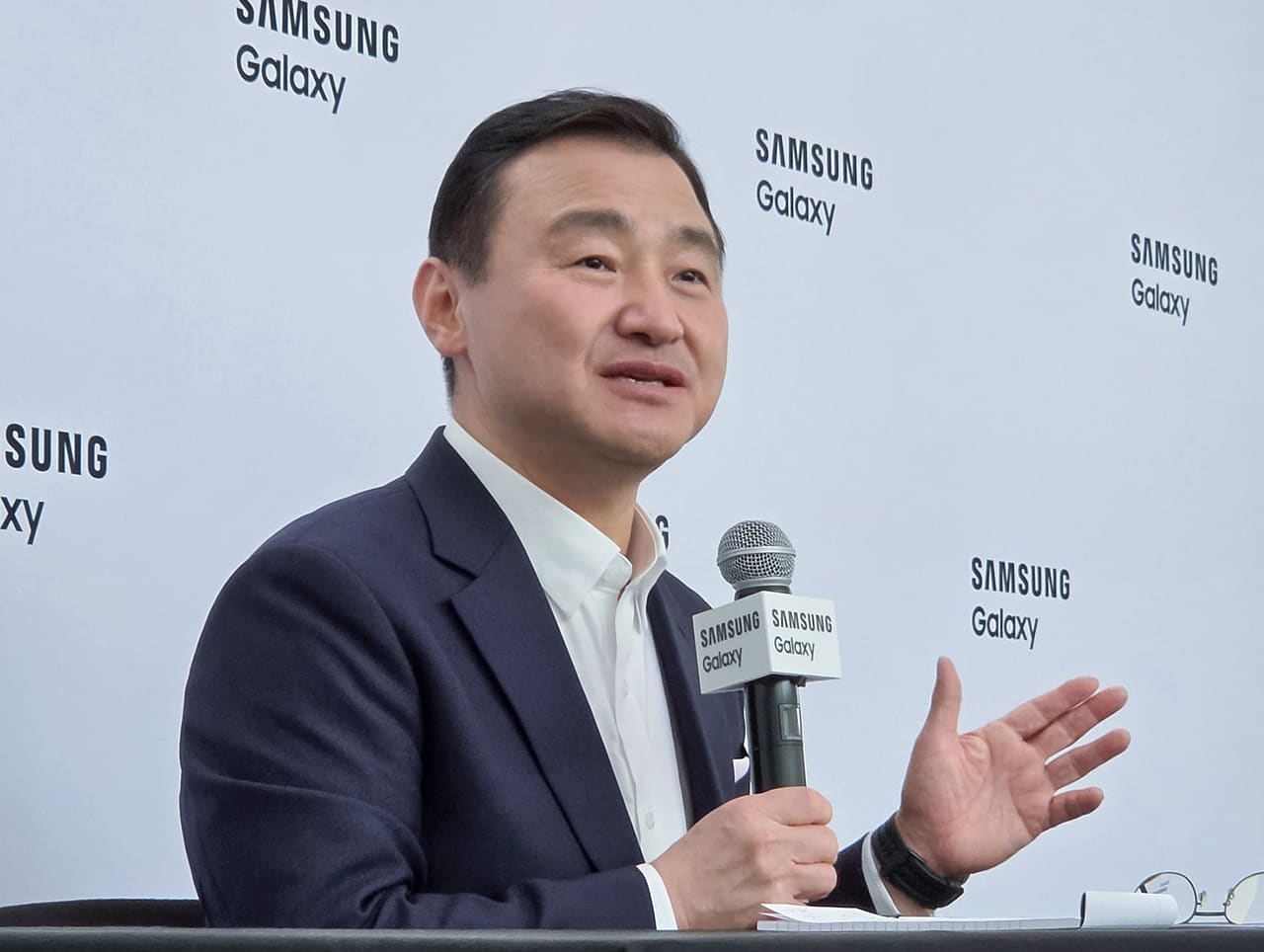
Roh Tae-moon, who serves as co-CEO and leads the Device eXperience division, outlined the approach at a Wednesday briefing, according to industry sources. He acknowledged that profitability challenges would likely persist as long as memory chip prices remain elevated, but emphasized that gaining ground in the smartphone market would take priority in the second half of the year.
The stance marks a departure from the margin-focused discipline that has historically guided Samsung's mobile operations. By signaling a willingness to absorb near-term profit erosion, the company is betting that scale and market position will deliver longer-term returns, even if quarterly earnings take a hit in the process.
Memory Prices Drive the Calculus
The profit squeeze stems largely from the cost of DRAM and NAND flash memory, core components in every smartphone Samsung ships. Memory prices have climbed sharply over the past year as supply tightened and demand from AI infrastructure accelerated, leaving handset makers with less room to maneuver on bill-of-materials costs.
For Samsung, the challenge is particularly acute. While the company manufactures its own memory chips through its semiconductor division, internal transfer pricing still reflects market rates, meaning the mobile unit faces the same cost pressures as external buyers. That dynamic limits the vertical integration advantage Samsung has long enjoyed over rivals who source components entirely from third parties.
The memory price environment also complicates Samsung's competitive positioning against Chinese rivals, many of whom have aggressively cut prices to gain share in key markets across Southeast Asia, Latin America, and parts of Europe. Matching those price points while absorbing higher memory costs creates a double bind that erodes margins faster than revenue grows.
Asia Market Share at Stake
The push for volume is partly driven by competitive dynamics in Asia, where Samsung has ceded ground to Chinese brands in the mid-range and budget segments. Companies like Xiaomi, OPPO, and Vivo have steadily gained share in India, Indonesia, and Vietnam by offering feature-rich devices at lower price points, leveraging efficient supply chains and aggressive retail strategies.
Samsung's decision to prioritize market share suggests the company views the current moment as critical for defending its position in these growth markets. Losing further ground now could make it harder to recover later, particularly as brand loyalty solidifies and distribution networks become entrenched.
The strategy also reflects a broader industry trend. As smartphone replacement cycles lengthen in mature markets and growth concentrates in price-sensitive regions, maintaining volume has become essential for staying relevant in the supply chain, securing component allocations, and justifying R&D investments that span multiple product tiers.
Trade-offs and Investor Expectations
The approach carries risks. Investors have grown accustomed to Samsung's ability to balance market share with healthy operating margins, particularly in mobile, where the company has historically commanded premium pricing in flagship tiers. A prolonged focus on volume at the expense of profitability could weigh on earnings multiples and raise questions about the sustainability of the strategy.
Analysts will watch closely to see whether the volume gains translate into durable market position or simply reflect price-driven churn that evaporates once Samsung pulls back on promotions. The company's ability to manage the trade-off between share and margin will depend in part on how quickly memory prices stabilize and whether it can extract cost efficiencies elsewhere in the supply chain.
For now, Roh's comments suggest Samsung is prepared to endure a period of compressed margins in exchange for maintaining competitive relevance in a rapidly shifting mobile landscape. Whether that calculus pays off will become clearer as third-quarter earnings reports roll in and the company's shipment data reveals how much share it has actually gained.
RELATED STORIES

Samsung's China Revenue Surpasses US Market as Memory Demand Climbs
Cheng Wei-Lun · 3 min
Samsung's Mobile Unit Faces 211% Memory Price Surge
Cheng Wei-Lun · 4 min

Nvidia's Madison Huang Tours Asia Robotics Hubs in Seoul and Beijing
Cheng Wei-Lun · 3 min

Korean Cable Maker Wins $143 Million US AI Data Center Contract
Cheng Wei-Lun · 3 min
Spot something wrong? Email editor@briefasia.com. We log every correction publicly.