Technology · Dev
Samsung's China Revenue Surpasses US Market as Memory Demand Climbs
The Korean chipmaker saw regional sales shift in H1 2026 as AI-driven semiconductor demand reshaped its customer base, though Nvidia remains outside its top-five roster.
KEY TAKEAWAYS
- ·Samsung Electronics generated more revenue from China than the US in the first half of 2026, driven by AI-related memory demand and semiconductor sales growth.
- ·An ongoing memory upcycle lifted DRAM and NAND shipments, with Chinese hyperscale operators and manufacturers absorbing large volumes of server components.
- ·Nvidia did not appear among Samsung's five largest customers despite HBM collaboration, as diversified buyers with broader component portfolios dominated the top-five list.
Regional Sales Flip
Samsung Electronics recorded higher revenue from China than from the United States in the first six months of 2026, marking a reversal in the company's geographic sales hierarchy. The shift reflects surging demand for memory components tied to artificial intelligence workloads, according to Samsung.
Both markets delivered substantial year-on-year increases, but China's acceleration outpaced the US, pushing it ahead in Samsung's regional breakdown. The company attributed the growth to its semiconductor division, which benefited from a sustained upcycle in memory pricing and volume driven by data-center expansion and AI model training infrastructure across Asia.
Memory Upcycle Drives Semiconductor Gains
Samsung's semiconductor revenue climbed sharply during the period, propelled by higher shipments of DRAM and NAND products. Hyperscale cloud operators and contract manufacturers in China absorbed large volumes of server memory modules, while US buyers maintained steady but slower growth rates.
The memory upcycle, which began in late 2025, has persisted longer than many analysts initially forecast. Tight supply of advanced DRAM nodes and robust AI server builds have kept contract prices elevated, particularly for high-density modules used in training and inference clusters.
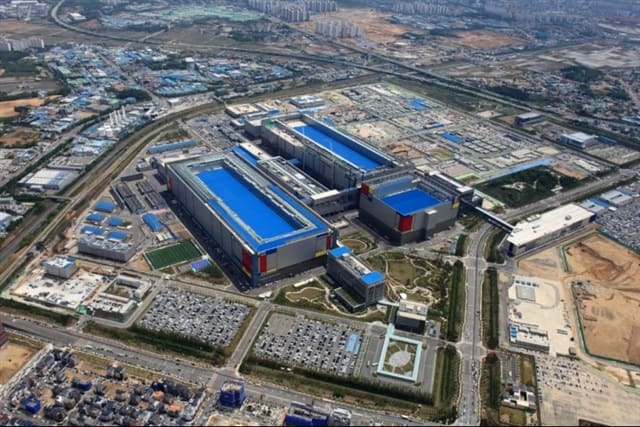
Samsung has ramped production at its fabrication facilities in South Korea to meet the increased orders, though the company has not disclosed specific capacity expansion figures for the first half of the year.
Nvidia Absent from Top-Five Customer List
Despite expanding collaboration on high-bandwidth memory products, Nvidia did not rank among Samsung's five largest customers by revenue in the first half. The GPU designer has been a visible partner in HBM development, and Samsung supplies HBM3 and HBM3E modules for Nvidia's data-center accelerators.
However, Nvidia's direct purchases from Samsung appear to have been eclipsed by larger orders from hyperscale cloud providers, telecommunications equipment makers, and consumer electronics brands that buy a broader mix of components, including display panels, logic chips, and storage devices.
The top-five customer roster typically includes companies with diversified procurement spanning multiple Samsung divisions, rather than firms focused solely on semiconductor components. Samsung does not publicly identify its largest customers by name.
Asia's AI Infrastructure Build-Out
China's rise in Samsung's revenue mix aligns with the country's push to build domestic AI infrastructure. Chinese cloud operators and internet platforms have accelerated purchases of memory and storage to support large language models and recommendation engines, even as US export controls have restricted access to certain cutting-edge logic chips.
Memory components face fewer export restrictions than advanced GPUs, allowing Samsung and other memory vendors to maintain strong sales channels into China. The company has also benefited from demand for mobile DRAM and NAND used in smartphones and consumer devices, segments where Chinese brands hold significant market share.
US sales growth, while positive, reflected a more mature data-center upgrade cycle and cautious enterprise spending in the first half. American hyperscalers continued to invest in AI capacity but spread purchases across multiple suppliers and geographies, diluting the concentration of orders to any single vendor.
Outlook and Competitive Dynamics
Samsung's regional performance underscores the shifting center of gravity in semiconductor demand. Asia-Pacific markets, led by China, now account for a larger share of memory consumption than North America, a structural change driven by the region's manufacturing base and digital economy scale.
The company faces intensifying competition from SK hynix, which has captured a larger share of HBM shipments to Nvidia and other AI-focused customers. SK hynix's early lead in HBM3E production has allowed it to secure long-term supply agreements with major GPU and accelerator makers, pressuring Samsung to accelerate its own HBM roadmap.
Samsung's broader product portfolio, however, provides revenue diversification that pure-play memory competitors lack. The company's logic foundry, display, and mobile businesses contribute to its top-line resilience even when memory cycles turn.
Whether China retains its lead over the US in Samsung's sales ranking will depend on the trajectory of AI infrastructure investment in both regions, the pace of HBM adoption, and the evolution of trade and technology policy. For now, the first-half figures signal that Asia's appetite for memory remains the dominant force shaping Samsung's revenue map.
RELATED STORIES
Apple Weighs Memory Options as Washington Signals Concern Over Chinese Suppliers
Cheng Wei-Lun · 3 min
Chinese Chipmaker Vertilite Bets $741 Million on InP Lasers for AI Networks
Cheng Wei-Lun · 3 min
Apple Trains Proprietary AI Model for China Market With Alibaba Support
Cheng Wei-Lun · 3 min
China's Electric Truck Exports Surge as Fuel Costs Rise Across Asia
Cheng Wei-Lun · 3 min
Spot something wrong? Email editor@briefasia.com. We log every correction publicly.