Technology · Dev
Korean Cable Maker Wins $143 Million US AI Data Center Contract
Gaon Cable's US subsidiary will supply power distribution systems for a 250-megawatt facility as Asian manufacturers tap North America's infrastructure buildout
KEY TAKEAWAYS
- ·Gaon Cable won a $143.4 million contract to supply busduct power systems for a 250-megawatt AI data center in the United States through its subsidiary LS Cable & System USA.
- ·The deal reflects growing demand for high-capacity electrical infrastructure as AI workloads drive data center power requirements far beyond traditional cloud facilities.
- ·Asian manufacturers are securing North American contracts by establishing local production, diversifying supply chains amid geopolitical risk and capacity constraints.
Korean Supplier Enters US AI Infrastructure Race
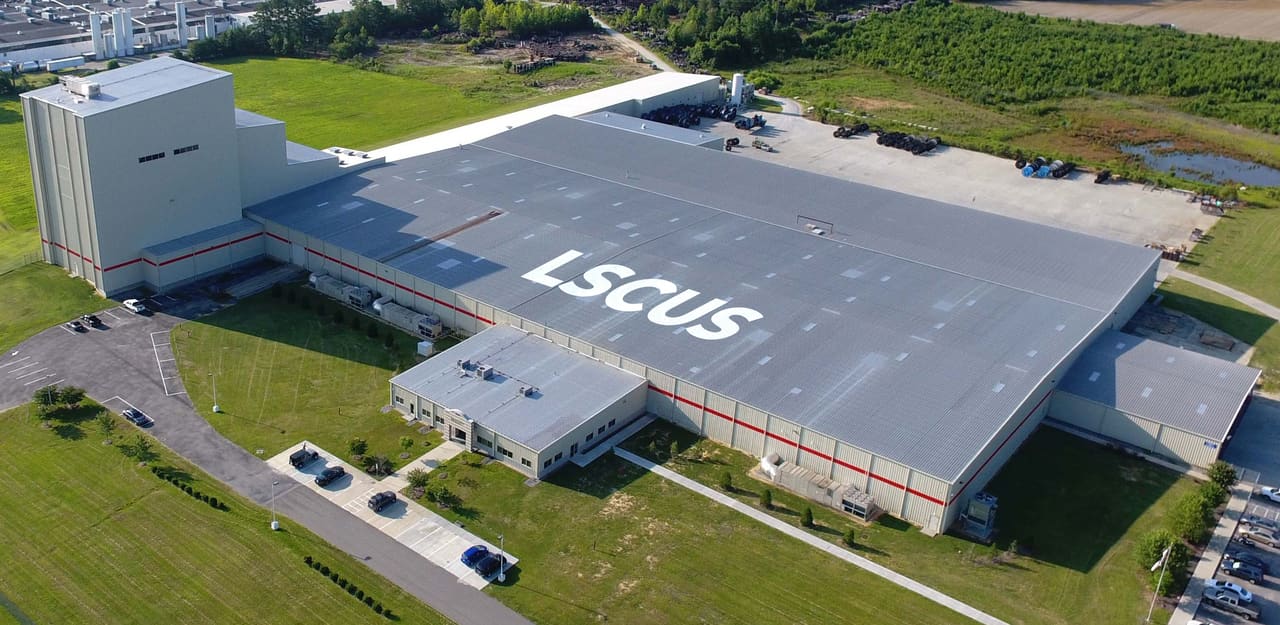
Gaon Cable has locked in a 200 billion won ($143.4 million) contract to supply power distribution infrastructure for a large-scale AI data center in the United States, the company announced Thursday. The deal positions the Korean manufacturer as a key supplier in North America's accelerating race to build computing capacity for artificial intelligence workloads.
The company's US manufacturing arm, LS Cable & System USA, will deliver busduct systems for a 250-megawatt facility being developed by a major American cloud operator. Busducts are high-capacity electrical conduits that channel large volumes of electricity through data centers, replacing traditional cable systems in power-intensive environments where AI chips can draw tens of kilowatts per rack.
Scale and Timing
The 250-megawatt capacity planned for the facility reflects the power demands of modern AI infrastructure. For context, a single rack of Nvidia H100 GPUs commonly used in large language model training can require 10 to 15 kilowatts, and newer configurations with liquid cooling push beyond 40 kilowatts. Facilities designed for AI workloads now routinely exceed 100 megawatts, far above the 10- to 30-megawatt range typical of traditional cloud data centers a decade ago.
Gaon Cable did not disclose the identity of the cloud operator or the project timeline, but construction activity for AI-focused data centers in the US has surged over the past 18 months. Hyperscalers including Microsoft, Google, and Amazon have collectively announced plans to add gigawatts of new capacity across Virginia, Texas, and the Pacific Northwest, driven by competition in generative AI and enterprise cloud services.
Asian Manufacturers in North America
The contract extends a pattern of Asian infrastructure suppliers securing design-build deals in North America. Korean, Japanese, and Taiwanese firms specializing in high-voltage switchgear, cooling systems, and prefabricated modules have found traction with US developers facing capacity constraints and long lead times for domestic equipment.
For Gaon Cable, the deal represents both revenue growth and geographic diversification. The company has historically focused on power transmission and industrial cable projects in South Korea and Southeast Asia. Establishing manufacturing presence in the US through LS Cable & System USA allows the firm to serve contracts that increasingly favor local production, particularly for critical infrastructure with national security considerations.
Power Distribution as a Bottleneck
Busduct systems have become a focal point in data center design as operators seek to reduce installation time and improve energy efficiency. Traditional cabling requires extensive conduit runs, labor-intensive terminations, and larger floor-space allocations. Busducts, by contrast, are prefabricated and modular, enabling faster deployment and tighter integration with overhead power delivery architectures.
The shift matters in AI facilities, where time-to-market can determine competitive position in training frontier models. A six-month reduction in construction time translates directly into earlier revenue generation and faster capture of enterprise AI contracts. Suppliers that can deliver integrated power systems on shortened schedules hold an advantage in bid competitions.
Implications for Regional Supply Chains
The deal also signals broader shifts in how data center supply chains are evolving across the Asia-Pacific. South Korean manufacturers are leveraging domestic expertise in heavy electrical equipment and semiconductor fabrication infrastructure to compete for contracts outside traditional markets. Japan's Meidensha and Taiwan's Delta Electronics have pursued similar strategies, embedding themselves in US and European projects through local subsidiaries and joint ventures.
For US cloud operators, diversifying supplier relationships reduces reliance on any single vendor and mitigates risks associated with tariffs, export controls, or geopolitical friction. At the same time, Asian suppliers gain access to the world's largest data center market, where capital expenditure on AI infrastructure is expected to exceed $50 billion annually through 2027, according to industry analysts.
What Comes Next
Gaon Cable's entry into the US market will test whether the company can scale beyond a single large contract. Repeat business and expansion into adjacent product categories, such as medium-voltage switchgear or backup power systems, would cement its position. The company has not disclosed plans for additional US facilities or partnerships, but sustained growth in AI data center construction would likely drive further investment in local manufacturing capacity.
Meanwhile, the 250-megawatt project itself will serve as a bellwether for how quickly US operators can bring new AI infrastructure online. Permitting, grid interconnection, and equipment procurement remain bottlenecks even as demand accelerates. Suppliers that prove they can meet aggressive timelines stand to capture a disproportionate share of the buildout ahead.
RELATED STORIES
Samsung Breaks Ground on $4.3 Billion HBM Packaging Plant in South Korea
Cheng Wei-Lun · 4 min
Samsung Secures Pricing Leverage as 4nm Foundry Capacity Books Through 2027
Cheng Wei-Lun · 4 min
Nvidia's Madison Huang Tours Asia Robotics Hubs in Seoul and Beijing
Cheng Wei-Lun · 3 min
Samsung Bets on Volume Over Margin as Memory Costs Squeeze Mobile Profits
Cheng Wei-Lun · 3 min
Spot something wrong? Email editor@briefasia.com. We log every correction publicly.